Physical Address
304 North Cardinal St.
Dorchester Center, MA 02124
Physical Address
304 North Cardinal St.
Dorchester Center, MA 02124


Valve lockout device selection is where most LOTO programs fall apart. I’ve walked through facilities with $50,000 lockout stations mounted on every wall—and found maintenance crews wrapping chains around gate valve handles because nobody bought the right hardware.
That chain? Non-compliant. The $12 ball valve lockout sitting in the station? Wrong size because someone measured the pipe instead of the handle. The butterfly valve on the chiller? No device at all because “we couldn’t find one that fit.”
These aren’t edge cases. They’re the norm. And every one of them is a citation waiting to happen.
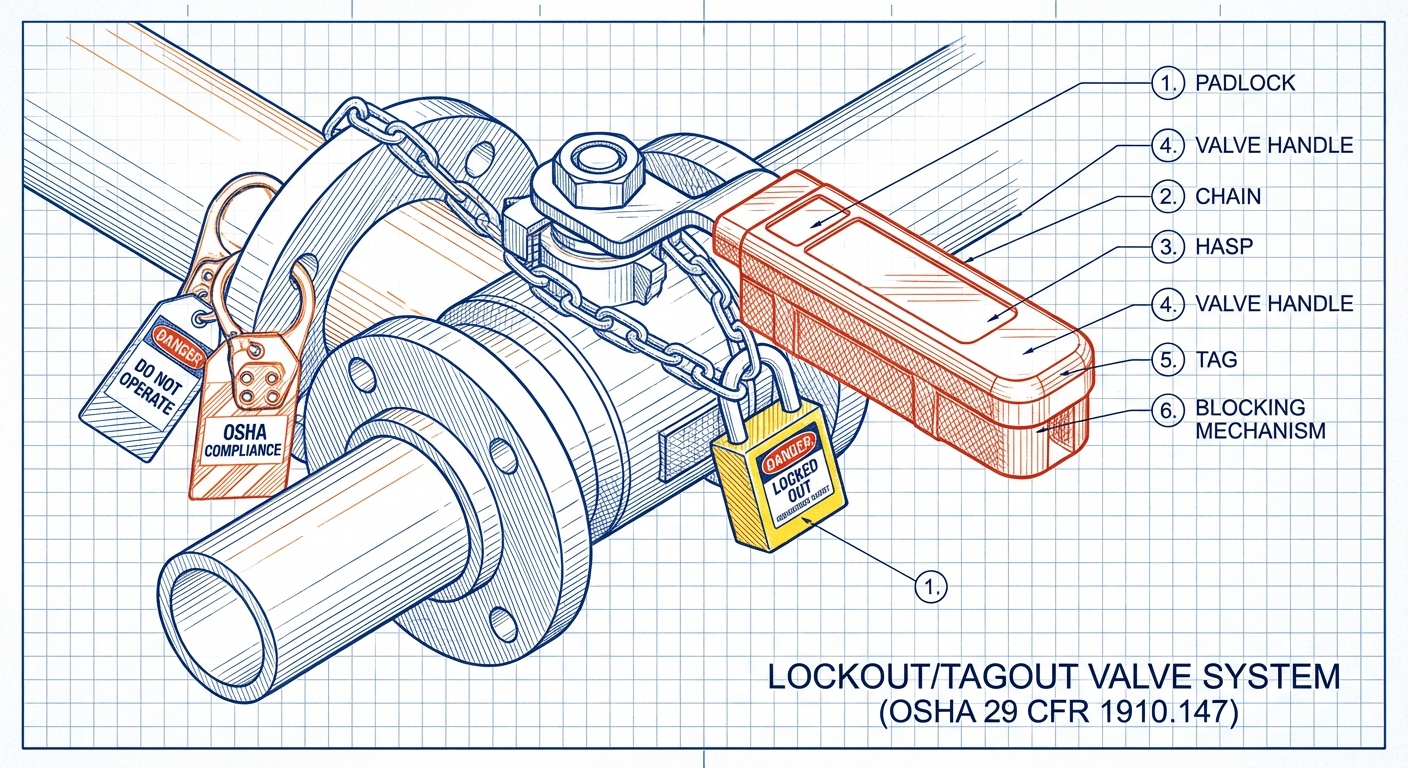
“Locks, tags, chains, wedges, key blocks, adapter pins, self-locking fasteners, or other hardware shall be provided by the employer for isolating, securing or blocking of machines or equipment from energy sources.”
— 29 CFR 1910.147(c)(5)(i)
Shop Floor Translation: You need hardware that physically prevents someone from opening or closing that valve while you’re downstream with your hands inside the equipment. “We wrapped a chain around it” doesn’t cut it.
A valve lockout device is a mechanical device that prevents operation of a valve handle while accepting a safety padlock. The device must meet four regulatory requirements: durable, standardized, substantial, and identifiable.
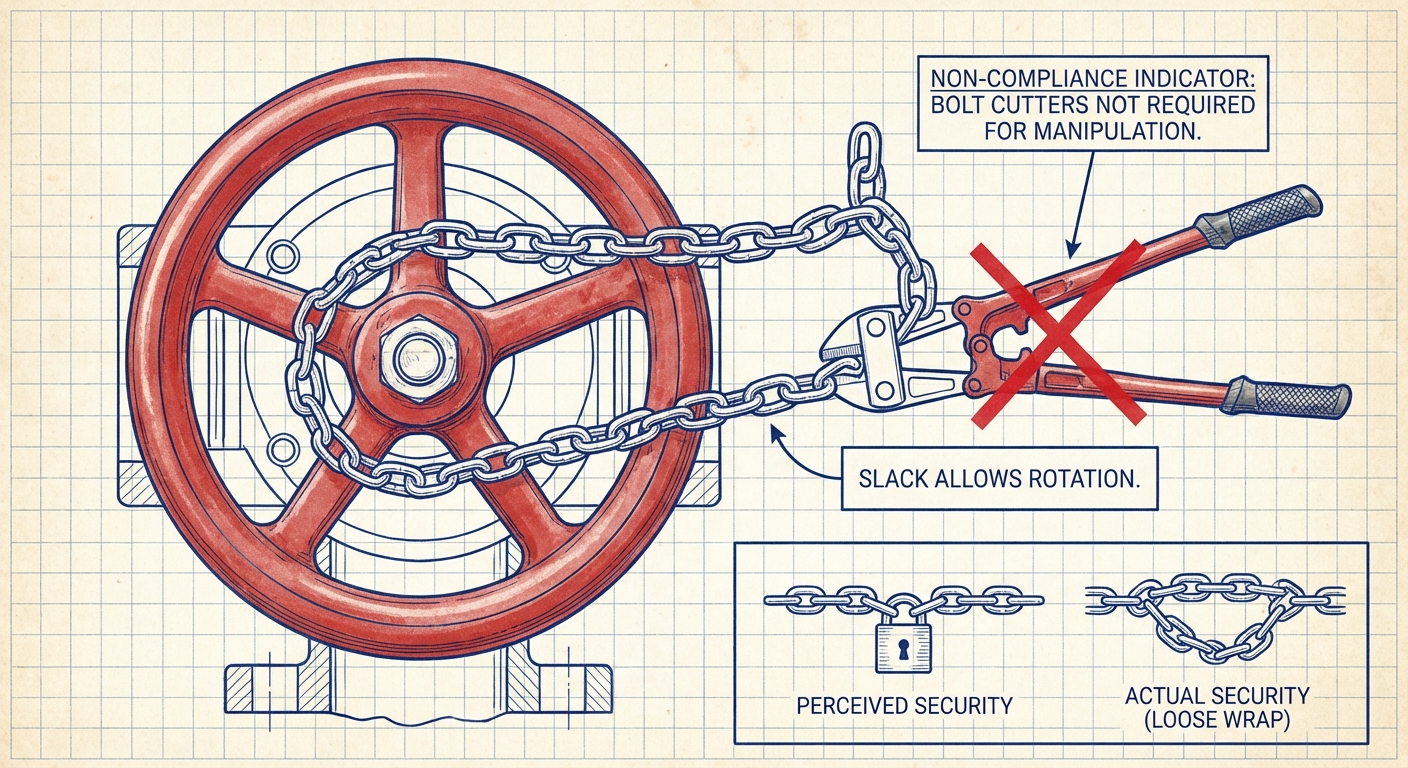
I see this constantly. Maintenance supervisor buys a heavy-duty chain, wraps it around a gate valve wheel, and padlocks the ends together. Looks secure. Feels secure.
Fails every audit.
Here’s why:
“Lockout devices shall be… substantial enough to prevent removal without the use of excessive force or unusual techniques, such as with the use of bolt cutters or other metal cutting tools.”
— 29 CFR 1910.147(c)(5)(ii)(C)
Shop Floor Translation: The device must require bolt cutters to defeat. A chain wrapped around a valve wheel can be slipped off, unwound, or manipulated without cutting anything. It doesn’t physically prevent valve operation—it just makes it inconvenient.
| COMPLIANT | NON-COMPLIANT |
|---|---|
| Valve-specific lockout device enclosing the handle | Chain wrapped around handle |
| Adjustable cable lockout through valve mechanism | Wire through handle spoke |
| Ball valve lockout clamped on handle | Zip-tie on valve stem |
| Gate valve lockout encasing wheel | Padlock through chain links |
AUDIT TRAP: OSHA’s list in (c)(5)(i) includes “chains” as acceptable hardware—but only when the chain SECURES a lockout device, not when the chain IS the lockout device. Inspectors know the difference.
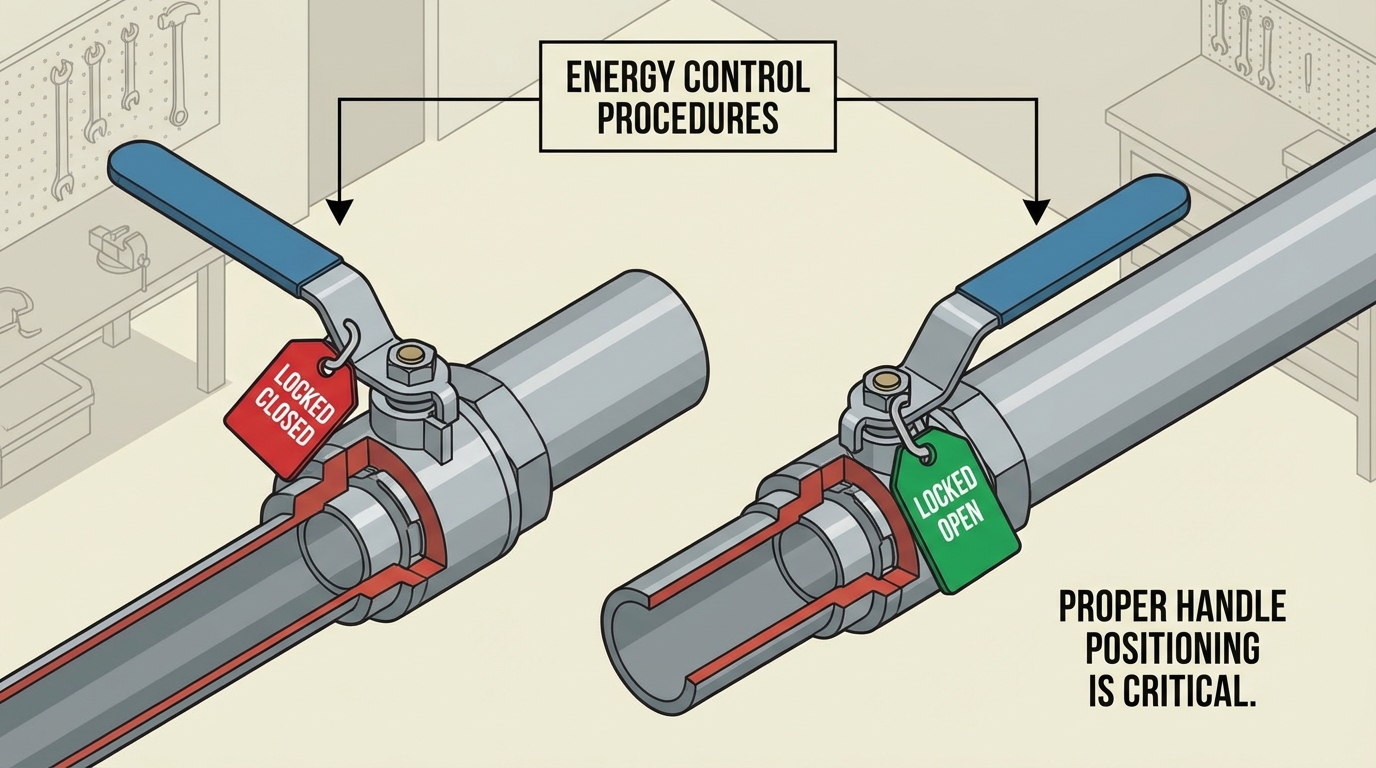
Ball valve lockout device selection requires a decision most people get wrong: do you lock it in the open position or closed position?
The answer depends on your energy control procedure. If the valve feeds hazardous energy to the equipment you’re servicing, you lock it CLOSED. If the valve feeds a safety system (like cooling water), you might lock it OPEN.
Here’s what matters for device selection:
Handle-Off (Perpendicular to Pipe):
Standard ball valve lockouts clamp over the handle when it’s perpendicular to the pipe. This is the “closed” position on most ball valves. Device sizing is based on handle WIDTH—typically 1″ to 3″ for industrial ball valves.
Handle-On (Parallel to Pipe):
Locking a ball valve in the OPEN position requires a different device geometry. Many standard ball valve lockouts won’t work here. You’ll need either a universal ball valve lockout with adjustable arms or an adjustable cable lockout.
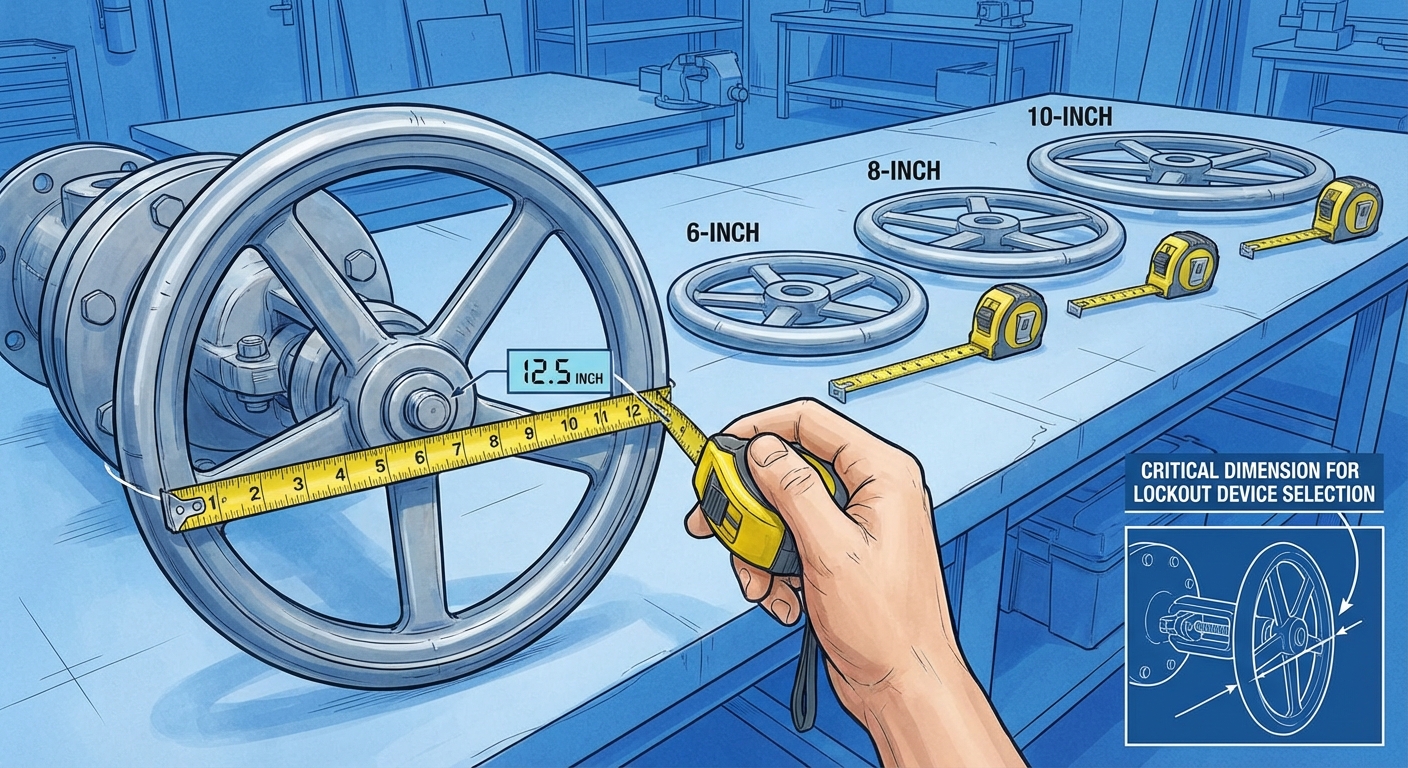
Gate valve lockout device selection fails when someone measures the pipe.
The pipe diameter tells you nothing. A 6″ gate valve might have a 4″ handwheel or a 12″ handwheel depending on the manufacturer and pressure rating. The HANDLE is what you’re locking out, not the pipe.
How to Measure:
Common Gate Valve Lockout Devices:
| Handwheel Diameter | Device Type | Typical Part Numbers |
|---|---|---|
| 1″ – 3″ | Small gate valve lockout | Master Lock 480, Brady 65560 |
| 2.5″ – 5″ | Standard gate valve lockout | Master Lock 481, Brady 65561 |
| 5″ – 6.5″ | Large gate valve lockout | Master Lock 482, Brady 65562 |
| 6.5″ – 10″ | Extra-large or cable lockout | Master Lock 483, S806 cable |
| 10″+ | Adjustable cable lockout only | Master Lock S806, Brady 50940 |
AUDIT TRAP: One-size-fits-all gate valve lockouts don’t exist. If the device doesn’t fully encase the handwheel and prevent rotation, it’s not compliant. I’ve seen facilities buy medium lockouts for every gate valve—then find that half their valves are either too small (device falls off) or too large (device doesn’t close).
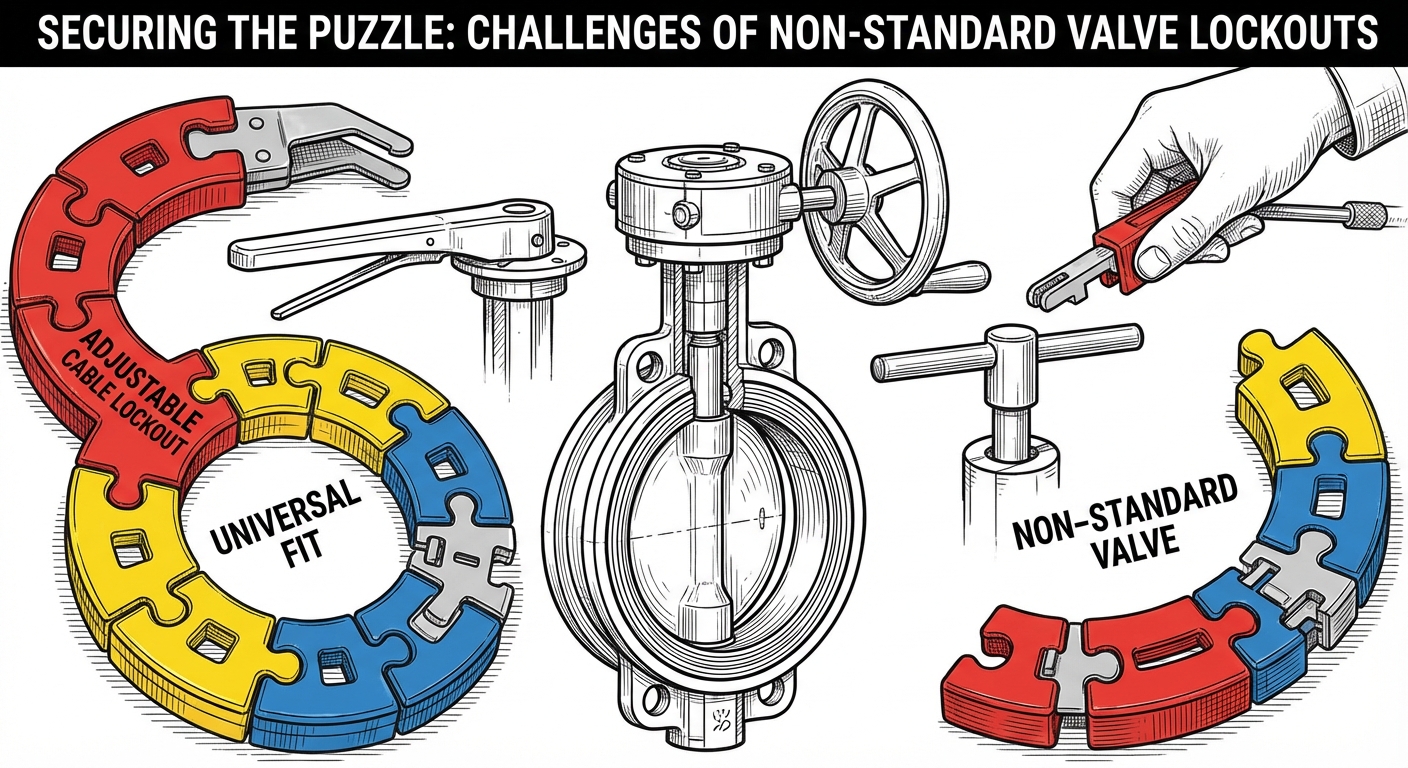
Butterfly valves are the reason adjustable cable lockouts exist.
The problem: butterfly valve handles vary wildly in design. Some have levers. Some have handwheels. Some have gear operators. Many have notched quadrant plates that don’t fit ANY dedicated lockout device.
If you have butterfly valves, you have three options:
Option 3 is the only universal solution. If you can find a hole, slot, or opening that prevents valve operation when blocked, a cable lockout will work..
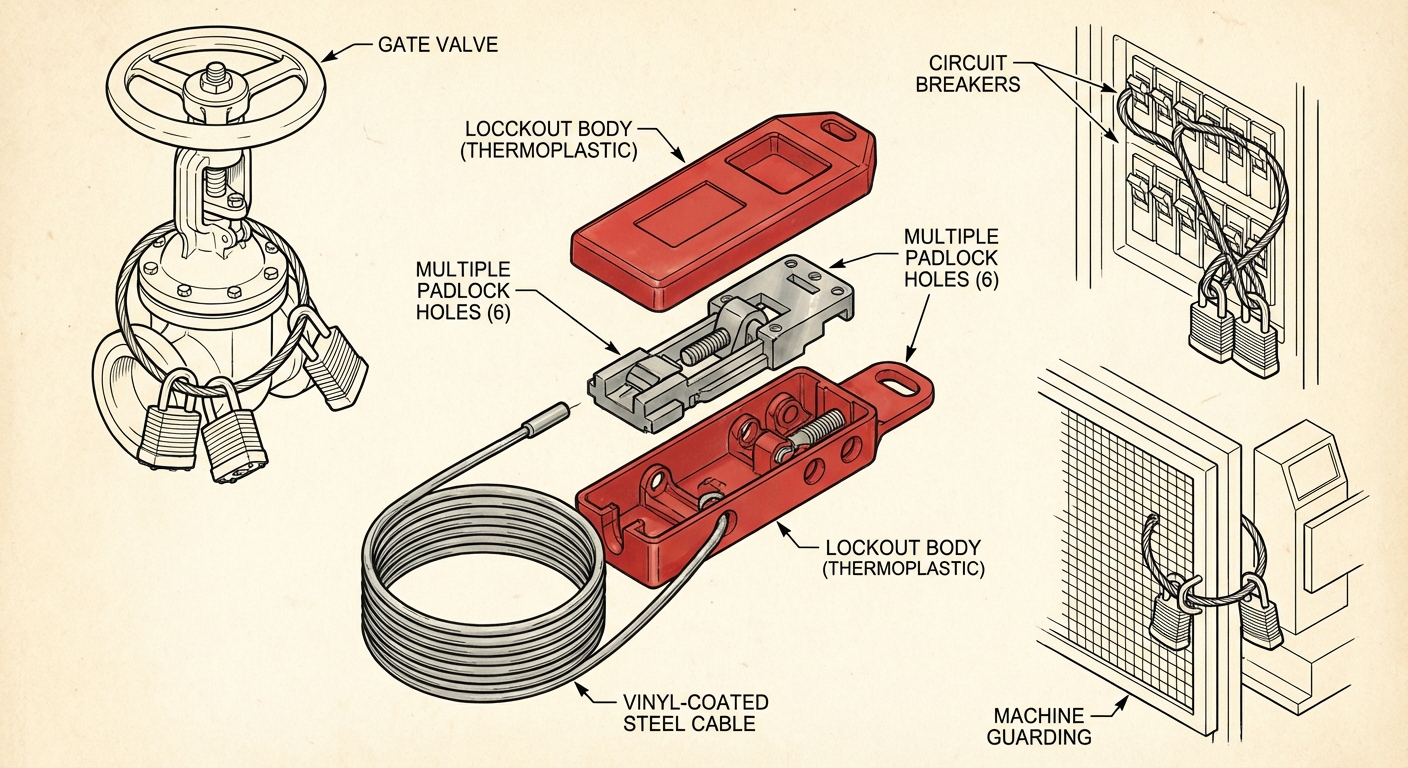
After twenty years of watching facilities struggle with valve lockout device selection, I recommend every LOTO program stock adjustable cable lockouts. Not as the ONLY device—but as the backup that covers every weird valve you can’t fit with dedicated hardware.
Master Lock S806 Specifications:
| Feature | Specification |
|---|---|
| Cable Length | 6 feet (adjustable) |
| Cable Diameter | 3/16″ vinyl-coated steel |
| Lock Holes | Accepts up to 6 padlocks |
| Meets Substantial Requirement? | Yes—requires cutting tools to defeat |
| Meets Standardized Requirement? | Yes—consistent red color/design |
| Price Range | $35–$50 |
When to Use:
When NOT to Use:
The cable lockout is your problem-solver, not your entire program.
Q: Can I use the same lockout device on all my valves?
A: No. Valve lockout device selection must match the valve type and handle dimensions. A ball valve lockout won’t work on a gate valve. A small gate valve lockout won’t fit a large handwheel. Stock multiple device types and sizes.
Q: Is a chain through the valve handle ever compliant?
A: Only if the chain SECURES a lockout device to a fixed point—not if the chain itself is the lockout. Chains wrapped around handles can be manipulated without cutting and don’t meet the “substantial” requirement.
Q: How do I lock out a valve with no handle?
A: Valves with actuators (pneumatic, hydraulic, or electric) require locking out the energy source to the actuator AND typically installing a mechanical block. This is a multi-energy-source situation requiring a machine-specific procedure.
Q: Do I need to lock valves in open AND closed position?
A: Your energy control procedure determines position. Document whether each valve is locked open or closed based on energy isolation requirements. Then verify you have devices that work in that position.