Physical Address
304 North Cardinal St.
Dorchester Center, MA 02124
Physical Address
304 North Cardinal St.
Dorchester Center, MA 02124


The tagout only program is an energy control approach that requires facilities to demonstrate full employee protection, similar to lockout procedures. OSHA permits this approach only when energy isolating devices are incapable of being locked out — not because lockout is inconvenient.
A tagout only program is defined as an energy control approach that uses warning tags instead of physical lockout devices to prevent equipment operation during servicing. OSHA permits tagout-only when the energy isolating device physically cannot accept a lock — older knife switches without hasp holes, legacy quarter-turn valves, or control panels with no lock provisions.
The distinction between tags and locks matters. Lockout devices create physical barriers that prevent operation. Tags warn. That fundamental difference drives six additional requirements that catch facilities off guard during audits.
Tagout-only equipment exists primarily in facilities with pre-1990 machinery. Post-January 1990 equipment must accept lockout devices by design — meaning tagout-only may not be a legal option for your machinery if you’ve replaced or modified equipment after that date.
Gate valve lockouts, ball valve covers, and universal breaker locks can convert most “incapable” equipment to lockout-capable. If a commercially available device would work, OSHA expects you to use it rather than default to tagout only program procedures. The “incapable” standard has a specific meaning: no commercially available lockout device exists that would secure the energy isolating device.
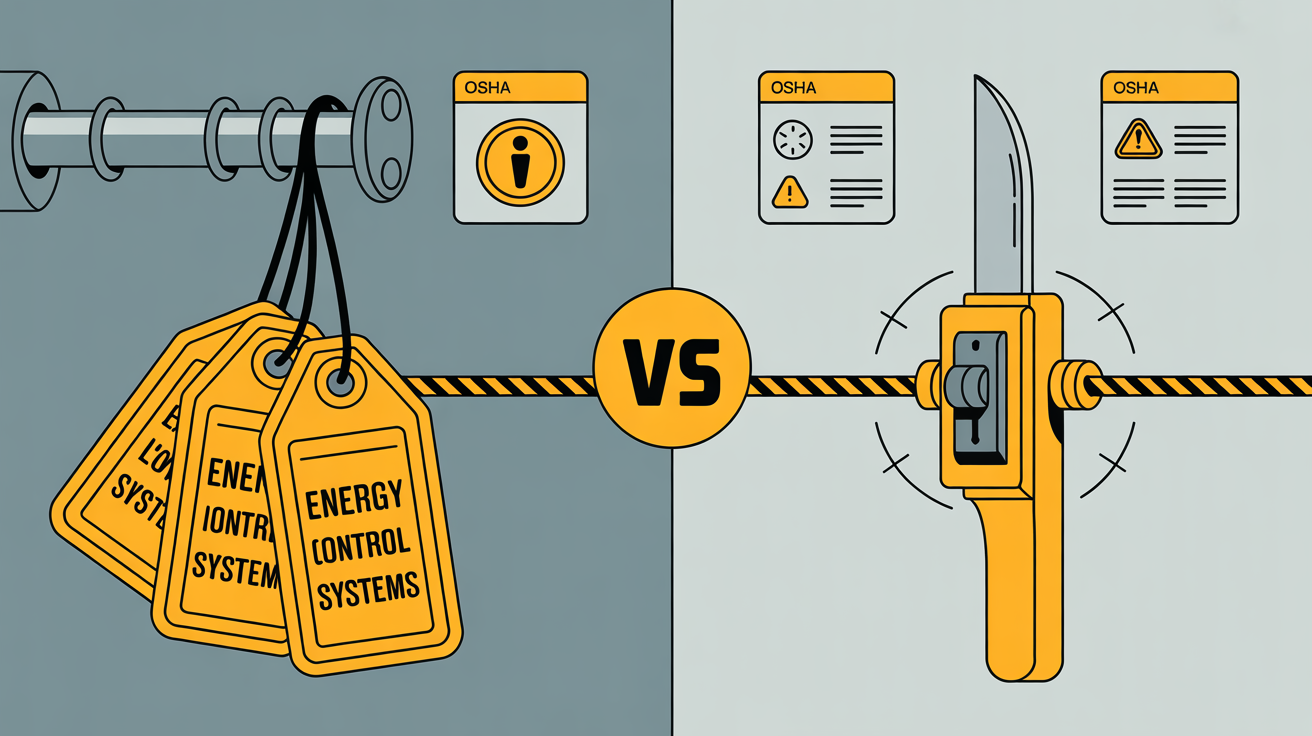
Full employee protection is the regulatory requirement that tagout-only programs must meet before OSHA permits their use. Tags provide warnings; locks provide barriers. OSHA demands proof that a warning-based system achieves equivalent protection to a physical barrier.
Tagout-only programs require demonstrating “full employee protection” through documented compensating measures. Facilities can’t meet this burden without documented additional safeguards specifying how each piece of tagout-only equipment achieves complete employee safety.
The proof must be specific to each machine. Acceptable compensating measures include removing an isolating circuit element, blocking a controlling switch, opening an extra disconnecting device, or removing a valve handle. Generic statements about “extra precautions” fail audits every time.
Employees working under tagout protection need machine-specific written procedures. Authorized employees performing the tagout must know which compensating measures apply — and records must prove that training occurred. The documentation burden for tagout only program compliance exceeds lockout requirements precisely because tags lack physical restraint capability.
OSHA requires specific training content for tagout that lockout programs don’t need. Employees must understand that tags are warning devices only with no physical restraint, that tags may evoke a false sense of security, and that tags can be bypassed or removed by anyone — unlike locks requiring specific keys. Failure to document this “tagout limitations” training element is a frequent citation trigger.
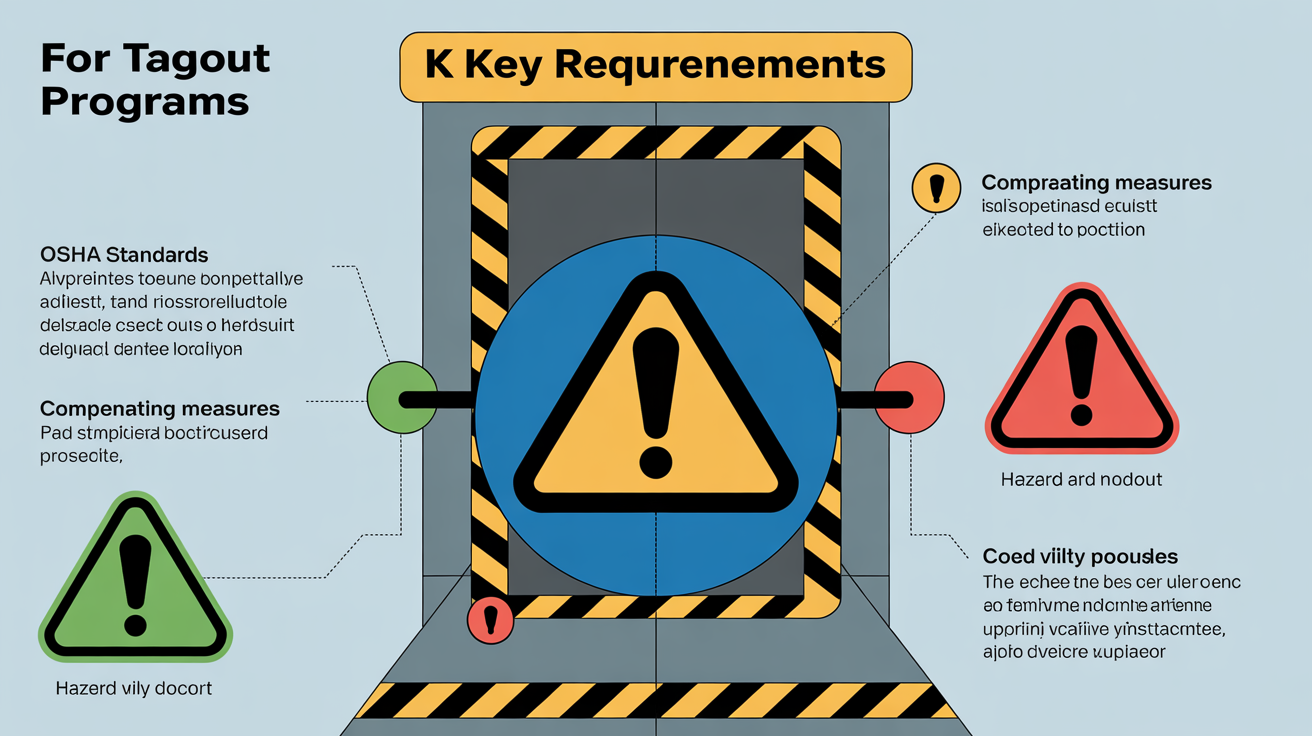
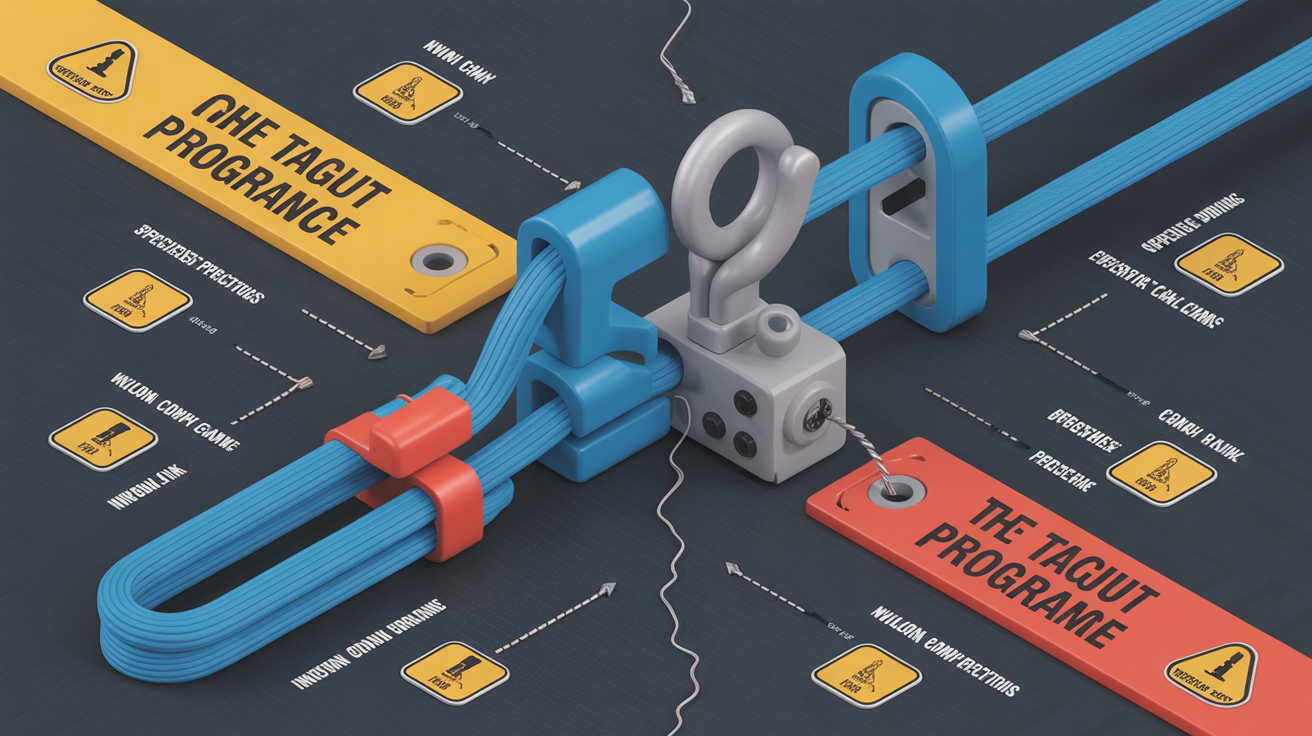
OSHA imposes specific hardware and training requirements on tagout only program implementations. Tag attachments must have minimum 50-pound unlocking strength to prevent inadvertent removal during servicing operations.
50-pound minimum requirement: Tag attachments must have minimum 50-pound unlocking strength per 29 CFR 1910.147(c)(5)(ii)(C)(2). This requirement matches the published strength of standard 1/4-inch industrial nylon ties.
Office zip-ties fail: Standard office zip-ties (18-35 lb.) fail OSHA requirements because they have tensile strength ratings between 18 and 35 pounds — well below the OSHA minimum.
Industrial-grade specification: Facilities must procure industrial nylon cable ties with tensile strength ratings at or above 50 pounds. Non-reusable, self-locking, and attachable by hand are additional requirements.
| Tag Attachment Type | Typical Strength | OSHA Compliant |
|---|---|---|
| Industrial 1/4″ nylon cable tie | 75+ lb. | Yes |
| Standard office zip-tie | 18-35 lb. | No |
| Self-locking nylon straps (rated) | 50-100 lb. | Yes (if rated) |
| String or wire | Varies | No |
| Reusable cable ties | N/A | No (reusable fails) |
Tags must survive the work environment without degradation. OSHA specifies that tagout devices must withstand exposure to weather, wet/damp locations, and chemical environments for the maximum expected duration.
| Compliant Tag Materials | Non-Compliant Tag Materials |
|---|---|
| Laminated polyester | Standard paper |
| UV-resistant ink | Standard ink |
| Chemical-resistant coating | Uncoated cardstock |
| Pre-printed standardized format | Hand-written text |
Tags must be readable by all employees in the area — not most, all. Multilingual workforces require multilingual tags or symbol-based communication. Unlike lockout devices that physically prevent operation regardless of language comprehension, tags function as warnings only, making universal understanding essential for tagout only program effectiveness.
OSHA training violations ranked #2 among LOTO citations in FY2024, with 491 documented violations. Tagout only program deficiencies contributed disproportionately because these programs require training content that lockout procedures don’t.
Facilities can’t meet the compliance burden without documented additional safeguards — yet most assume a tag alone provides adequate protection. Common failure patterns include:
OSHA requires more rigorous periodic inspection for tagout programs. Lockout inspections review responsibilities with authorized employees only. Tagout inspections must include both authorized employees and affected employees — a critical distinction facilities frequently miss. Annual inspection documentation must identify all employees included, and tagout programs expand that list significantly.
Using office supply zip-ties instead of industrial nylon cable ties with documented tensile ratings creates automatic citations. Gate valve lockouts and similar retrofit devices exist for most “tagout-only” equipment — OSHA expects facilities to use them rather than maintain tagout only program procedures unnecessarily.
Non-compliance with tagout only program requirements can result in $16,131 per serious violation. OSHA penalties scale based on violation severity and employer history.
| Violation Category | Base Amount | Escalated Amount | Escalation Trigger |
|---|---|---|---|
| Serious | $16,131 | $16,131 | Per instance |
| Willful | $16,131 | $165,514 | Intentional disregard |
| Repeat | $16,131 | $165,514 | Prior citation within 5 years |
| Failure to Abate | $16,131/day | Uncapped | Past deadline |
The 491 documented violations in FY2024 training citations alone represent millions in aggregate penalties. OSHA cites each deficiency separately — a facility with five machines lacking proper tagout only program documentation faces five violations, not one.
Beyond direct penalties, violations trigger operational shutdowns during investigations, increased insurance premiums following citations, mandatory abatement timelines disrupting production schedules, and enhanced scrutiny on subsequent inspections. The real cost of non-compliance extends far beyond the fine amount.
Converting tagout-only equipment to lockout-capable often costs less than a single citation. Gate valve lockouts run $15-40. Circuit breaker lockouts cost $5-20. The investment in proper lockout devices eliminates the tagout only program requirement entirely — along with its documentation burden and enhanced inspection scrutiny.
Equipment installed after January 2, 1990 must accept lockout devices by design. Facilities running tagout only program procedures on post-1990 equipment face willful violation exposure when OSHA determines retrofit was required. The $165,514 willful penalty makes even expensive retrofits economically rational.