Physical Address
304 North Cardinal St.
Dorchester Center, MA 02124
Physical Address
304 North Cardinal St.
Dorchester Center, MA 02124


Lockout Tagout padlocks are safety devices that prevent unauthorized equipment activation during maintenance, protecting workers from injuries and fatalities. They are the physical enforcement layer of your energy control program—and OSHA treats them as non-negotiable hardware for compliance.
730 companies cited for LOTO violations in fy2024 learned this the hard way. Hardware failures accounted for a significant share of those citations, and the root cause was almost always the same: facilities grabbed whatever lock was cheapest rather than selecting padlocks that meet OSHA’s four regulatory requirements.
The $10 difference between a compliant safety padlock and a hardware-store lock doesn’t seem significant—until you’re facing a $16,131 citation cost or worse. LOTO violations contribute to 120 fatalities and 50,000 injuries annually. Companies face penalties of $127 million in enforcement costs each year. At $15 per lock, compliant lockout devices are the cheapest insurance you’ll ever buy.
Lockout Tagout padlocks are specialized safety devices designed to physically secure energy isolating devices in the off position during equipment servicing. Unlike standard padlocks from a hardware store, LOTO locks must meet four specific regulatory criteria under OSHA’s energy control program requirements.
A lockout tagout padlock serves one function: ensuring that only the authorized employee who applied the lock can remove it. This description of Lockout Tagout padlocks matters because the lock creates exclusive control over hazardous energy—electrical, hydraulic, pneumatic, or mechanical.
| Feature | LOTO Padlock | Standard Padlock |
|---|---|---|
| Shackle Strength | 6mm+ hardened steel (requires bolt cutters) | Thin shackle (breakable by hand) |
| Color Coding | Standardized red facility-wide | Random colors |
| Identification | Employee name/photo engraved | Anonymous |
| Durability | Brass/stainless for industrial environments | Chrome-plated (rusts in wet areas) |
The energy control program at your facility must specify which locks are approved for LOTO. Random personal locks from toolboxes fail audits. Every lock in your LOTO kit needs documentation proving it meets OSHA’s durable, standardized, substantial, and identifiable requirements.
Lockout tagout padlocks prevent unauthorized equipment activation by creating a physical barrier between stored energy and workers. During maintenance, unauthorized equipment activation occurs when someone restarts a machine without verifying that all personnel are clear—and the consequences are catastrophic.
The functionality of Lockout Tagout padlocks works through a simple mechanism: when an authorized employee applies a lock to a circuit breaker, valve, or disconnect switch, no one else can energize that equipment. The lock physically blocks the energy isolating device from moving to the “on” position.
Why procedures alone aren’t enough:
“Tagout device attachment means shall be… non-releasable with a minimum unlocking strength of no less than 50 pounds.”
— 29 CFR 1910.147(c)(5)(ii)(C)
Shop Floor Translation: Tags warn. Locks prevent. OSHA knows the difference—and so do the families of workers who died because someone trusted a warning sign instead of a padlock. During service and repair operations, the only reliable protection against uncontrolled start-up is metal preventing metal from moving.
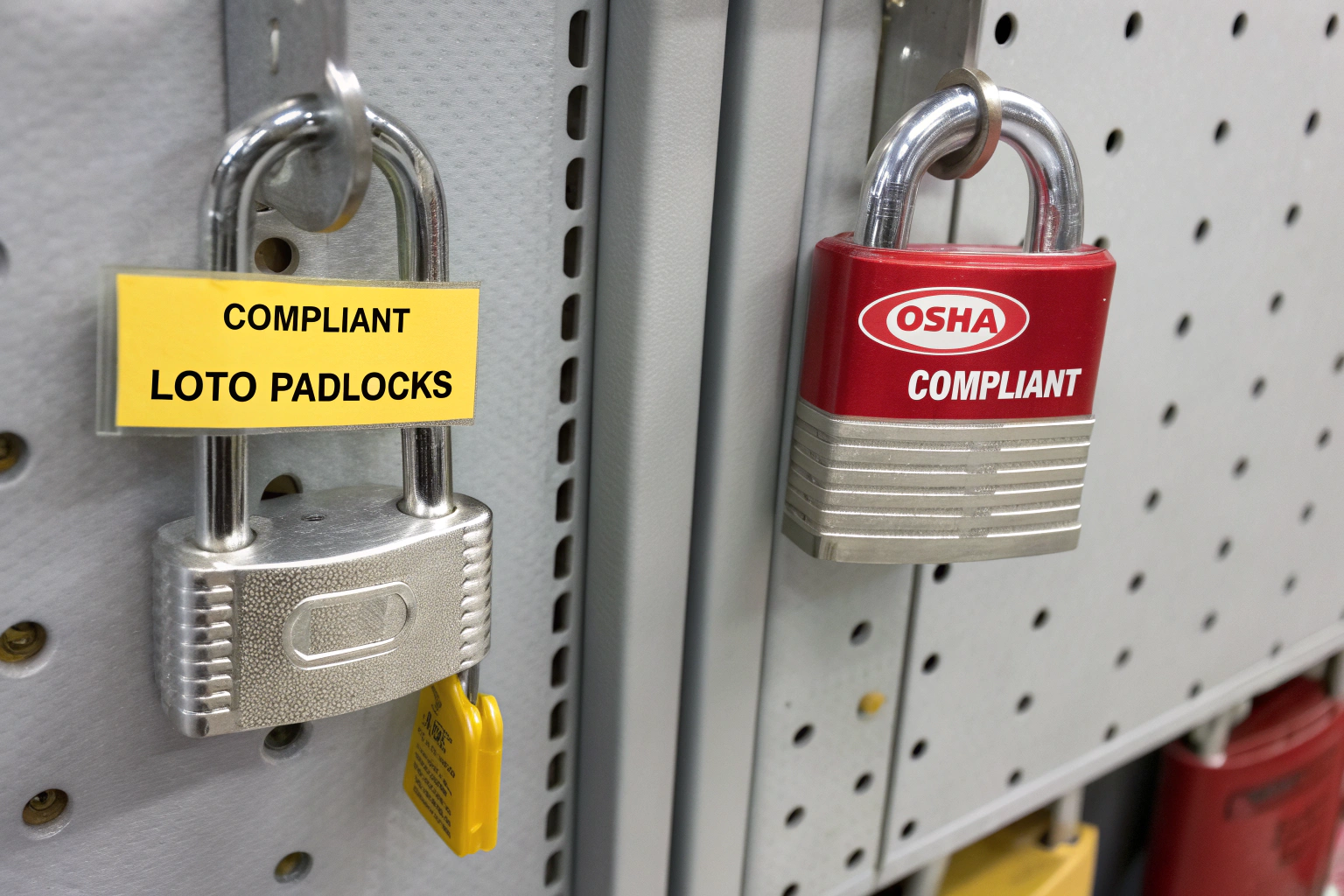
Common mistakes lead to LOTO violations at an alarming rate. 730 companies cited for LOTO violations in FY2024 made errors that were entirely preventable—and most weren’t complex failures. They were obvious gaps that any competent safety professional should have caught.
The 5 common mistakes that generate the most citations:
Using non-compliant locks — Office-supply padlocks, combination locks, and unmarked hardware store locks fail OSHA’s “substantial” requirement. If it doesn’t require bolt cutters or metal cutting tools to remove, it’s not compliant.
Skipping machine-specific procedures — Generic one-size-fits-all lockout procedures triggered 730 citations last year. Each piece of equipment needs its own documented procedure identifying all energy sources.
Confusing training with annual inspection — 362 citations came from facilities that thought “we do annual LOTO training” satisfied the inspection requirement under 29 CFR 1910.147(c)(6). It doesn’t. Inspection requires observation of employees actually performing procedures.
Anonymous or shared locks — When an employer issues the same lock to multiple workers, or uses locks without employee identification, they’ve violated the identifiable requirement. One person, one lock, one key.
Ignoring stored energy — Hydraulic pressure, spring tension, elevated components, and capacitor discharge kill workers who locked out the main power but forgot about residual energy.
These safety protocol failures aren’t theoretical. They’re documented in OSHA’s enforcement database, and they repeat year after year at different facilities making identical mistakes.
AUDIT TRAP: Your lockout devices must identify the applying employee. A lock engraved “Maintenance Dept” instead of “J. Martinez” is a citation waiting to happen.
LOTO violations cost $16,131 per violation for serious citations—and that’s just the starting point. The financial impact of Lockout Tagout violations extends far beyond the initial fine into operational disruption, legal exposure, and reputational damage.
| Violation Type | Maximum Penalty | Typical Scenario |
|---|---|---|
| Serious | $16,131 citation cost | Missing machine-specific procedures |
| Willful/Repeat | $165,514 per violation | Prior warnings ignored |
| Per-Instance | Multiplied by each affected worker | Group lockout failures |
Companies face penalties of $127 million in enforcement costs annually across all LOTO citations. But fines represent only 20% of the true cost. The hidden expenses include:
The math is brutal: a facility with 10 citation-worthy violations faces $161,310 in penalties before counting any of the operational costs. Compare that to $15 per lock for compliant lockout devices and the $10 difference between a compliant safety padlock and a hardware-store lock.
Facilities that view LOTO hardware as an expense rather than insurance are making a $127 million mistake collectively. The financial burden falls hardest on companies that tried to save money on the front end.
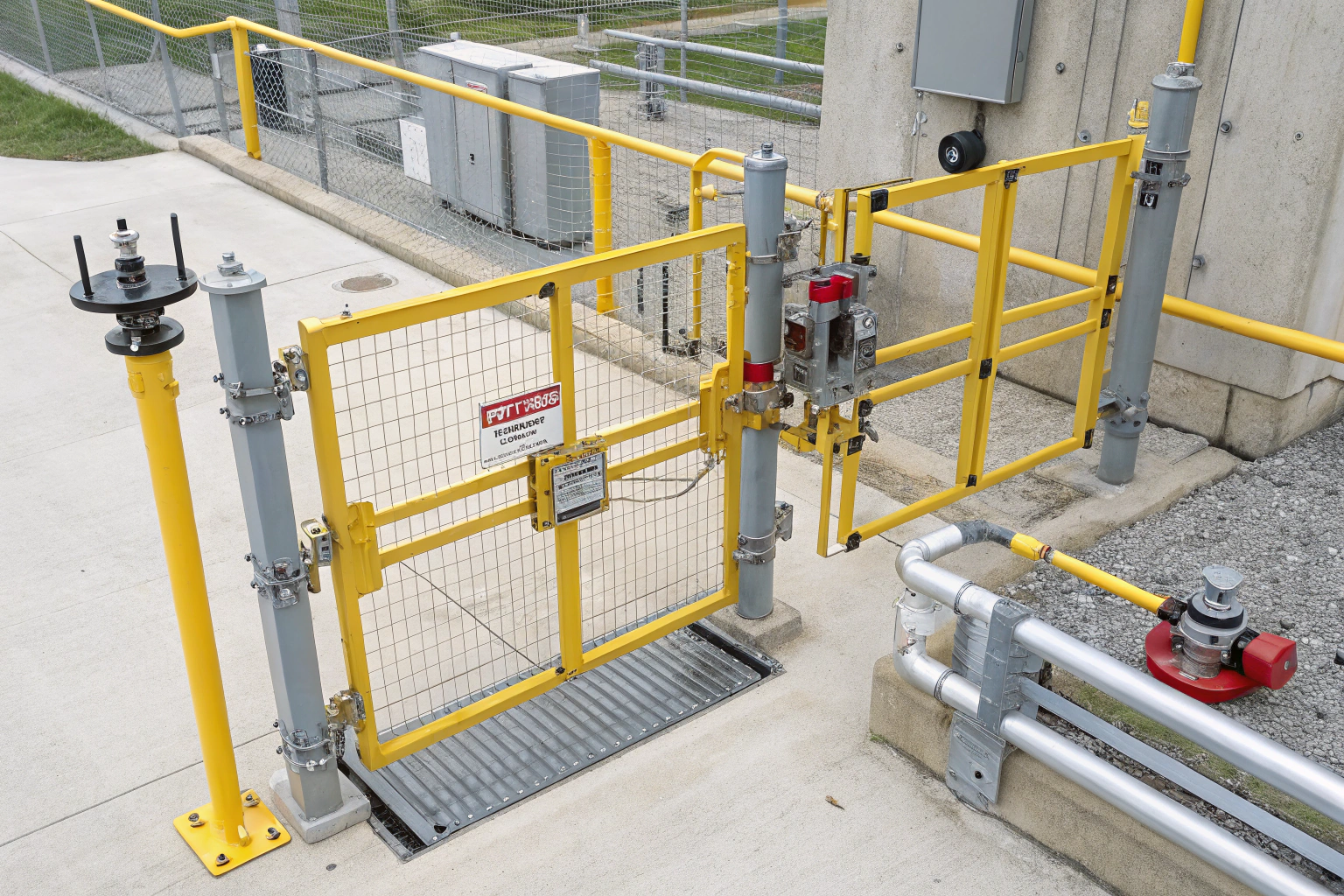
OSHA requires an energy control program under 29 cfr 1910.147, and the regulatory requirements for lockout tagout programs are specific, documented, and auditable. This isn’t guidance—it’s law.
The standard breaks into three pillars:
1. energy control procedures — 29 CFR 1910.147(c)(4)
“Procedures shall be developed, documented and utilized for the control of potentially hazardous energy when employees are engaged in the activities covered by this section.”
— 29 CFR 1910.147(c)(4)(i)
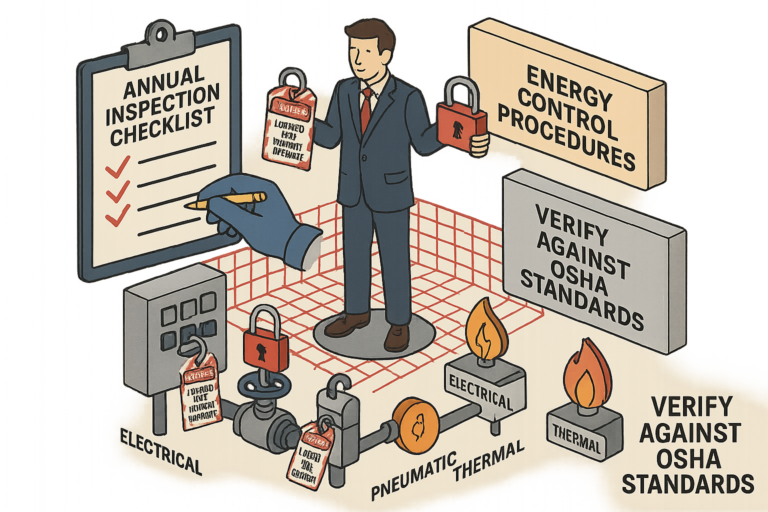
Shop Floor Translation: You need a written, machine-specific procedure for EVERY piece of equipment. Lockout Tagout procedures must include specific steps for shutdown, isolation, lockout device application, stored energy release, and verification.
2. Periodic Inspections — 29 CFR 1910.147(c)(6)
The regulation at 29 CFR 1910.147(c)(6) mandates annual inspections of each energy control procedure by an authorized employee other than the one using the procedure. This hierarchy of compliance verification ensures procedures stay current and workers maintain competency.
3. Training and Communication — 29 CFR 1910.147(c)(7)
OSHA defines three employee classifications requiring different training levels:
| Employee Type | Training Required |
|---|---|
| Authorized | Full hazard recognition, isolation methods, procedure execution |
| Affected | Purpose of LOTO, prohibition against restarting |
| Other | Awareness that LOTO exists and is in use |
Your energy control program must address all three groups. The LOTO program requires documented training with dates, names, and content covered. An employer who cannot produce these records during an audit receives citations.

Effective Lockout Tagout procedures must include training for authorized employees as the foundation—but implementation steps for Lockout Tagout procedures go beyond classroom instruction. Here’s the sequence that survives audits:
Step 1: Conduct an Energy Source Audit
Walk every piece of equipment in your facility. Document every energy type: electrical, hydraulic, pneumatic, mechanical, thermal, chemical, gravitational. This inventory drives everything else. Training is essential for preventing unauthorized activation, but only if workers know what they’re locking out.
Step 2: Develop Machine-Specific Written Procedures
Each procedure must identify:
Step 3: Select and Standardize Hardware
Your lockout devices must be durable, standardized, substantial, and identifiable. Select one color for LOTO (red is industry standard). Assign personal locks to each authorized employee. Stock your LOTO kit with enough devices for group lockout scenarios.
Step 4: Train by Classification
Authorized employees receive full training on procedure execution. Affected employees learn recognition and restrictions. Training programs must document dates, attendees, and topics covered for each classification.
Step 5: Establish Inspection Protocols
Annual inspection of each procedure—not just annual training—is mandatory. The inspector must be an authorized employee other than the one being observed. Certification records must identify the machine, date, employees, and inspector.
Step 6: Document Everything
OSHA audits are paper audits. Without documentation proving each step occurred, you failed compliance regardless of actual practice. Employee training records, procedure documents, inspection certifications, and lock assignment logs must be retrievable on demand.
A: Lockout Tagout padlocks are specialized safety devices that physically secure energy isolating devices during maintenance. They must meet OSHA’s four requirements: durable, standardized, substantial, and identifiable.
A: LOTO padlocks prevent unauthorized equipment activation by physically blocking energy isolating devices from being moved to the “on” position during service and maintenance activities.
A: Common mistakes include using non-compliant locks, relying on generic procedures instead of machine-specific ones, confusing training with annual inspection, using anonymous locks, and ignoring stored energy sources.
A: LOTO violations cost $16,131 per serious citation, with willful or repeat violations reaching $165,514. Companies face $127 million in total enforcement costs annually.
A: OSHA’s 29 CFR 1910.147 requires a written energy control program with machine-specific procedures, periodic inspections under 29 CFR 1910.147(c)(6), and documented training for three employee classifications.
A: Implementation requires conducting an energy source audit, developing machine-specific procedures, standardizing hardware, training employees by classification, establishing inspection protocols, and documenting everything.