Physical Address
304 North Cardinal St.
Dorchester Center, MA 02124
Physical Address
304 North Cardinal St.
Dorchester Center, MA 02124
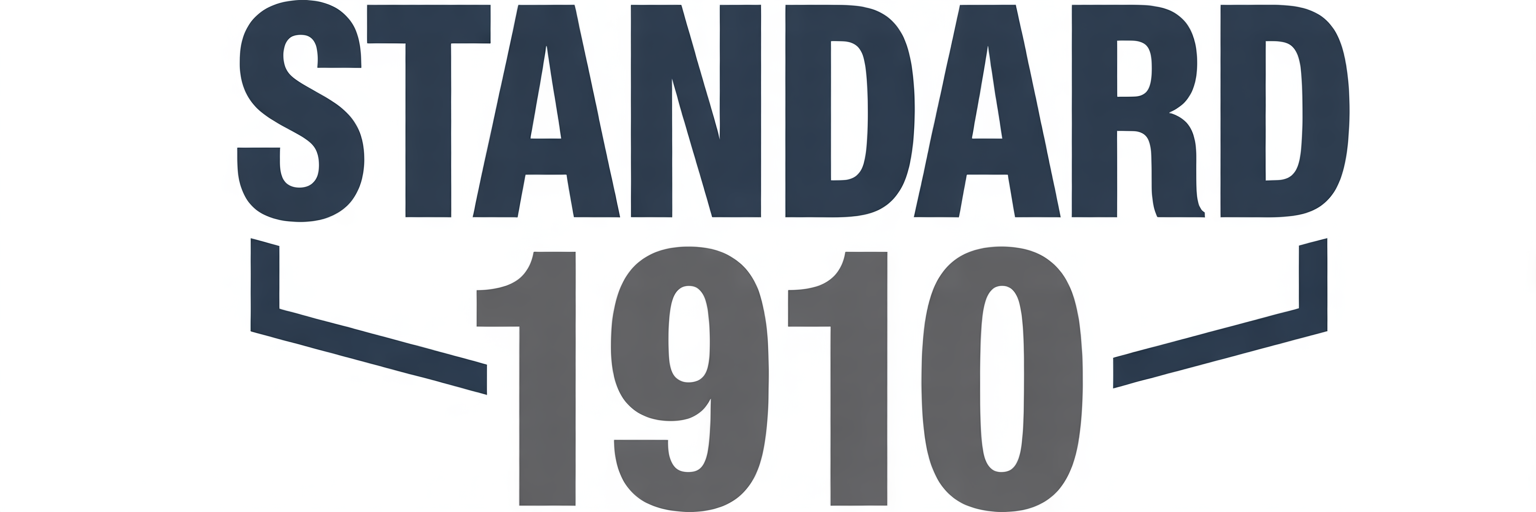
Lockout Hasp Selection is critical for ensuring worker safety during maintenance operations. Choosing the right hasp can prevent regulatory citations and protect employees.
At a Glance:
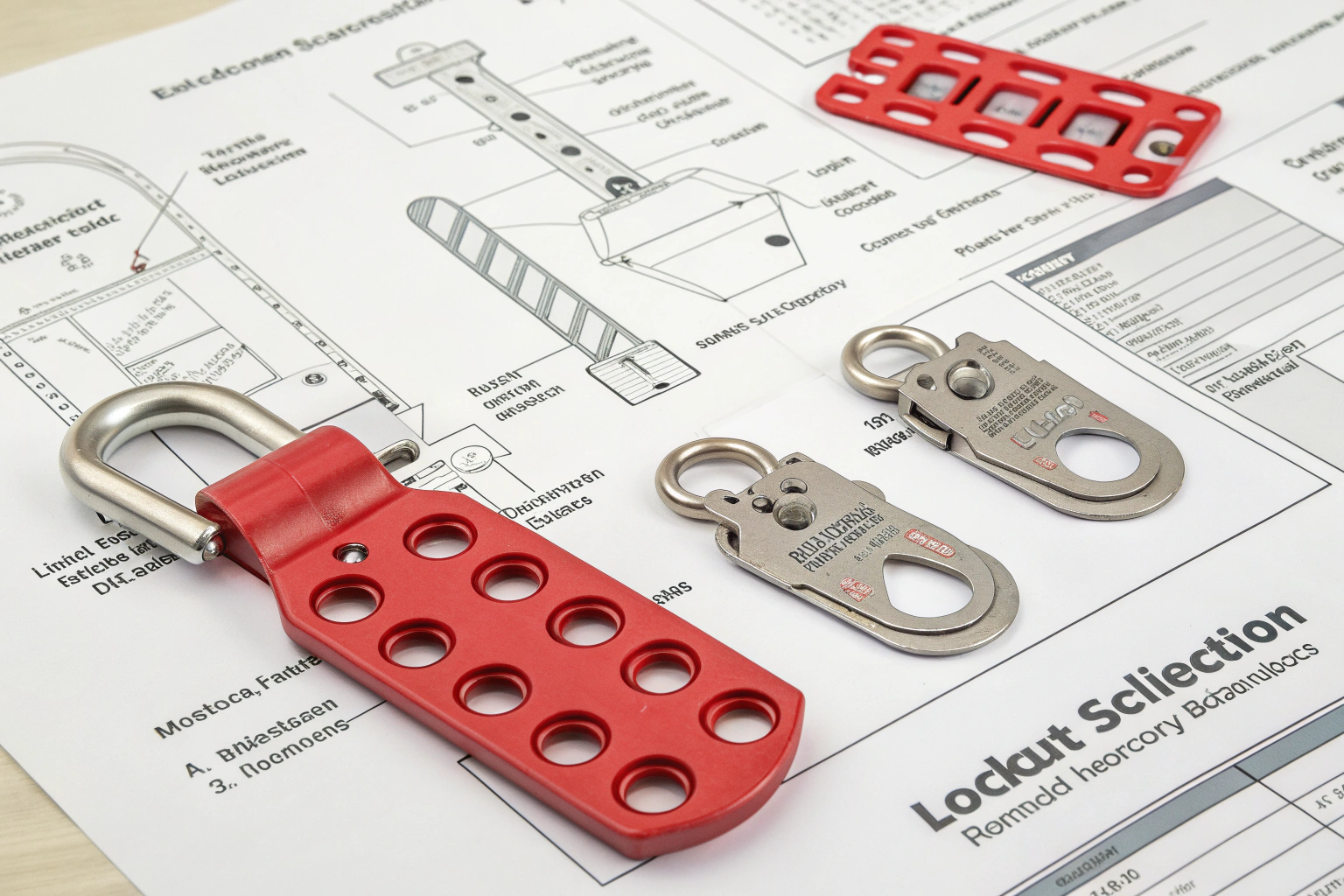
Hasp Selection defines the process of choosing a lockout device that secures an energy isolation point during multi-worker maintenance operations.
Lockout Hasp Selection — The systematic evaluation of multi-lock hardware based on jaw capacity, shackle hole count, material durability, and crew size requirements for group lockout scenarios.
Most guides describe Lockout Selection as simple procurement. This requires deeper analysis: a hasp that accommodates six padlocks fails an 8-person crew. A hasp with a 1-inch jaw opening cannot secure oversized breaker handles. These specification mismatches create compliance gaps that generic purchasing ignores.
What lockout hasp selection actually evaluates:
Lockout Selection directly impacts worker safety because undersized hardware forces dangerous compromises. Workers assume protection exists when the hasp appears installed—but a hasp that cannot accommodate every crew member’s lock leaves workers exposed to unexpected energization.
Improper selection can lead to regulatory citations and can jeopardize worker safety through inadequate energy isolation during multi-person maintenance.
Improper Lockout Hasp Selection — Choosing hardware that fails to meet crew size requirements, environmental conditions, or OSHA-mandated specifications for group lockout operations.
Regulatory Citations — Documented non-compliance with 29 CFR 1910.147 hardware requirements resulting in OSHA enforcement action against facilities.
OSHA serious violations carry fines up to $16,131 per instance. Facilities face these penalties when inspectors discover hasps that cannot accommodate all workers on a maintenance crew. The consequences of improper selection extend beyond fines—they include operational shutdowns and increased audit scrutiny.
| Consequence Type | Impact on Facilities |
|---|---|
| Worker Exposure | Unauthorized energization during multi-person service |
| Citation Trigger | Hardware fails to secure all authorized employee locks |
| Operational Disruption | Stop-work orders until compliant hasps installed |
| Pattern Violation | Multiple deficient hasps compound penalty calculations |
Improper selection can jeopardize worker safety when a hasp accommodates fewer locks than workers assigned. An 8-person crew using a 6-hole hasp forces two workers to either share lock positions or work unprotected. Both scenarios violate exclusive control requirements.
OSHA cited 289 companies for energy control program violations in FY2024. Improper selection can lead to regulatory citations that compound when inspectors discover pattern deficiencies across multiple energy isolation points within the same facility.
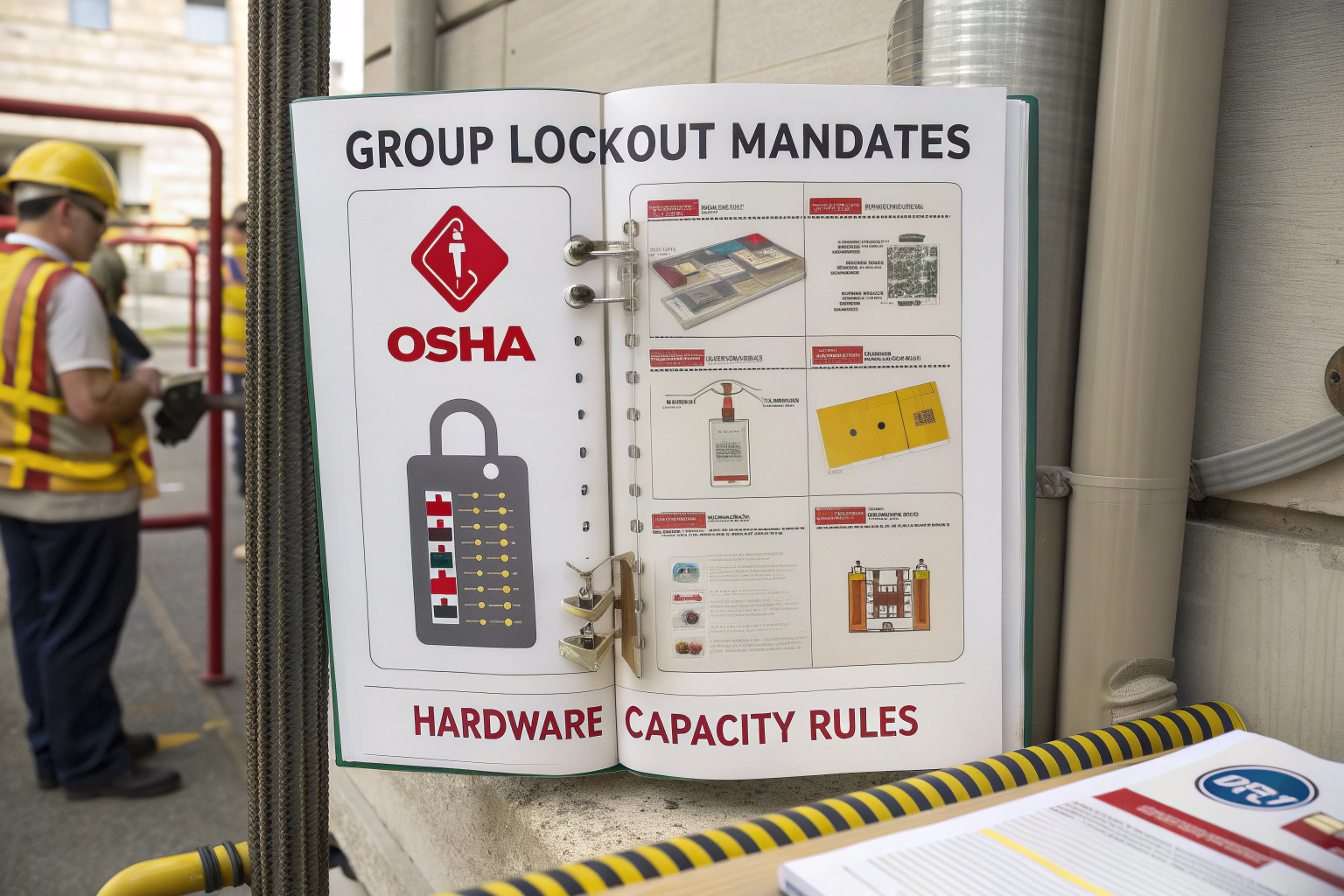
Lockout Hasp Selection is regulated through specific hardware requirements under 29 cfr 1910.147(f)(3), which mandates that group lockout devices accommodate all authorized employees.
OSHA regulates lockout selection to prevent scenarios where workers assume protection but hardware limitations leave gaps. The regulatory framework for lockout selection establishes minimum standards that facilities must meet.
Specific Hardware Requirements Under 29 CFR 1910.147:
Group Lockout Mandate: 29 CFR 1910.147(f)(3) requires each authorized employee to affix a personal lockout device when multiple workers service the same equipment
Hardware Capacity Rule: The lockout hasp must accept sufficient shackle holes for every worker on the crew plus the primary lock securing the energy isolation point
Exclusive Control Standard: Each worker maintains independent lock control—no shared positions during active service
Durability Requirement: Hasp materials must withstand the environment at the specific energy isolation point for expected exposure duration
Regulatory citations follow when hasps fail these standards. A hasp with insufficient shackle holes violates the group lockout mandate. A hasp that deteriorates in outdoor conditions fails the durability requirement.
Application to Lockout Hasp Selection:
Hasp Selection is regulated through these specific hardware requirements to prevent facilities from substituting generic hardware for purpose-built safety devices.
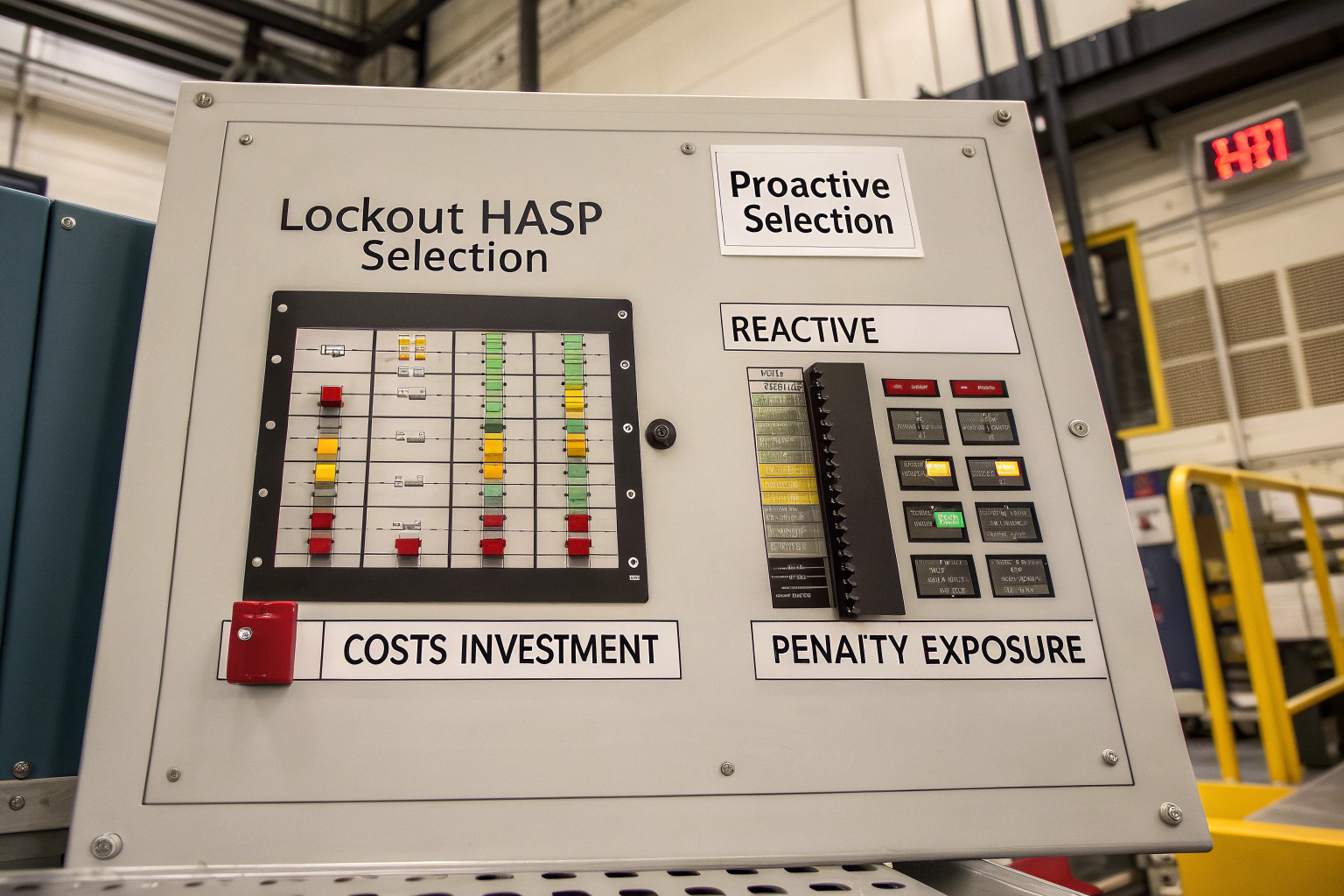
Lockout Hasp Selection has replacement costs of $50-150 per compliant unit, while improper selection generates penalty exposure that compounds across every non-compliant installation.
| Cost Category | Proactive Selection | Improper Lockout Hasp Selection |
|---|---|---|
| Hardware Investment | $50-150 replacement costs per hasp | Same initial cost, plus emergency replacement |
| Penalty Exposure | $0 | Up to $16,131 per serious violation |
| Operational Impact | Planned procurement cycle | Stop-work orders during citation response |
| Audit Frequency | Standard inspection schedule | Priority scheduling for follow-up visits |
Facilities face enforcement consequences that multiply when OSHA identifies pattern violations. A single facility with 20 non-compliant hasps across various energy isolation points faces substantial penalty exposure—before considering willful or repeat classifications.
Cost Analysis for Lockout Hasp Selection:
The costs related to Hasp Selection favor proactive compliance. Facilities that calculate costs purely on hardware price miss the enforcement consequences that make non-compliance dramatically more expensive than compliant procurement.
Improper selection generates hidden costs beyond direct penalties. Post-citation facilities receive priority scheduling for follow-up inspections, creating ongoing administrative burden.
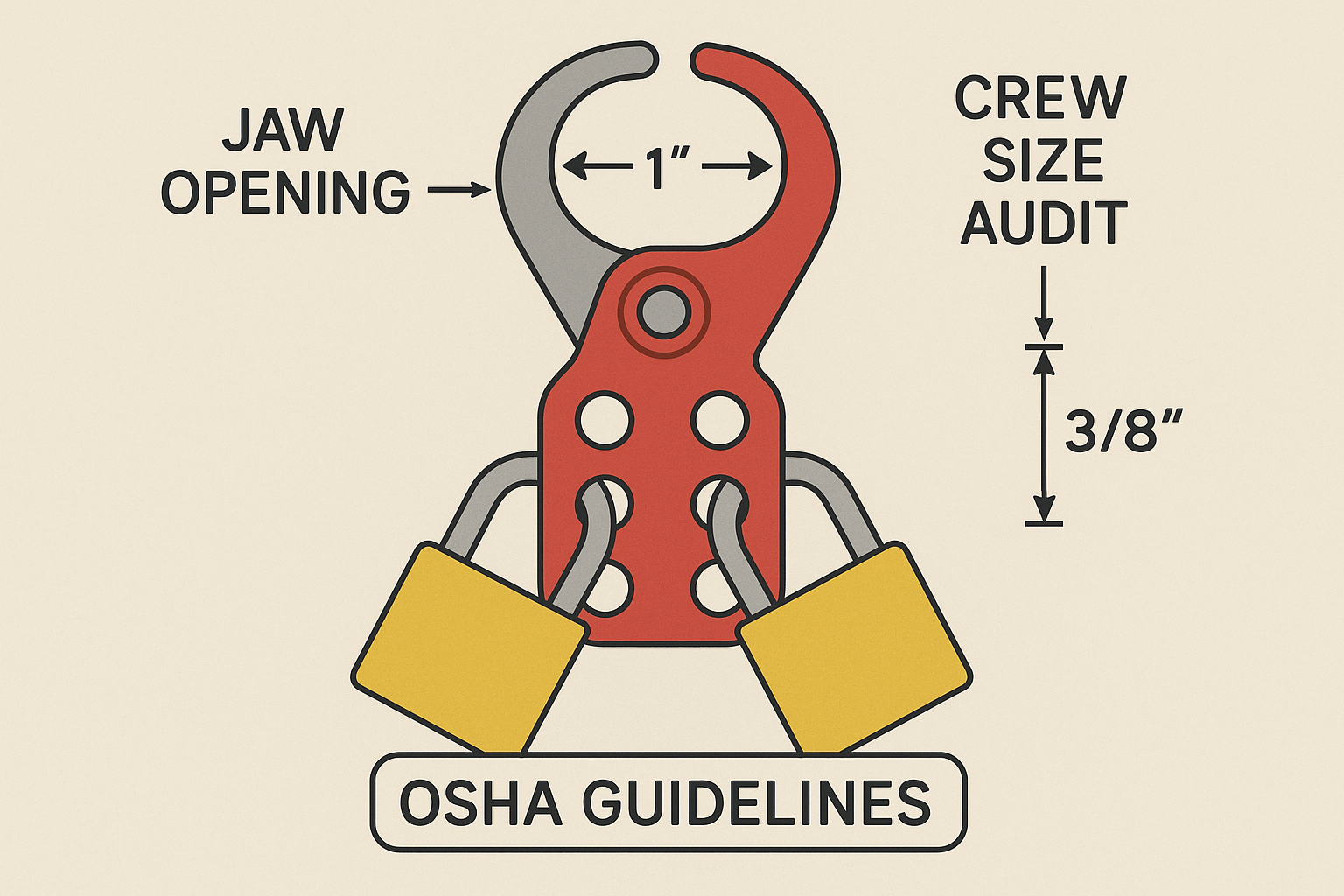
How to choose the right lockout hasp is directly related to compliant operations—matching hardware specifications to operational demands before installation.
Step 1: Audit Crew Sizes per Energy Isolation Point
Document the maximum number of authorized employees who service each machine simultaneously. This selection process determines whether your hardware meets regulatory requirements by establishing minimum shackle hole counts. An energy isolation point serviced by an 8-person crew requires a hasp with at least 9 holes.
Step 2: Measure Jaw Opening Requirements
Each lockout hasp must physically fit the energy isolation point hardware. Measure breaker handles, valve stems, and disconnect switches to establish minimum jaw opening dimensions. A 1-inch jaw opening fails on oversized industrial disconnects.
Step 3: Assess Environmental Conditions
Match hasp material composition to installation environment. Outdoor energy isolation points require weather-resistant materials. Chemical exposure areas demand corrosion-resistant construction.
Step 4: Verify Regulatory Compliance
Confirm selected hasps meet OSHA hardware criteria: durable, standardized, substantial, and identifiable. Cross-reference against 29 cfr 1910.147 requirements before procurement.
Step 5: Document Selection Rationale
Create records linking each lockout hasp to its designated energy isolation point, maximum crew size, and compliance verification. These guidelines for selecting lockout hasps demonstrate systematic evaluation rather than ad hoc purchasing.
How to choose the right lockout hasp is related to compliant operations through this structured evaluation. This selection process determines whether your hardware meets regulatory requirements or creates discoverable compliance gaps.
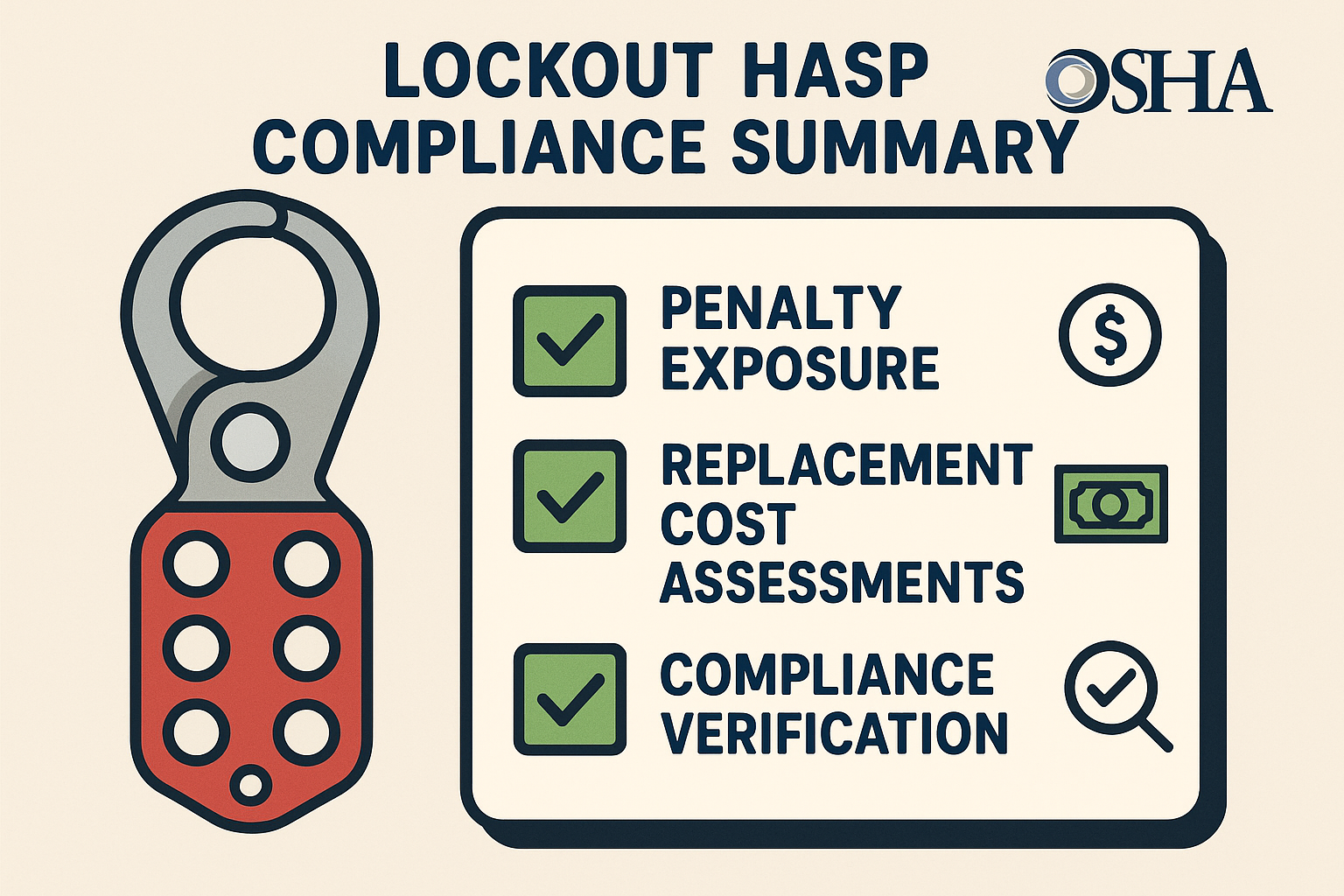
Lockout Hasp Selection separates compliant operations from citation targets. Understanding consequences of improper lockout hasp selection drives proactive hardware evaluation before OSHA inspection reveals deficiencies.
Facilities face enforcement consequences exceeding $16,131 per violation when hardware cannot accommodate all workers or fails durability requirements. Lockout Hasp Selection has replacement costs of $50-150 per unit—a fraction of potential penalty exposure.