Physical Address
304 North Cardinal St.
Dorchester Center, MA 02124
Physical Address
304 North Cardinal St.
Dorchester Center, MA 02124

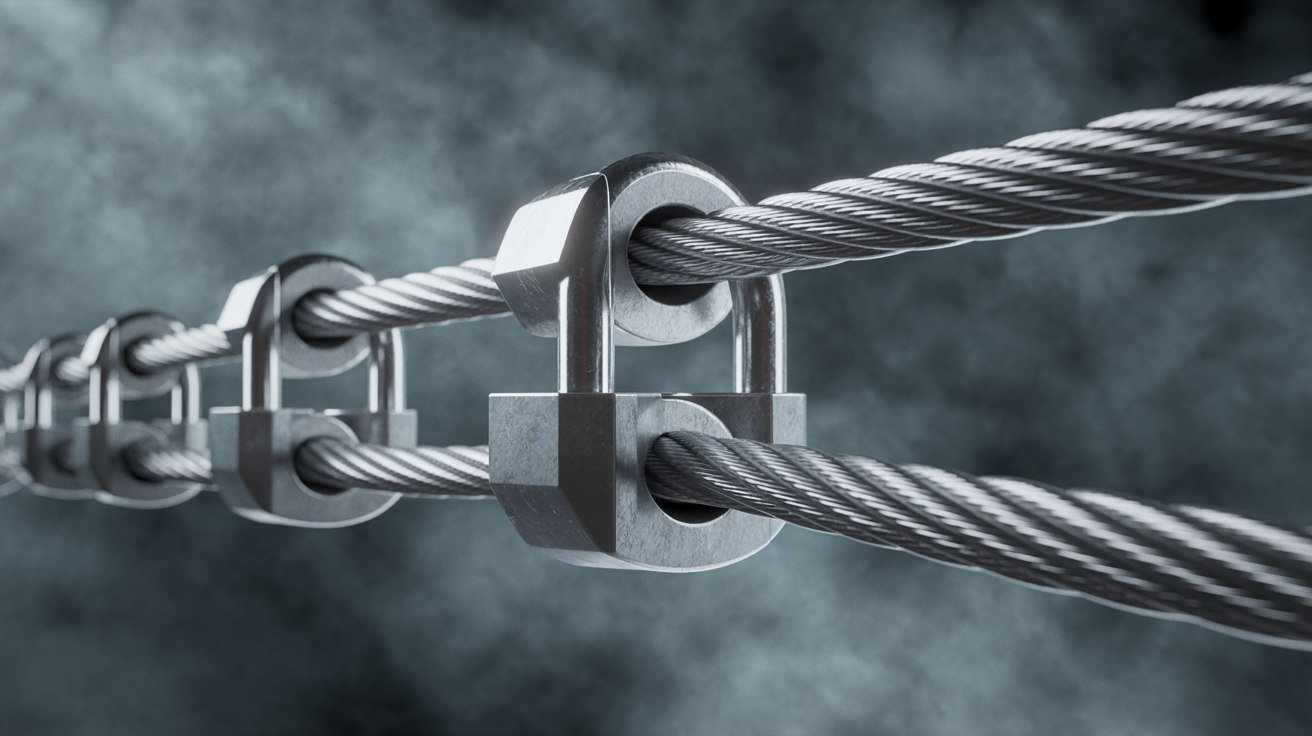
Cable lockout devices are adjustable locking mechanisms that secure energy isolation points during maintenance. Misconceptions about these devices create compliance gaps that trigger OSHA enforcement. A $16,131 citation costs more than decades of proper cable lockout equipment.
Cable lockout devices are adjustable locking mechanisms that secure non-standard equipment where dedicated lockout hardware cannot physically attach. Cable lockout devices use flexible steel cables — typically vinyl-coated galvanized steel — threaded through isolation points and secured with a padlock.
The device category fills a specific gap in lockout/tagout programs. Standard valve lockouts cap at 2.5-3 inch handles. Circuit breaker lockouts fit specific breaker models. Cable lockout devices solve the “everything else” problem through adaptability.
| Equipment Type | Why Cable Required | Dedicated Alternative |
|---|---|---|
| Oversized gate valves | Body exceeds device limit | None available |
| Custom machinery | No standard lockout hole | None available |
| Multiple isolation points | Single cable secures several | Multiple individual devices |
| Confined spaces | Rigid devices won’t fit | None practical |
The cable determines compliance status. Industrial-grade devices use 3/16″ minimum diameter steel cables requiring bolt cutters for removal. Consumer-grade cables from hardware stores measure 1/8″ or thinner — cables thinner than 3/16″ steel can be cut without bolt cutters, failing the standard under OSHA requirements.
Cable lockout devices serve facilities with equipment diversity. Food processing plants with custom conveyors, chemical facilities with oversized valves, manufacturing operations with legacy machinery — all require cable flexibility. The error occurs when facilities treat cables as universal solutions rather than gap-fillers for non-standard equipment.
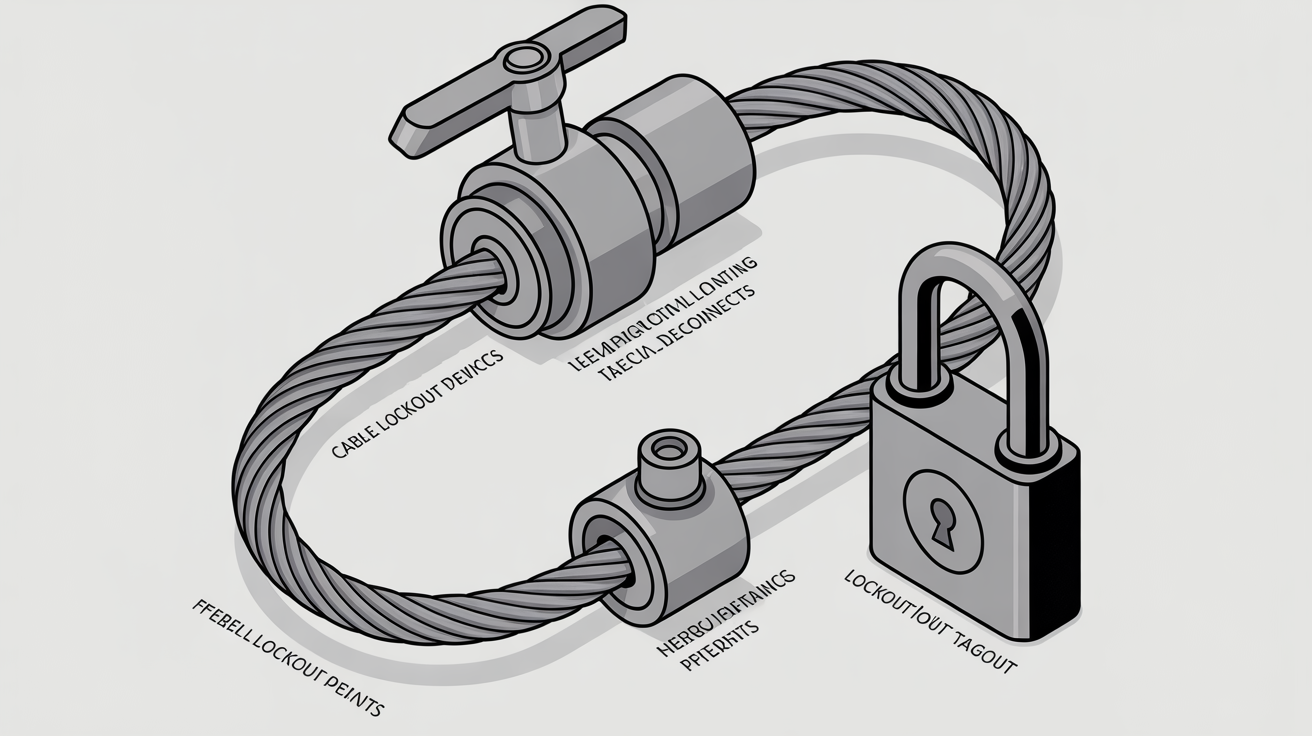
Flexible steel cables secure energy isolation points by physically preventing equipment operation during maintenance. The cable threads through or around the energy isolating device and connects back to a lock mechanism accepting a padlock.
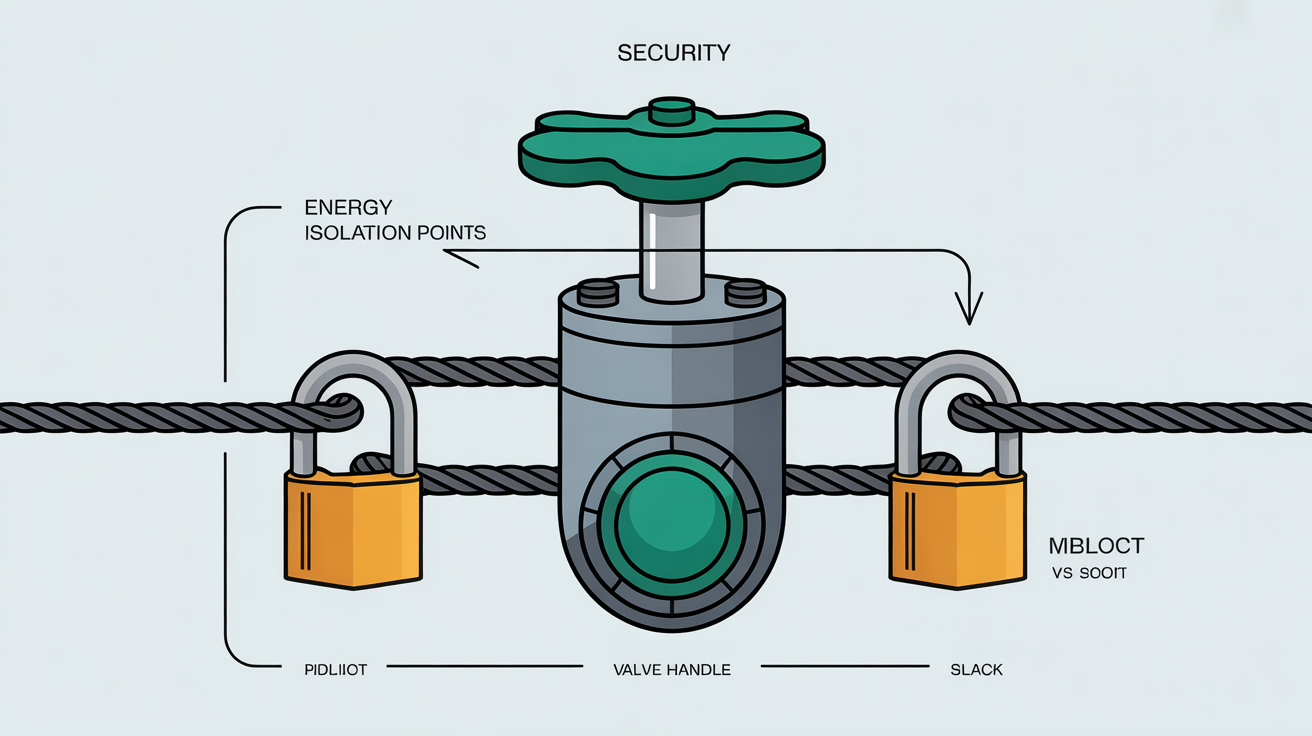
Energy isolation points are physical locations where energy sources connect to equipment: electrical disconnects, valve handles, pneumatic supply lines, hydraulic connections. The cable creates a closed loop around these points. Equipment cannot operate until the lock owner removes the device.
The security mechanism depends on three factors:
Cable security fails when excess length creates slack. A 6-foot cable on a small valve handle allows partial movement. On some valve types, 15-20 degrees of handle rotation permits flow. The cable “secures” the isolation point without preventing operation.
Fixed-length cables require matching cable length to equipment size. Retractable cable lockouts eliminate slack automatically by maintaining tension regardless of isolation point dimensions. Inspectors verify that cables prevent operation — not merely restrict movement.
Three myths create compliance exposure for facilities relying on cable lockout devices. That flexibility creates a dangerous assumption among safety managers who treat cables as universal solutions. A dangerous assumption is “if it fits, it’s compliant” — the belief that threading a cable through any isolation point satisfies OSHA requirements.
Myth 1: Cables work on everything
Myth 2: Longer cable means more versatility
Myth 3: Cable diameter doesn’t matter
Each myth undermines compliance programs. Facilities treating cables as universal solutions face enforcement exposure equivalent to having no lockout program. Flexibility serves specific applications — not blanket deployment across all equipment types.
Using a cable lockout when a dedicated device exists may trigger citations under OSHA’s enforcement framework. OSHA cited 2,443 lockout/tagout violations in FY2024 — hardware selection errors contribute significantly to these enforcement actions.
Cable lockouts must meet OSHA’s ‘substantial’ requirement defined in 29 CFR 1910.147(c)(5)(ii)(C). The standard requires devices “substantial enough to prevent removal without the use of excessive force or unusual techniques, such as with the use of bolt cutters or other metal cutting tools.”
Citation triggers related to cable lockout devices:
| Violation Type | Regulatory Cite | Cable-Related Failure |
|---|---|---|
| Substantial requirement | (c)(5)(ii)(C) | Cable too thin; wire cutters sufficient |
| Hardware selection | (c)(5)(i) | Cable used where dedicated device available |
| Energy control procedure | (c)(4) | No documentation of selection rationale |
The 289 citations recorded under energy control program failures include hardware selection errors. Enforcement focuses on documentation: why did you choose this device? Cable lockouts without written justification for specific equipment create audit exposure. Inspectors carry calipers and verify cable specifications against manufacturer ratings.
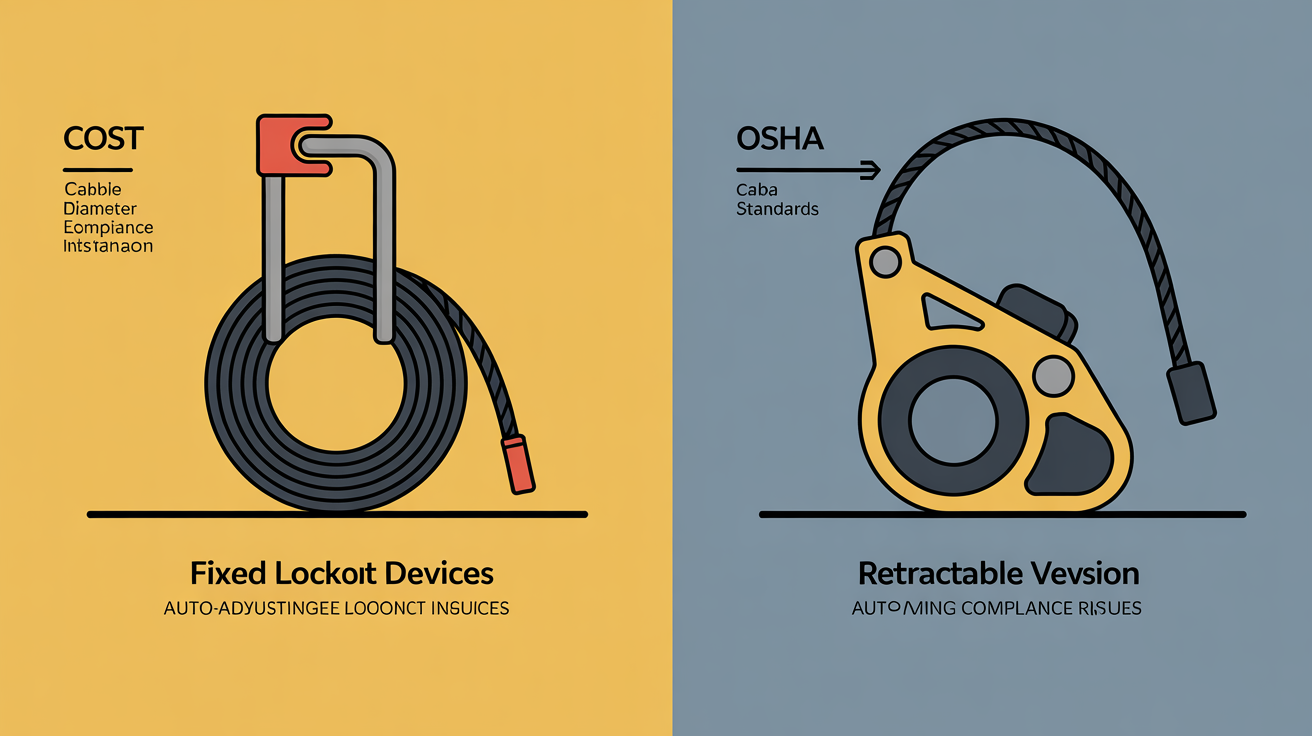
A fixed cable lockout device costs $25 for industrial-grade models meeting OSHA specifications. A retractable cable costs $45 — the auto-adjusting mechanism eliminates slack-related compliance risks. The $15-25 price difference between fixed and retractable models disappears against a $16,131 citation for non-compliance.
| Device Category | Unit Cost | Slack Risk | Best Application |
|---|---|---|---|
| Fixed cable (3ft) | $20-25 | Low if matched | Single equipment type |
| Fixed cable (6ft) | $25-30 | High if mismatched | Large equipment only |
| Retractable cable | $40-50 | Eliminated | Variable equipment sizes |
| Dedicated valve lockout | $15-35 | None | Standard valves |
| Dedicated breaker lockout | $8-20 | None | Circuit breakers |
Cost comparison: Equipment vs. citation
A citation can exceed $16,131 per violation for serious infractions. Willful violations multiply that figure tenfold. The fine itself understates total cost:
Budget allocation by scenario:
| Facility Profile | Recommended Investment | Cost Rationale |
|---|---|---|
| Standard valves only | Dedicated valve lockouts at $15-35 | Superior restraint, lower per-unit cost |
| Mixed equipment sizes | Retractable cables at $45 | Eliminates slack across all applications |
| Oversized/custom equipment | Fixed cables matched to equipment | No dedicated device exists |
| Multiple workers | Hasps plus individual padlocks | Group lockout compliance |
The cost-benefit calculation favors dedicated devices where they exist. A $25 fixed cable on a ball valve — where a $20 dedicated ball valve lockout exists — saves $5 while accepting citation exposure that can exceed $16,131 per violation.
Facilities spending on cable lockout devices for standard equipment create false economy. Cable lockouts fill gaps for non-standard equipment. They should not replace purpose-built hardware because cables happen to fit everything. Inspectors review hardware selection against available alternatives — choosing cables for convenience when dedicated devices exist creates unnecessary compliance risk.