Physical Address
304 North Cardinal St.
Dorchester Center, MA 02124
Physical Address
304 North Cardinal St.
Dorchester Center, MA 02124

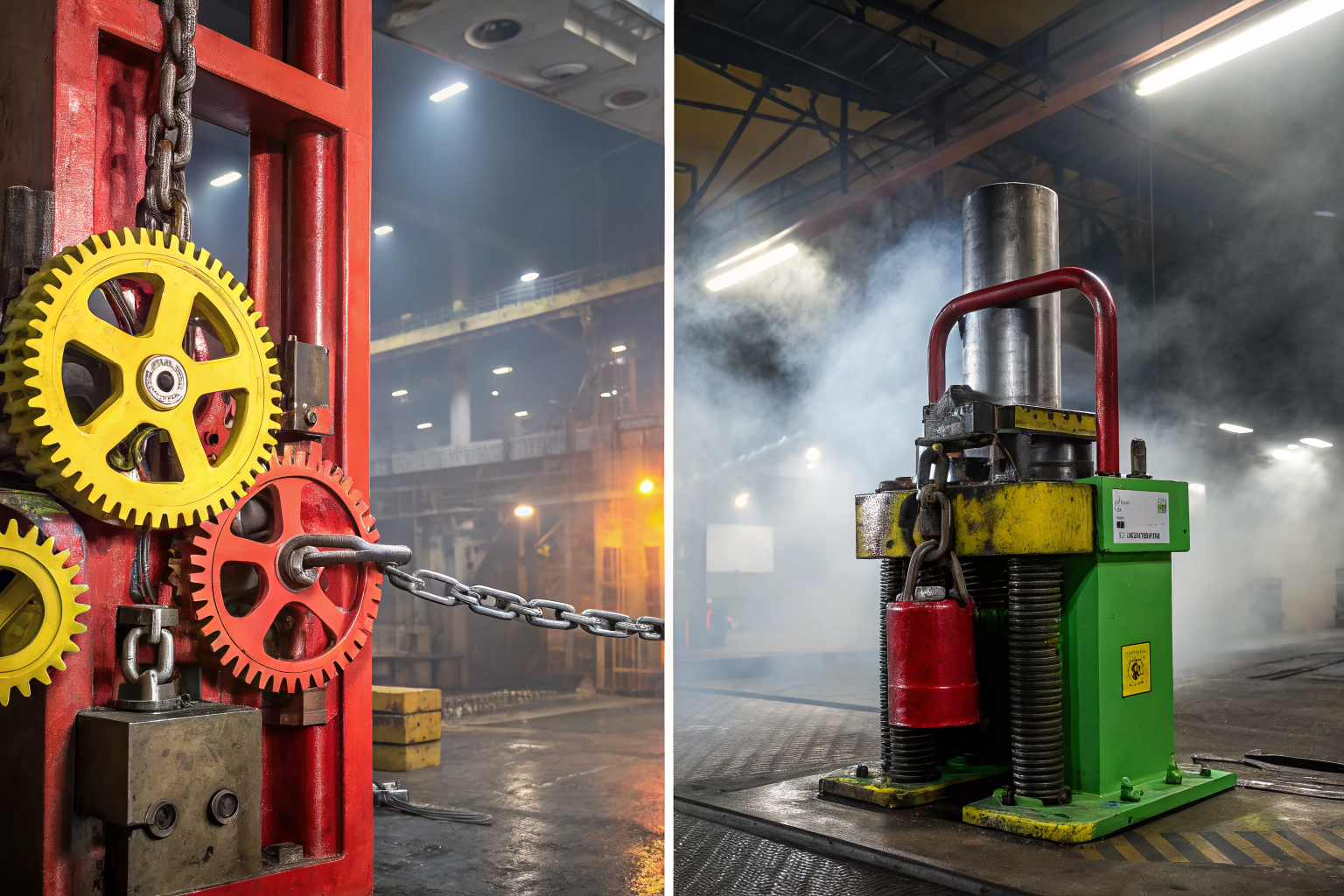
Contractor lockout tagout creates shared liability for facility managers. Proper communication and compliance with OSHA standards are essential to prevent accidents.
Contractor lockout tagout creates a liability trap most facility managers walk into blind.
Outside contractor comes in to service your hydraulic press. They bring their own locks, their own procedures, their own safety training. They get hurt. Whose citation?
Both of yours.
The host employer cannot outsource safety obligations by hiring “qualified” contractors. OSHA holds both parties accountable when energy control failures occur. OSHA shows up and writes citations for both employers.
The regulation that governs this is 1910.147(f)(2). Six words in that subsection create more shared liability than most facility managers realize: “shall inform each other.”
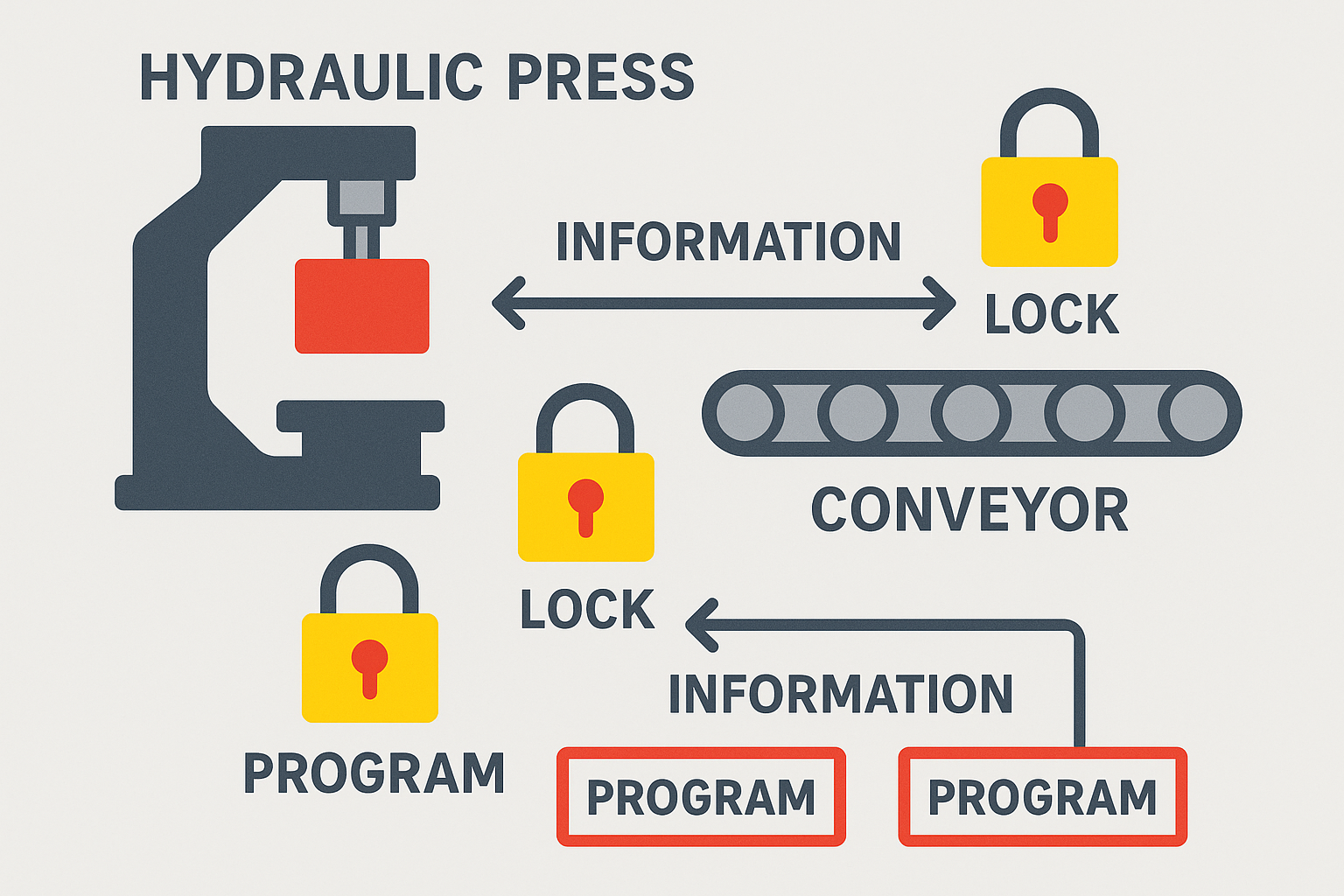
Contractor lockout tagout is the coordination of energy control procedures between a host employer and outside servicing personnel working on the host’s equipment. This arrangement defines shared liability because both employers bear legal responsibility for worker protection during servicing activities.
The standard creates joint responsibility that facility managers cannot delegate away. When contractors service your hydraulic press, your injection molder, or your conveyor system, you remain obligated under 29 CFR 1910.147(f)(2) to ensure proper energy isolation occurs. The contractor’s safety program supplements — but never replaces — your own energy control procedures.
Contractor lockout tagout differs from single-employer lockout in three critical ways:
This collective accountability means facility managers face citations when contractors fail on their premises — even when the host employer wasn’t directly involved in the servicing work. The liability trap springs shut because OSHA interprets “shall inform each other” as an affirmative obligation, not a passive assumption.
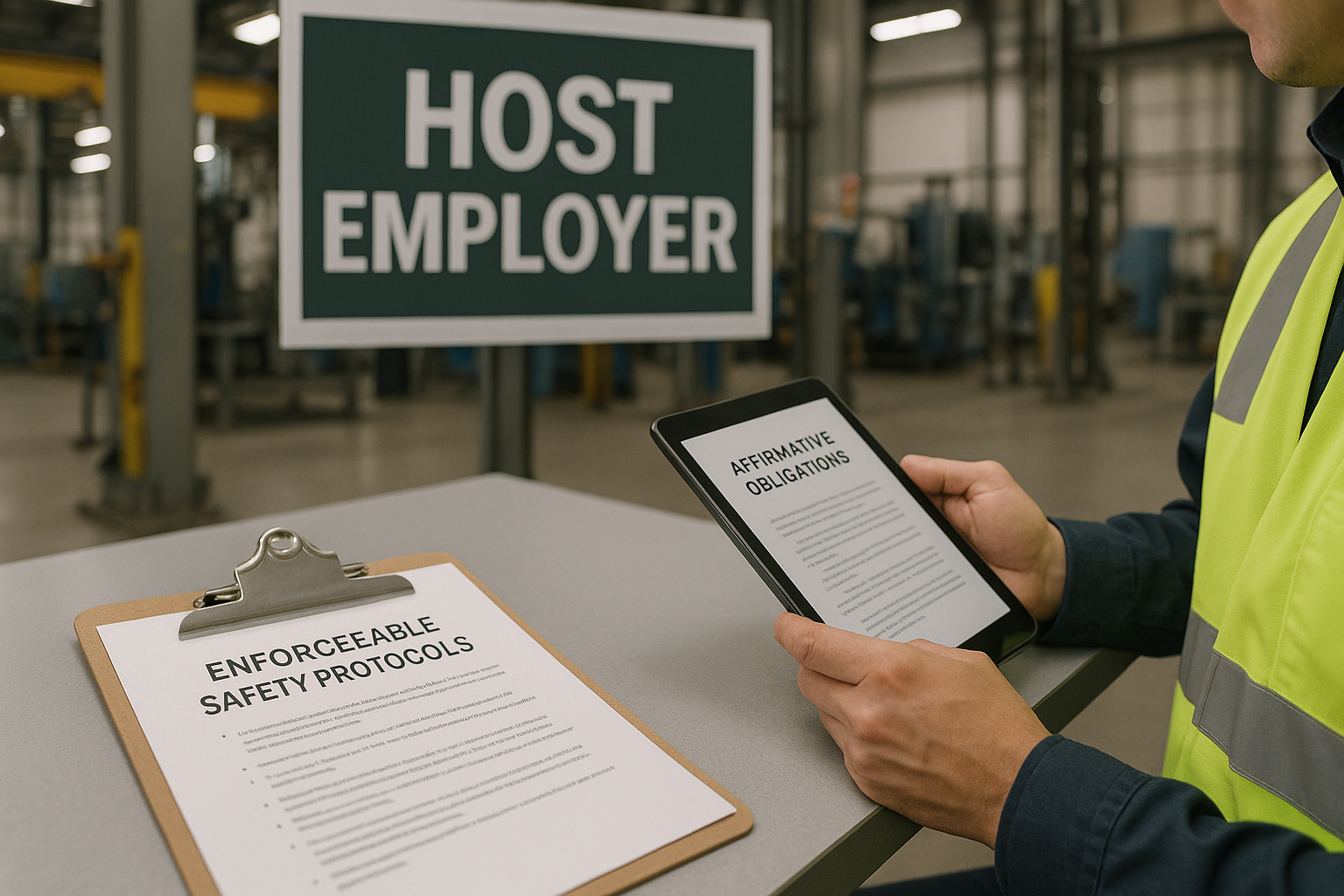
OSHA defines host employer responsibilities through explicit regulatory language that creates enforceable safety protocols. The standard places affirmative obligations on the on-site employer that cannot be satisfied by verifying contractor qualifications alone.
“Whenever outside servicing personnel are to be engaged in activities covered by the scope and application of this standard, the on-site employer and the outside employer shall inform each other of their respective lockout or tagout procedures.”
— 29 CFR 1910.147(f)(2)(i)
Before that contractor touches your equipment, you must tell them about YOUR energy control procedures. And they must tell you about theirs. This documented exchange happens BEFORE work begins — not during the safety investigation after someone gets hurt.
OSHA defines host employer responsibilities across four distinct obligations:
The host employer must provide machine-specific energy control procedures for every piece of equipment the contractor will service. Generic facility-wide procedures fail this requirement.
Your employees must understand and comply with the contractor’s energy control program restrictions. If a contractor has equipment locked out, your personnel must know they cannot attempt to operate it.
When both host and contractor personnel work together, the on-site employer coordinates lockout activities to prevent premature energy restoration.
Contractor lockout devices must be distinguishable from employee devices through color, shape, or labeling — enabling visual verification of who controls what isolation point.
These safety protocols establish employer obligations that OSHA enforces through citations against both parties when failures occur. Safety compliance requires documented evidence of information exchange, not assumptions about professional competence.
The most common host employer failure is the simplest: never actually telling the contractor about your energy control procedures.
“They’re licensed. They know what they’re doing.”
Doesn’t matter.
“They’ve worked here before.”
Still doesn’t matter.
“They have their own LOTO program.”
That satisfies THEIR obligation under the standard. It does nothing for YOUR obligation.
The regulation says “shall inform each other.” Not “shall assume the other party knows.” Not “shall verify they have their own program.” You must actively communicate YOUR machine-specific energy control procedures for the equipment they’re servicing.
| HOST EMPLOYER DID | HOST EMPLOYER NEEDED TO DO |
|---|---|
| Verified contractor has LOTO training | Provided YOUR written procedure for THAT machine |
| Confirmed contractor brought their own locks | Explained YOUR specific isolation points |
| Assumed contractor knew the equipment | Identified all energy sources on YOUR equipment |
| Signed a general work order | Documented the procedure information exchange |
AUDIT TRAP: “We verified they were qualified” is not the same as “we informed them of our procedures.” An auditor will ask for documentation of WHAT procedures you communicated. Training certificates from the contractor don’t satisfy this requirement.
Your obligation is affirmative. You must provide information about your specific equipment. A licensed electrician doesn’t automatically know that your particular injection molder has stored hydraulic pressure that persists after electrical isolation.
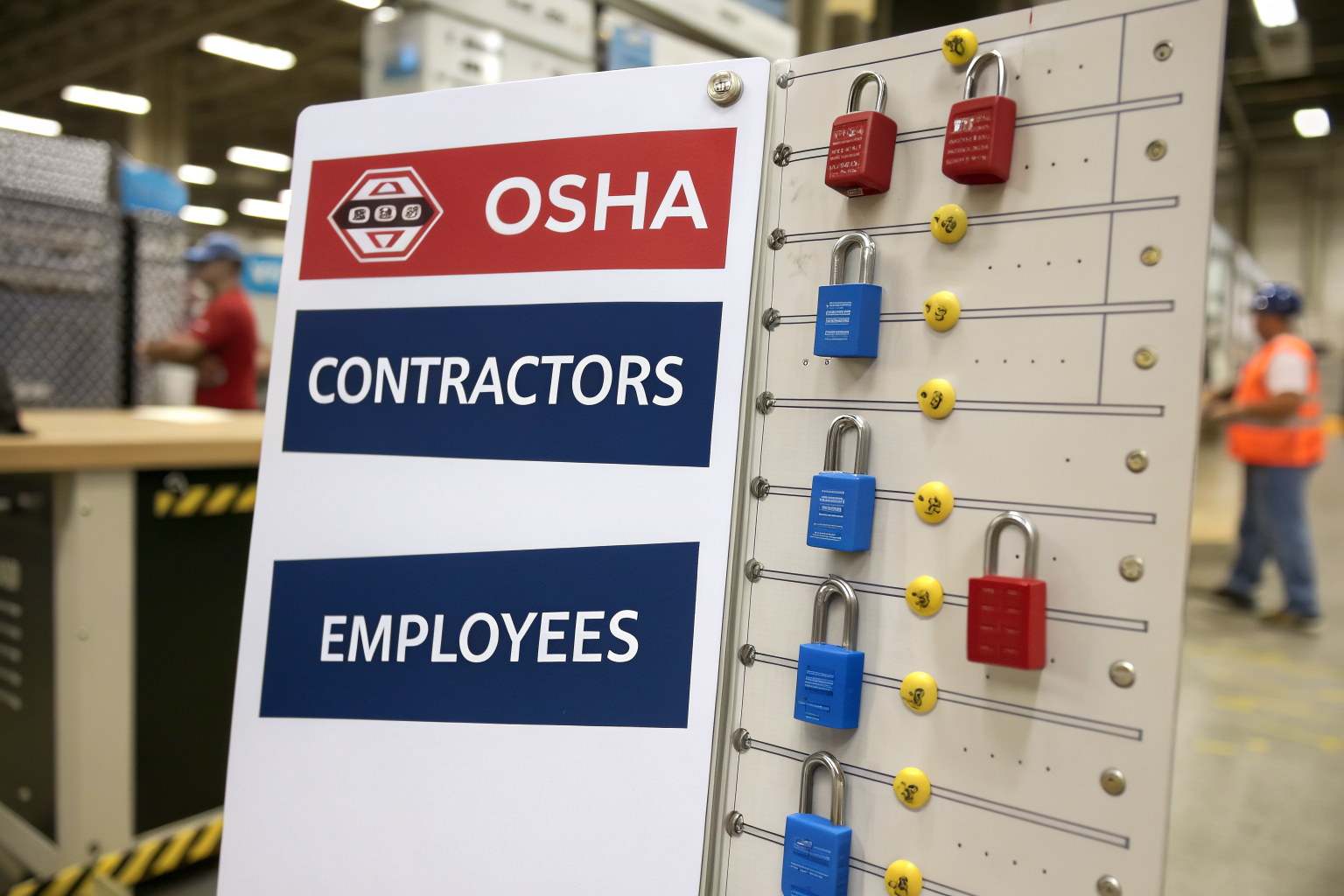
“The on-site employer shall ensure that his/her employees understand and comply with the restrictions and prohibitions of the outside employer’s energy control program.”
— 29 CFR 1910.147(f)(2)(ii)
Your employees need to recognize contractor locks and know not to touch them. That means contractor lockout devices must be visually distinguishable from your employee devices.
OSHA expects inspectors to look at a lock and know whether it belongs to your authorized employees or to an outside contractor. If all locks look identical, compliance becomes unverifiable.
| COMPLIANT | NON-COMPLIANT |
|---|---|
| Contractors use blue locks; employees use red | Everyone uses red safety padlocks |
| Contractor tags have company logo | Generic “Danger” tags on all devices |
| Different lock body shape | Same lock model, different keys |
| Contractor locks labeled with company name | Serial numbers only — no visual difference |
The standardization requirement in 1910.147(c)(5)(ii)(B) applies here. Your locks are standardized. Contractor locks must be standardized differently — distinguishable by color, shape, or labeling.
AUDIT TRAP: “We can tell by the key” doesn’t work. Visual distinction must be immediate and obvious. An inspector — or your employee — should identify contractor vs. employee locks at a glance without checking key codes or serial numbers.
Informing contractors about procedures isn’t enough. You must communicate the specific hazards of the specific equipment.
Your maintenance team knows that the stamping press has stored mechanical energy in the flywheel that persists after electrical isolation. They know it because they’ve worked on it for years. They know to wait for the flywheel to stop and verify zero energy state before entering the point of operation.
The outside contractor? They’re seeing this machine for the first time.
Host employer obligation includes communicating:
All hazardous energy sources present in the equipment — electrical, mechanical, hydraulic, pneumatic, thermal, chemical, gravitational. Contractors can’t isolate energy sources they don’t know exist.
Energy that remains after primary isolation. Capacitors that hold charge. Hydraulic cylinders under pressure. Elevated components that can fall. Springs under tension.
How to confirm zero energy state for this specific machine. Try-start procedures. Pressure gauge readings. Physical verification methods.
“They’re professionals — they should assess the hazards themselves.”
They should. But your knowledge of that specific equipment is part of what they need. Your duty to inform includes sharing what you know about the hazards they’ll encounter.
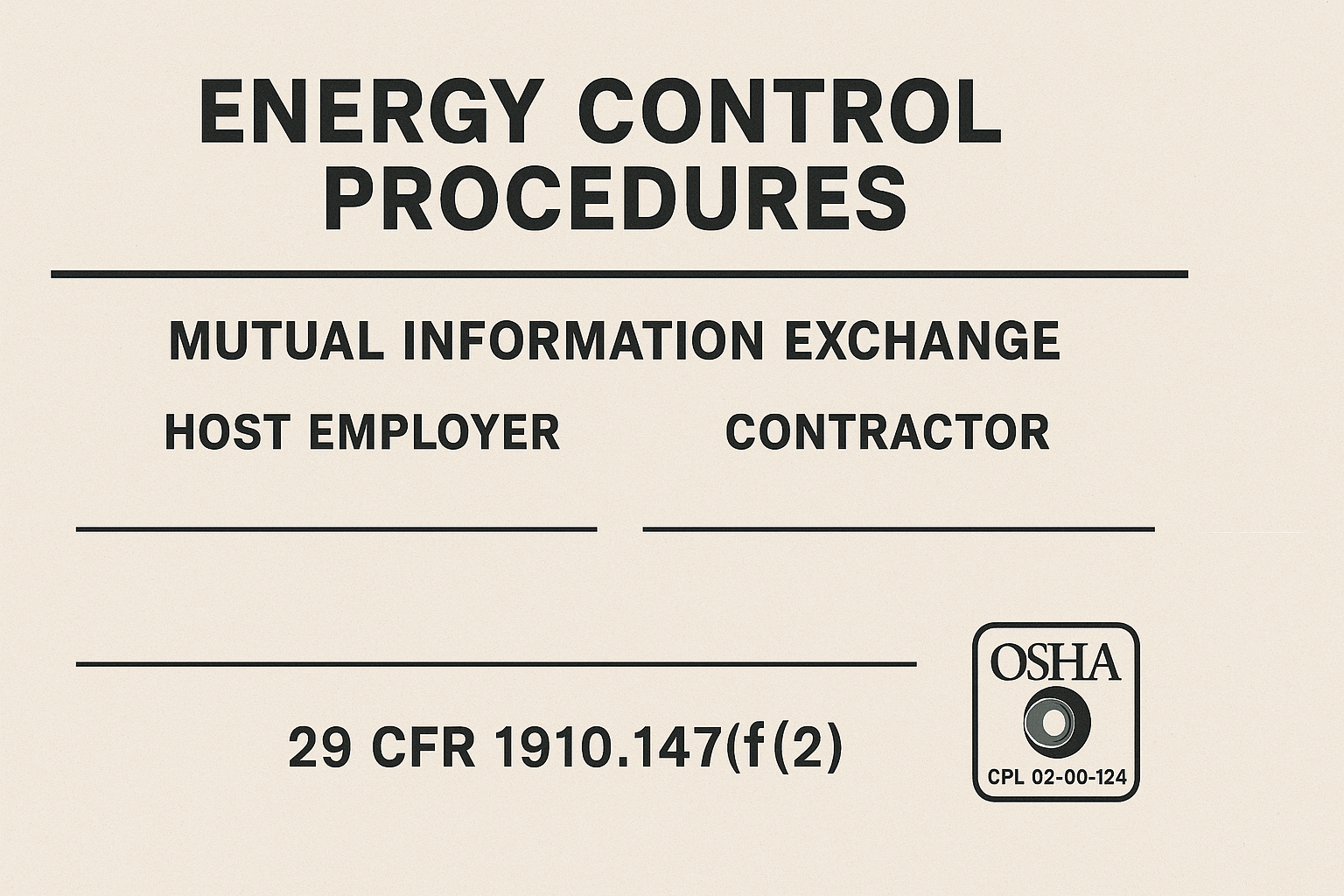
Compliance is ensured by effective communication between host employers and contractors through documented procedures and verified implementation. 29 CFR 1910.147(f)(2) requires mutual information exchange about energy control procedures. OSHA Directive CPL 02-00-124 provides guidance on compliance. Following these steps establishes clear procedures that satisfy both regulatory requirements and practical safety training needs.
Require contractors to submit their written energy control procedures before authorizing any work. Review their procedures against your machine-specific requirements to identify gaps. Document this review with date, reviewer name, and findings.
Before contractors touch equipment, conduct a documented briefing covering your energy control procedures for that specific machine. Include all energy sources, isolation points, stored energy hazards, and verification methods. Both parties sign the briefing record.
Establish which party applies locks first and removes locks last. Document the coordination sequence in writing. Verify contractor devices are distinguishable from employee devices before work begins.
Designate one person — typically host employer personnel — as the coordination point for all contractor lockout tagout activities. This person verifies isolation status, authorizes lock removal, and documents the process.
Before contractor departure, verify all lockout devices are removed, equipment is operational, and guards are reinstalled. Document completion with date, time, and signatures from both parties.
Effective communication through these steps transforms contractor lockout tagout from a liability trap into a documented safety training success. Each step creates the audit trail OSHA expects when investigating multi-employer incidents.
Contractor finishes the work. Removes their locks. Leaves the facility.
What’s the state of the equipment?
Host employer has an obligation to verify that energy control devices have been removed and the equipment is ready for normal operation. This parallels the lockout removal requirements in 1910.147(e)(3) — verification that employees are clear and equipment is ready before reenergization.
Confirm all contractor lockout devices have been removed from isolation points. Locks left on equipment create confusion for subsequent shifts and potential operational hazards.
Verify equipment is in a safe operating condition. Guards reinstalled. Safety devices functioning. Energy control devices removed from all isolation points.
Written record that work completed, lockout protection removed, and equipment returned to operational status. Date, time, personnel involved.
“We trust our contractors to clean up after themselves.”
Trust isn’t documentation. When OSHA asks how you verified the equipment was safe to return to operation, “we assumed the contractor handled it” isn’t a compliant answer.

Common failures create the liability trap that ensnares both facility managers and contractors during OSHA investigations. These failures expose facility managers to shared liability even when contractors appear to follow their own programs correctly.
Failure to inform contractors of host procedures: Host employer never provides machine-specific energy control procedures, assuming contractor qualifications substitute for information exchange. Contractor locks and employee devices operate under different — potentially conflicting — protocols.
No coordination between lockout activities: Host and contractor apply locks independently without documented coordination. Neither party knows the complete isolation status, creating premature removal risk.
Indistinguishable lockout devices: All locks look identical. Inspectors cannot verify who controls which isolation point. Your employees cannot identify contractor locks to avoid interference.
Missing hazard communication: Host employer fails to communicate stored energy, residual pressure, or machine-specific verification requirements. Contractor encounters unknown hazards.
Assuming contractor compliance satisfies host obligations: Contractor follows their program perfectly — but their program doesn’t address your equipment’s specific requirements. Dual compliance failure results in citations for both parties.
No post-work verification: Contractor departs without documented confirmation that all devices are removed and equipment is operational. Host employer cannot demonstrate safe return to service.
Each failure creates risk exposure that compounds during OSHA investigations. The liability trap closes when investigators discover that neither program adequately addressed the other party’s requirements — leaving facility managers with citations regardless of which employer’s workers were injured.
Resources support compliance efforts by providing documented frameworks, training programs, and regulatory guidance that satisfy OSHA requirements. Effective contractor lockout tagout programs draw from multiple resource categories.
OSHA Directive CPL 02-00-124 provides guidance on compliance for multi-employer worksite situations. This directive clarifies how OSHA assigns citations when multiple employers share responsibility for worker safety. Safety manuals incorporating this directive help facility managers understand their obligations when contractors service equipment.
Specialized training programs address the unique requirements of contractor lockout tagout coordination. These programs cover procedure disclosure requirements, coordination protocols, and documentation standards that generic LOTO training omits. Host employer personnel need training beyond standard authorized employee certification.
Pre-work briefing checklists, contractor procedure review forms, and post-work verification records create the audit trail OSHA expects. Safety manuals should include templates specific to contractor coordination — not repurposed single-employer forms.
Trade associations publish contractor lockout tagout guidance tailored to specific industries. Food processing, chemical manufacturing, and general industry each present unique coordination challenges that industry-specific resources address.
Third-party auditors evaluate contractor lockout tagout programs against regulatory requirements. These audits identify gaps before OSHA investigators discover them — converting potential citations into corrective actions.
These resources support compliance efforts when implemented systematically. A binder of safety manuals provides no protection if the documented procedures don’t reflect actual contractor coordination practices on your facility floor.
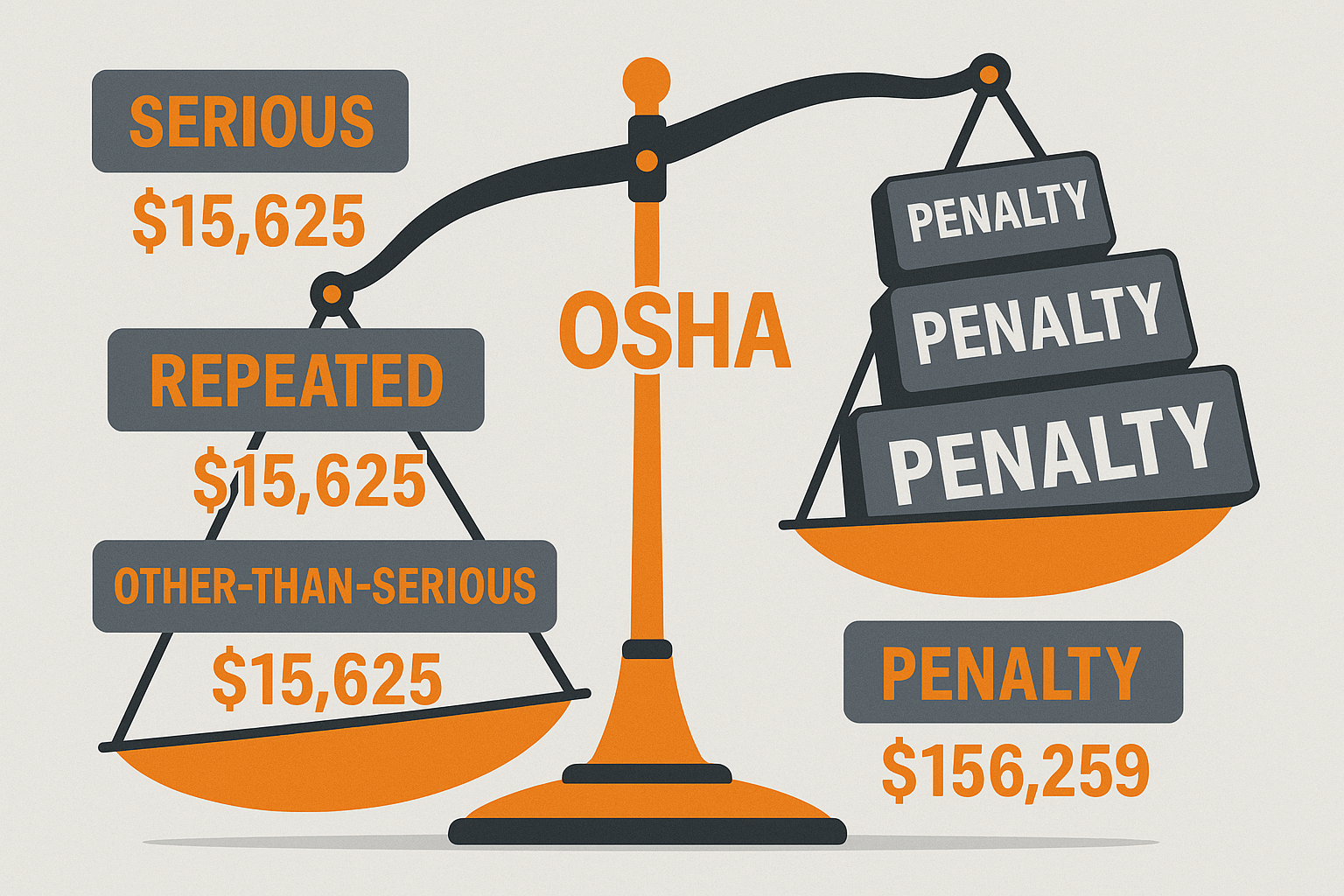
Non-compliance leads to penalties that extend far beyond the initial fine. OSHA issues citations against both host employers and contractors when investigations reveal contractor lockout tagout failures — creating dual liability that multiplies financial and operational consequences.
Willful or repeat violations under current OSHA penalty structures trigger significant financial consequences. Penalties can exceed $156,259 per violation. Serious violations carry penalties up to $15,625 per instance. Multiple violations during a single contractor incident generate stacked penalties against both employers. Non-compliance leads to penalties that can bankrupt small contractors and severely impact host employer operating budgets.
OSHA issues citations in escalating severity based on violation characteristics:
Beyond direct fines, compliance violations trigger operational disruptions:
Safety regulations create duties that generate civil liability beyond OSHA penalties. Injured workers and their families pursue negligence claims citing regulatory violations as evidence of substandard care. Criminal referrals occur in fatality cases involving willful violations.
OSHA issues citations against both parties in contractor incidents — meaning host employers cannot avoid consequences by blaming contractor failures. The shared liability structure ensures compliance violations impact everyone involved.
Contractor personnel can use host employer locks IF the locks meet all four device requirements (durable, standardized, substantial, identifiable) AND the lock is under that contractor employee’s exclusive control. The identifiable requirement means the lock must indicate that specific contractor employee — not just “Contractor” generically. Practically speaking, contractors bringing their own locks simplifies distinguishability and ensures one-person-one-lock-one-key control.
The regulation requires mutual information exchange — you inform them of your procedures, they inform you of theirs. While the standard doesn’t explicitly mandate written exchange, documentation protects both parties. Best practice: require contractors to provide written energy control procedures for review before authorizing work on your equipment. Verbal exchange doesn’t survive an audit.
Multi-employer worksite rules add complexity. The controlling employer (typically general contractor) has overall coordination responsibility. But host employer obligations under 1910.147(f)(2) still apply to the facility owner when contractors service their installed equipment. Multiple overlapping duties — each employer has obligations based on their role. When in doubt, coordinate more than you think necessary.
Follow whichever requirement is more protective. If contractor procedure requires additional isolation points beyond your procedure, those points get isolated. Dual compliance means satisfying BOTH programs — the more stringent requirement governs. This protects workers and ensures neither program is violated.