Physical Address
304 North Cardinal St.
Dorchester Center, MA 02124
Physical Address
304 North Cardinal St.
Dorchester Center, MA 02124


Lockout tagout shift change procedures protect workers when maintenance extends beyond a single shift. These procedures ensure continuous energy control during personnel transitions and prevent accidental equipment startup during the handoff window between off-going and oncoming employees.
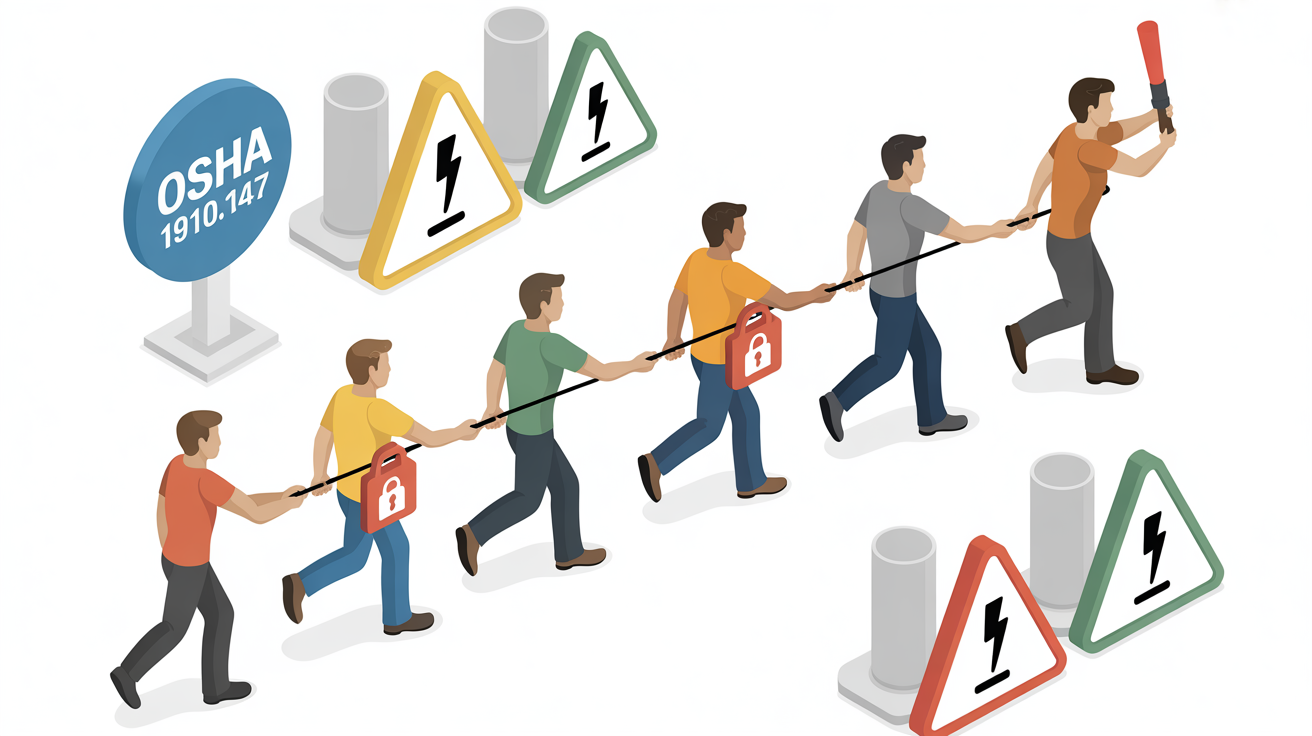
Lockout tagout shift change procedures are documented protocols that protect workers during the transfer of energy control responsibilities between shifts. These procedures govern how an outgoing employee hands off lockout protection to an oncoming employee without creating gaps in safety coverage.
OSHA 29 CFR 1910. 147(f)(4) mandates documented shift change procedures for any facility where maintenance spans multiple work periods. The standard requires three elements: orderly transfer of LOTO protection, minimized exposure during transition, and written documentation of each handoff.
The standard doesn’t suggest procedures. It mandates them. OSHA requires specific procedures that address how authorized employees communicate equipment status, when physical lock transfer occurs, and what documentation captures each transition. Facilities operating multi-shift maintenance without these documented protocols operate outside compliance.
A compliant lockout tagout shift change procedure must specify:
Equipment on Line 4 locked out at 10 AM requires documented transfer at 3 PM, again at 11 PM, and again at 7 AM — each confirming the zero energy state continues.

Shift changes create the highest-risk windows in any lockout tagout program. Maintenance jobs that span multiple shifts require continuous protection, yet personnel transitions introduce communication failures and verification gaps that lead to $16,131 in penalties for non-compliance with LOTO regulations.
Lockout tagout shift change procedures must include orderly transfer of LOTO protection to maintain continuous worker safety:
The shift change impact compounds when protection transfers improperly:
Each lockout tagout shift change multiplies handoff failure risk. A motor replacement on Line 4 takes 16 hours. A conveyor overhaul requires three days. OSHA enforcement data shows facilities with documented shift change procedures experience significantly fewer citations than those relying on informal practices.
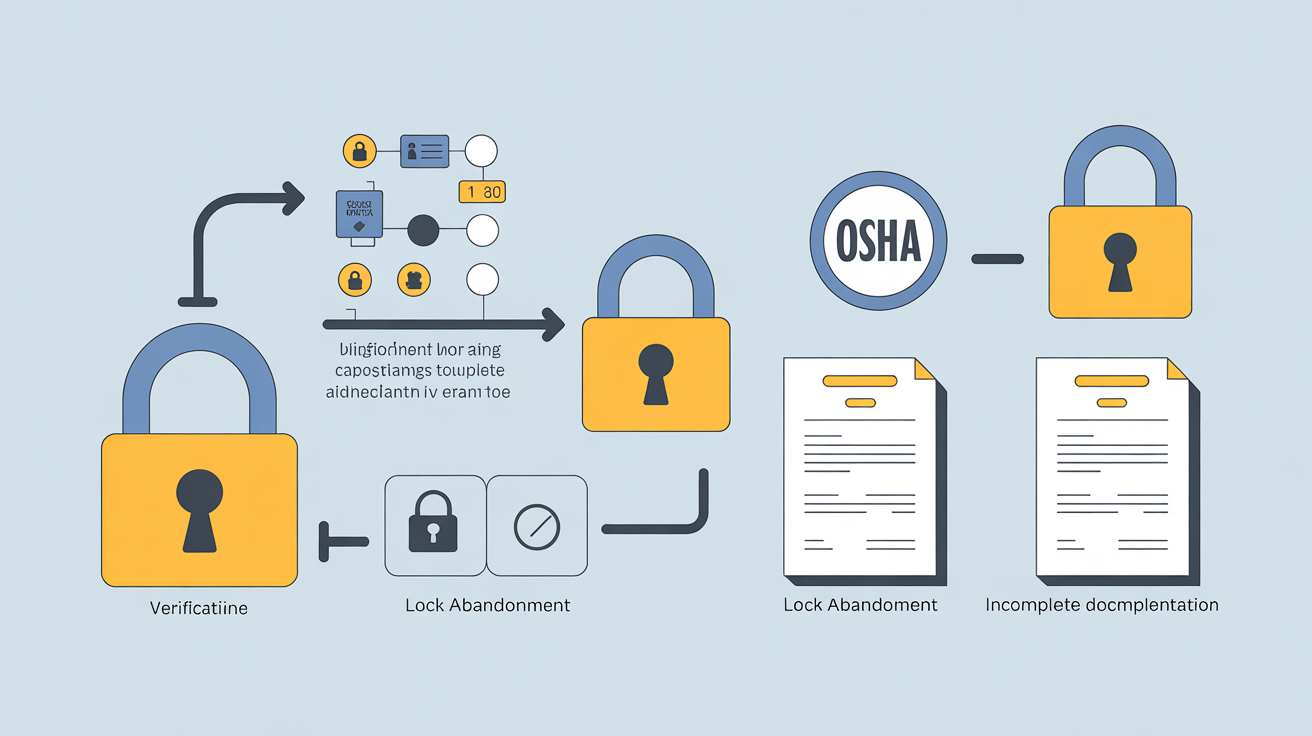
OSHA issued 2,443 LOTO citations issued in FY2023, with handoff failures contributing significantly to the enforcement total. These failures follow predictable patterns that facilities repeat despite available solutions.
Verbal-only communication: Verbal handoffs fail OSHA audits because they leave no audit trail. “It’s locked out at Breaker 7” contains useful information that evaporates when the oncoming employee handles another emergency.
Lock abandonment: Day shift leaves at 3 PM with their lock still on equipment. Night crew sees an anonymous lock and assumes it’s abandoned. Nobody documents the transfer because no transfer occurred.
Protection gaps: The outgoing employee removes their personal lock at 2:58 PM. The oncoming authorized employee arrives at 3:05 PM. For seven minutes, equipment sits unprotected.
No verification by oncoming crew: The oncoming employee accepts the previous shift’s lockout without confirming zero energy state. Trust replaces verification.
No procedure for abandoned lockouts: When authorized employees leave unexpectedly, their locks remain on equipment with no documented removal process.
Shift change logs must record what’s locked out, which energy sources are isolated, what work remains incomplete, and what hazards persist. Without written records, enforcement officers see an undocumented program — regardless of what employees verbally communicated during the handoff.

Documentation transforms verbal agreements into enforceable records that survive shift changes, personnel turnover, and OSHA audits. Specific procedures are required for orderly transfer of LOTO protection under the federal standard, and documentation proves those procedures exist and function during inspections.
70% complete compliance is necessary to avoid penalties during OSHA evaluations. Facilities scoring below this threshold face citations regardless of actual safety performance. Documentation creates the evidence that demonstrates program effectiveness.
Improper lock removal occurs when day shift employees call in sick without transferring their lockout to oncoming personnel. Documentation determines whether Supervisors can legally remove the absent employee’s lock.
OSHA’s February 28, 2000 Letter of Interpretation permits lock removal by someone other than the applying authorized employee only when:
Without documented procedures meeting all five requirements, equipment stays locked out indefinitely — or someone improvises and creates liability.
| Element | Purpose |
|---|---|
| Equipment identification | Confirms which machine is locked out |
| Energy isolation points | Lists all breakers, valves, disconnects |
| Lock identification numbers | Tracks which employee holds each personal lock |
| Work status | Documents completed and remaining tasks |
| Transfer timestamp | Records exact handoff time |
| Both signatures | Creates accountability chain |
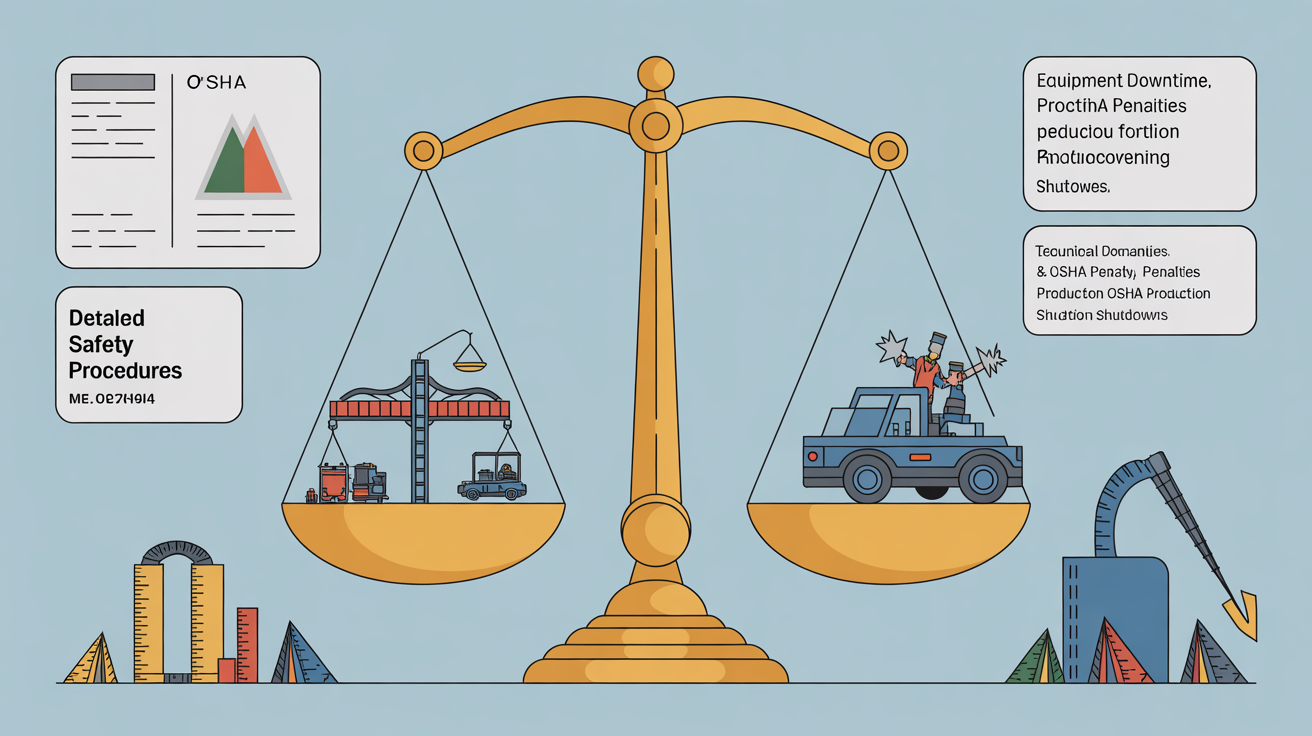
Facilities face indefinite equipment downtime when lockout tagout shift change procedures fail or don’t exist. The immediate cost is production loss. The regulatory cost escalates from there, and non-compliance can result in $165,514 fines for willful violations.
Fines can exceed $165,514 for LOTO violations when OSHA classifies them as willful or repeat offenses:
Non-compliance creates cascading consequences beyond direct penalties:
A single lockout tagout shift change failure creates exposure. Repeated failures across multiple pieces of equipment compound into systemic non-compliance. OSHA inspectors examining one lockout tagout shift change incident often audit the entire lockout tagout program — converting a single citation into facility-wide enforcement action that touches every production line.
A: Lockout tagout shift change procedures are documented protocols governing the transfer of energy control responsibilities between shifts. OSHA 29 CFR 1910. 147(f)(4) mandates these procedures to ensure orderly LOTO protection transfer, minimized exposure during transitions, and written documentation of each handoff between authorized employees.
A: Shift changes create protection gaps when outgoing employees remove locks before oncoming employees apply theirs. Maintenance jobs spanning multiple shifts require documented handoffs to maintain continuous energy control. Failures result in $16,131 penalties for non-compliance with LOTO regulations.
A: Common failures include verbal handoffs without documentation, lock abandonment, protection gaps during transitions, failure to verify zero energy state, and no procedures for abandoned lockouts. OSHA issued 2,443 LOTO citations in FY2023, with handoff failures contributing significantly to enforcement totals.
A: Documentation proves compliance during osha audits, enables legal removal of abandoned locks, and creates accountability chains across shift changes. 70% complete compliance is necessary to avoid penalties, and documentation demonstrates that specific procedures exist and function.
A: Facilities face indefinite equipment downtime, fines exceeding $165,514 for willful LOTO violations, production shutdowns during investigations, increased insurance premiums, and potential criminal referrals in fatality cases involving willful non-compliance with energy control requirements.