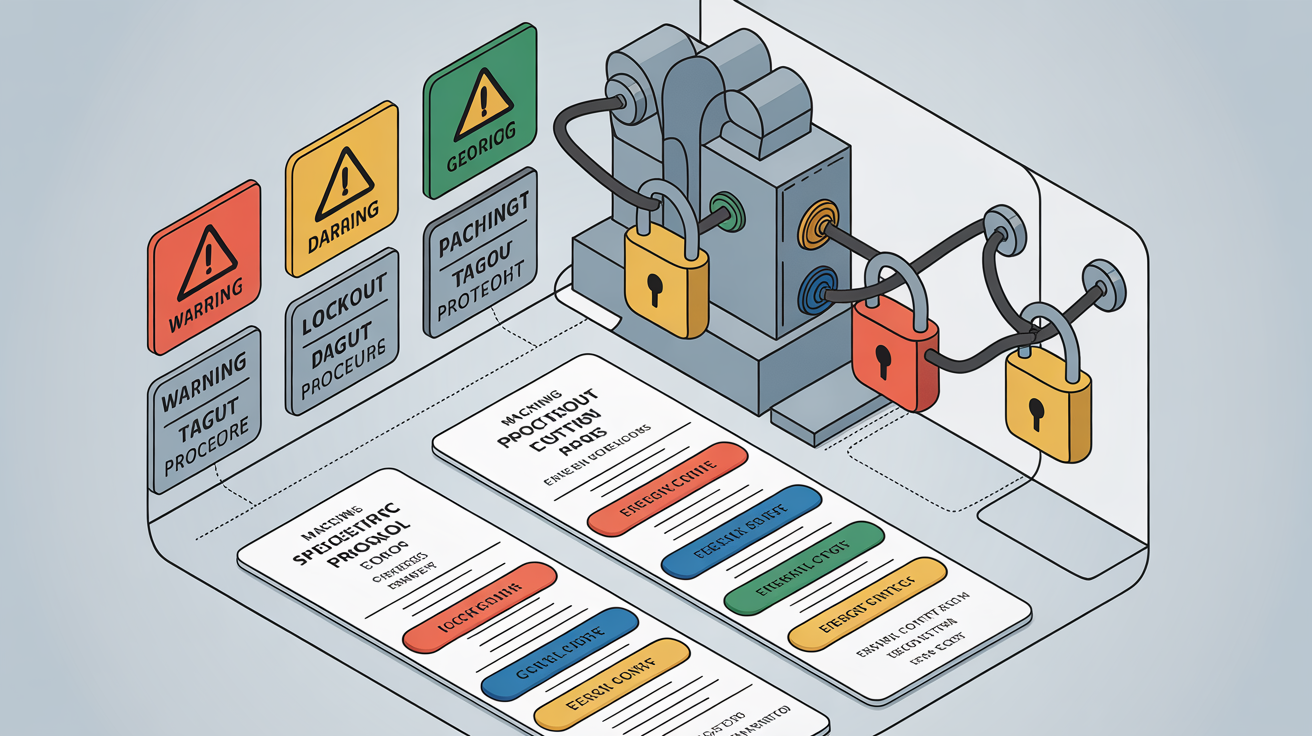
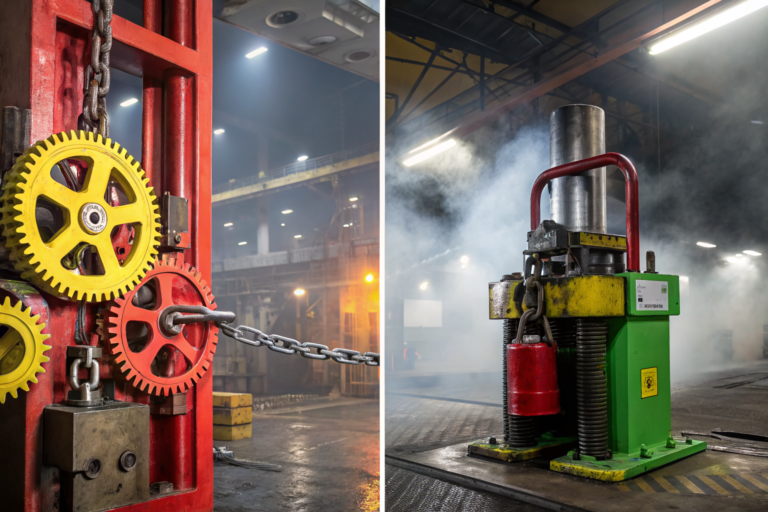
Lockout Tagout Procedures are critical for ensuring worker safety during equipment servicing. Each authorized employee must use a personal lock, preventing unexpected energization.
Key Takeaways
Lockout Tagout Procedures are defined as energy control methods that protect multiple workers servicing the same equipment simultaneously
The cost of getting this wrong is $165,514 per willful violation — and that figure assumes nobody gets hurt
Lockout Tagout Procedures are defined as energy control methods that prevent hazardous energy release during equipment maintenance and servicing. OSHA developed these requirements after documenting patterns of worker fatalities caused by unexpected machine startup.
These procedures require physical barriers — locks and tags — between energy sources and the worker performing maintenance. The distinction matters: warning signs can be ignored, but a locked disconnect switch requires deliberate removal before equipment can operate.
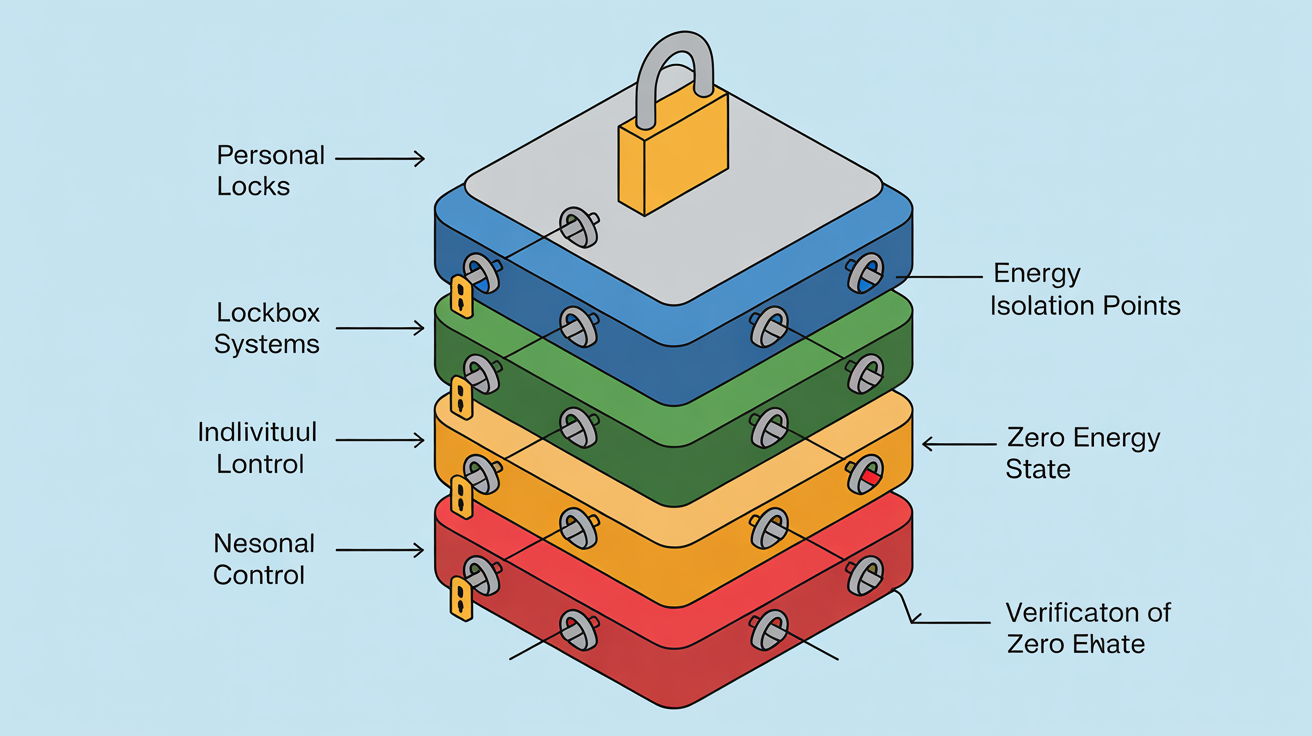
Group lockout tagout procedures are energy control methods that protect multiple workers servicing the same equipment. They require a lockbox system where each worker maintains personal control over their own protection. This system prevents one person’s completion decision from exposing others still inside the machine.
Energy Type
Common Sources
Isolation Method
Electrical
Motors, panels
Circuit breaker lockout
Hydraulic
Presses, lifts
Valve lockout, pressure bleed
Pneumatic
Air tools
Line disconnect
Mechanical
Springs, gravity
Blocking devices
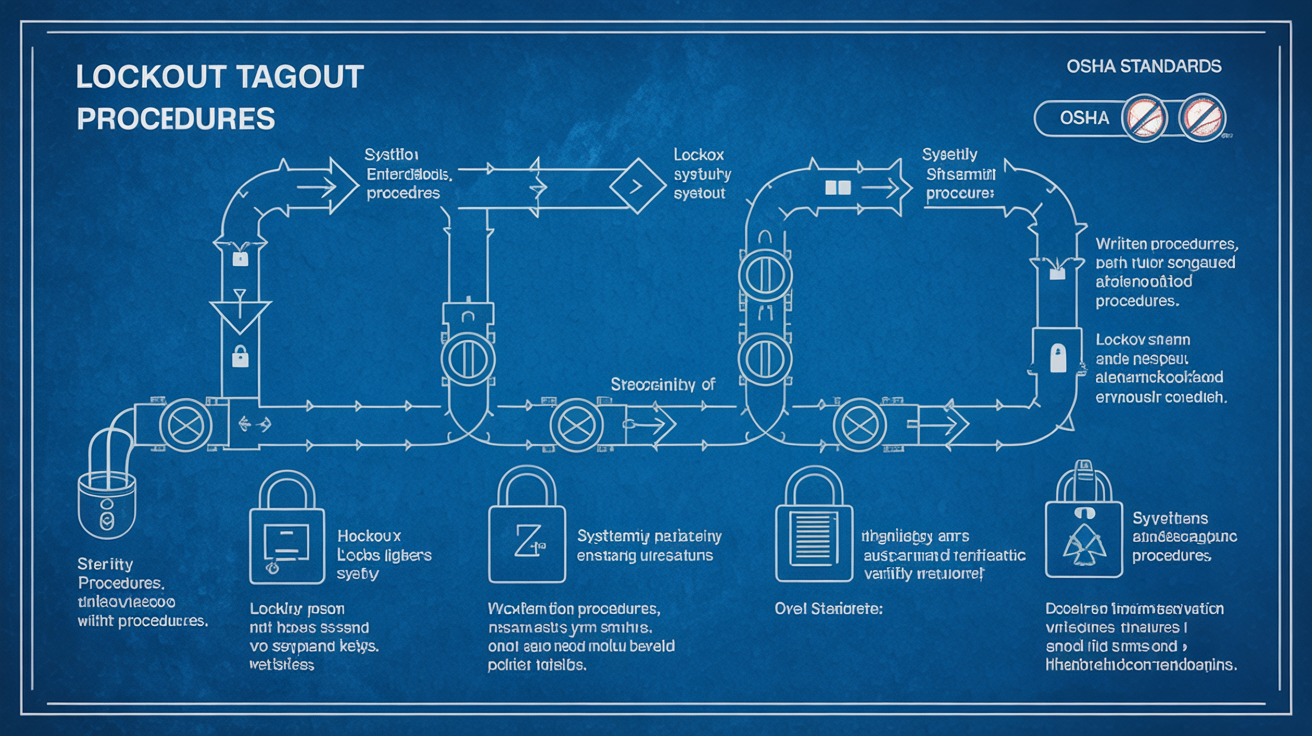
The procedures apply whenever a worker could contact hazardous energy during servicing activities. OSHA mandates written, machine-specific procedures for each piece of equipment — generic templates fail enforcement inspections.
How do Lockout Tagout Procedures protect workers?
Lockout Tagout Procedures protect multiple workers by creating individual control over shared energy isolation points. When multiple workers are involved in servicing the same equipment, each faces identical exposure to unexpected energization — but protection requires more than shared awareness.
OSHA 1910.147(f)(3) establishes the regulatory framework for group protection. The standard mandates that employers provide protection equivalent to personal lockout when a crew services equipment together.
These energy control methods operate through three required elements:
Primary authorized employee designation — One person coordinates all energy isolation before work begins
Lockbox system implementation — Keys from isolation points are secured in a locked container
Personal lock requirement — Each worker adds their own lock to the group lockbox
The protection mechanism prevents a common failure pattern. One crew member finishes their task, thinks the job is done, and re-energizes equipment. Meanwhile, the rest of the crew remains exposed to unexpected energization inside the machine. Personal locks eliminate this risk — no single person can restore energy until everyone removes their individual device.
The primary authorized employee verifies zero energy state before authorizing work. This verification includes try-start testing: attempting to operate equipment using normal controls to confirm complete isolation. The primary also tracks exposure status of all crew members and prevents any lock removal until everyone has physically cleared.
Energy control methods under Lockout Tagout Procedures require tiered training. Authorized employees who perform lockout receive different instruction than affected employees who operate equipment nearby.
What are the consequences of failing to implement Lockout Tagout Procedures?
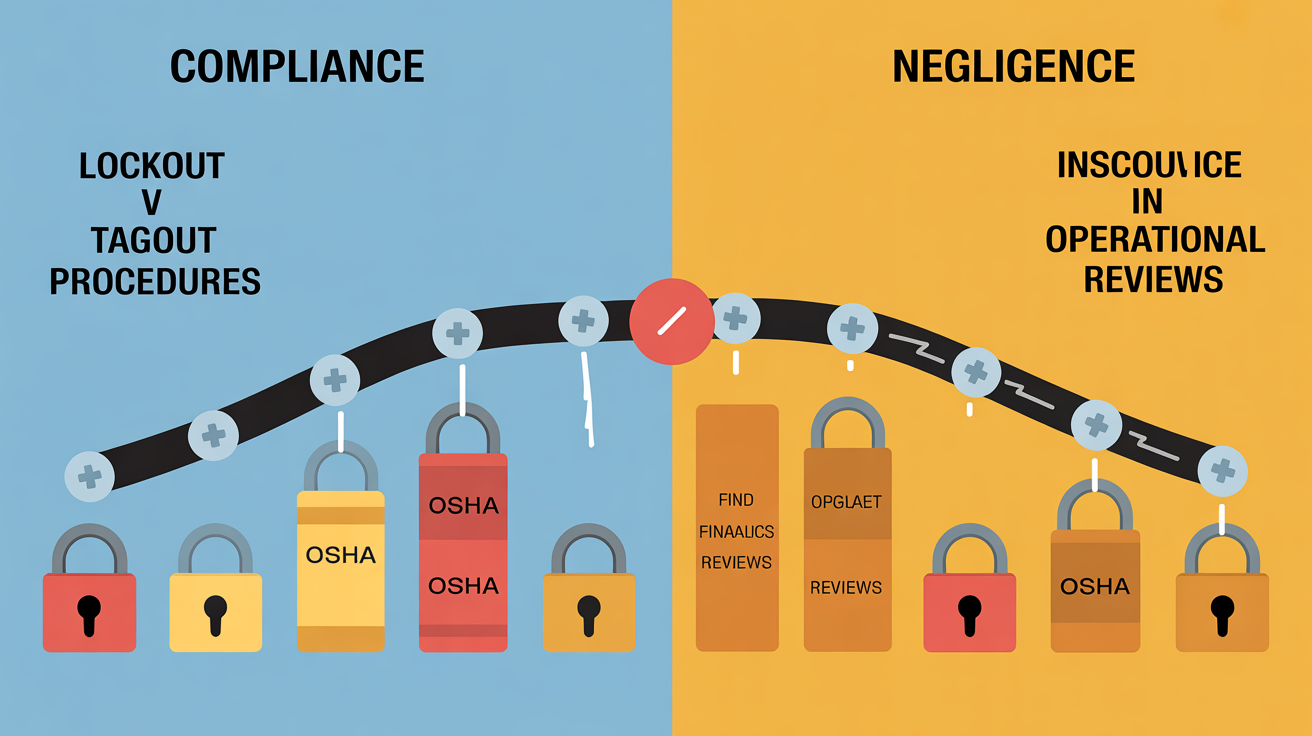
Failure to implement Lockout Tagout Procedures can result in crew exposure to unexpected energization — the most severe consequence being worker fatality. OSHA documented 730 violations for inadequate energy control procedures in FY2024, making this the most-cited LOTO subsection.
The cost of getting this wrong is $165,514 per willful violation. That figure assumes nobody gets hurt. When injuries occur, citations compound across multiple categories.
Financial consequences by violation type:
Serious violations: $16,131 per instance — applies when death or serious harm could result from the hazard
Willful violations: $165,514 per instance — applies when employer knowingly disregards requirements
Repeat violations: $165,514 per instance — applies when same violation occurs within five years
Failure to abate: $16,131 per day — applies when cited hazard remains uncorrected after deadline
Beyond direct penalties, OSHA citations trigger operational consequences. Inspectors issue shutdown orders for imminent danger conditions. Insurance carriers review loss history and adjust premiums. Customer audits flag safety violations as supplier disqualification events.
Violation Category
FY2024 Citations
Primary Cause
Energy control procedures
730 citations
Missing machine-specific written procedures
Training documentation
491
Inadequate worker instruction records
Periodic inspection
362
Confusing training with procedure audit
Criminal referrals occur in fatality cases. When willful violations cause worker death, OSHA refers cases for prosecution. Individual managers have faced personal liability for decisions that exposed workers to known hazards.
How can organizations ensure compliance with Lockout Tagout Procedures?
Organizations must implement group lockout tagout procedure requirements through documented systems that auditors can verify. OSHA’s FY2024 enforcement data shows that documentation failures — not hardware problems — drive most citations.
Group lockout tagout procedure requirements are mentioned in 29 CFR 1910.147, which specifies both program elements and equipment standards. Compliance requires systematic execution across five areas.
Step 1: Develop machine-specific written procedures. Each piece of equipment requiring lockout needs documented isolation steps. The procedure must identify specific energy sources, specific isolation points, specific lockout device placement locations, and specific verification testing methods. Generic procedures fail audits.
Step 2: Assign the primary authorized employee for each job. Every group lockout requires one person with primary responsibility. This individual executes isolation, verifies zero energy state, and tracks exposure status of all workers. Documentation must specify how this assignment occurs.
Step 3: Implement compliant lockbox systems. The personal lock requirement means each worker adds their own padlock to the group lockbox before beginning work. Lockboxes cost $50 to $150. Portable lockout stations with hasps and locks run $200 to $500.
Step 4: Conduct annual periodic inspections. OSHA requires inspection of each energy control procedure at least annually. The inspector must be an authorized employee other than the one using that procedure. Certification records must identify the machine, inspection date, employees included, and inspector identity.
Step 5: Maintain training records distinguishing employee categories. Training documentation must separate authorized employees, affected employees, and other employees. Each category requires different instruction content.
What are the best practices for Lockout Tagout Procedures?
Best practices include affixing a personal lock to the group lockbox — the single action that transforms shared protection into individual control. OSHA issued 2,443 LOTO citations in FY2024, and analysis reveals consistent patterns that best practices directly address.
Each authorized employee maintains personal control over their protection through their lock on the lockbox. This principle underlies every effective practice.
Personal lock discipline prevents single-point failures. When the supervisor’s lock is the only barrier, one person’s judgment becomes everyone’s protection. Best practices require each worker to add a personal lock before beginning any task. The lockbox cannot open until every lock is removed.
Keys remain secured throughout servicing. The primary places isolation point keys in the lockbox after verifying zero energy state. Those keys stay secured until all personal locks are removed. Best practices prohibit key removal for partial re-energization during multi-phase work.
Verification replaces assumption at every transition. Best practices mandate the primary verify exposure status of all workers before any lock removal. Physical confirmation — seeing each worker remove their lock — meets this standard. Verbal confirmation across the floor does not.
Documentation survives the work activity. Written records of group lockout execution create audit evidence. Best practices treat documentation as part of the procedure, not paperwork completed afterward.