Physical Address
304 North Cardinal St.
Dorchester Center, MA 02124
Physical Address
304 North Cardinal St.
Dorchester Center, MA 02124

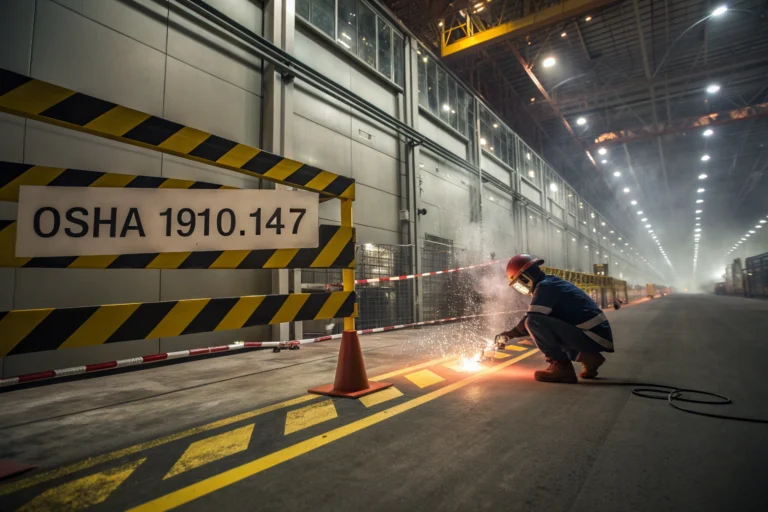
LOTO training requirements ensure that authorized employees receive critical training on hazardous energy sources and control methods. OSHA mandates specific training for different employee categories to enhance workplace safety.
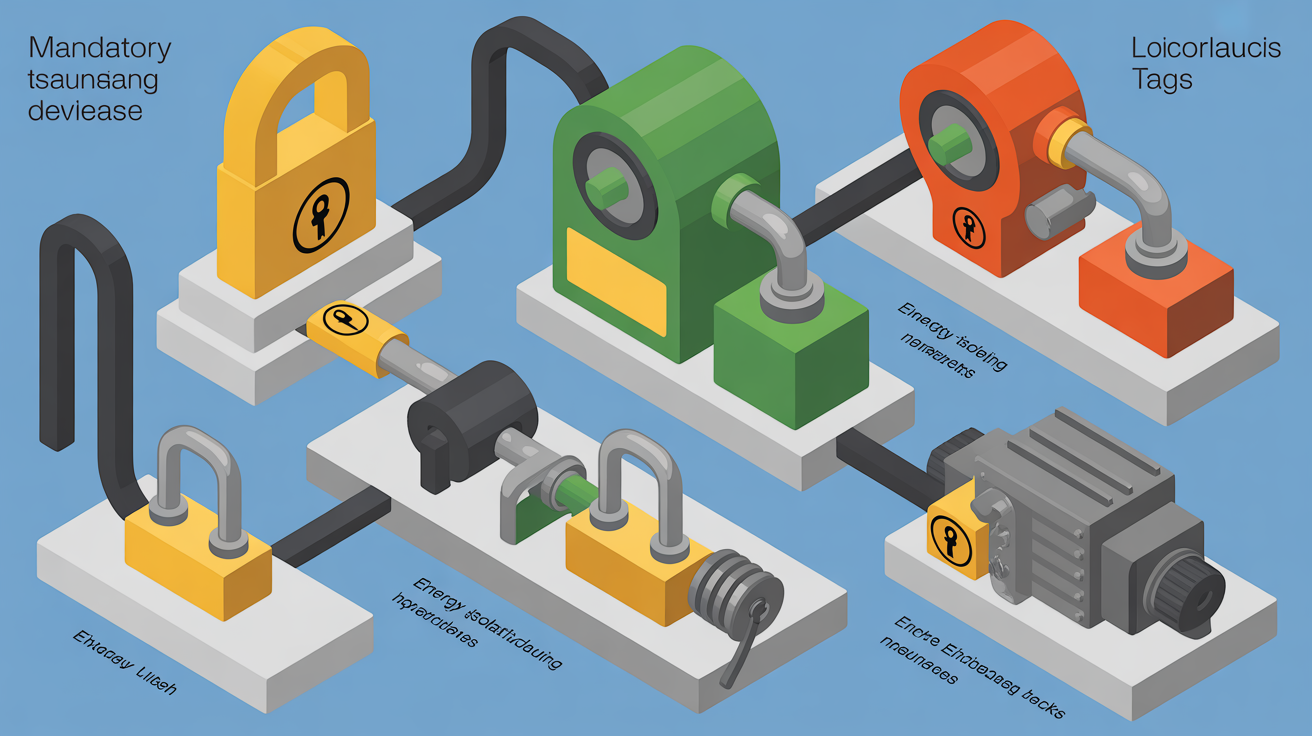
LOTO training requirements define the safety protocols that protect workers from hazardous energy during equipment servicing. These lockout/tagout procedures establish mandatory training standards under 29 CFR 1910.147 for anyone who interacts with energy-isolating devices, locks, or tags.
The regulatory foundation states: “Each authorized employee shall receive training in the recognition of applicable hazardous energy sources, the type and magnitude of the energy available in the workplace, and the methods and means necessary for energy isolation and control.”
LOTO training requirements address two primary groups with different training scopes:
The training distinction between these groups matters because their workplace roles differ fundamentally. Authorized employees physically apply locks and execute procedures. Affected employees operate equipment or work near serviced machines. A machine operator who normally runs a hydraulic press needs different training than the maintenance technician who locks it out.
“Each affected employee shall be instructed in the purpose and use of the energy control procedure.” This requirement ensures affected employees understand their prohibition against restarting equipment — even when production pressures mount.
| Training Element | Authorized Employees | Affected Employees |
|---|---|---|
| Hazard Recognition | All energy types | Awareness level |
| Procedure Execution | Hands-on competency | Not required |
| Device Application | Must demonstrate | Recognition only |
| Restart Prohibition | Part of procedure | Primary focus |
LOTO training requirements exist because uncontrolled energy kills. Electrical, hydraulic, pneumatic, thermal, and mechanical energy sources each demand specific isolation methods that only proper training provides.
OSHA mandates LOTO training requirements through 29 CFR 1910.147, the Control of Hazardous Energy standard. This regulation creates binding training obligations that carry enforcement consequences.
OSHA requires training for 491 companies under its jurisdiction. This enforcement activity demonstrates the agency’s prioritization of energy control procedures as a critical compliance target. Training violations consistently rank among the most-cited LOTO deficiencies because documentation failures are easy to verify during inspections.
OSHA’s regulatory framework for LOTO training requirements includes:
OSHA enforces LOTO training requirements through multiple channels:
Energy control procedures must align with actual workplace hazards. OSHA inspectors ask employees to demonstrate their knowledge on specific equipment. Generic training content cannot prepare workers for these competency checks.
Training violations compound across employees. Each undertrained authorized employee represents a separate violation. A facility with ten improperly trained maintenance workers faces ten potential citations — not one.
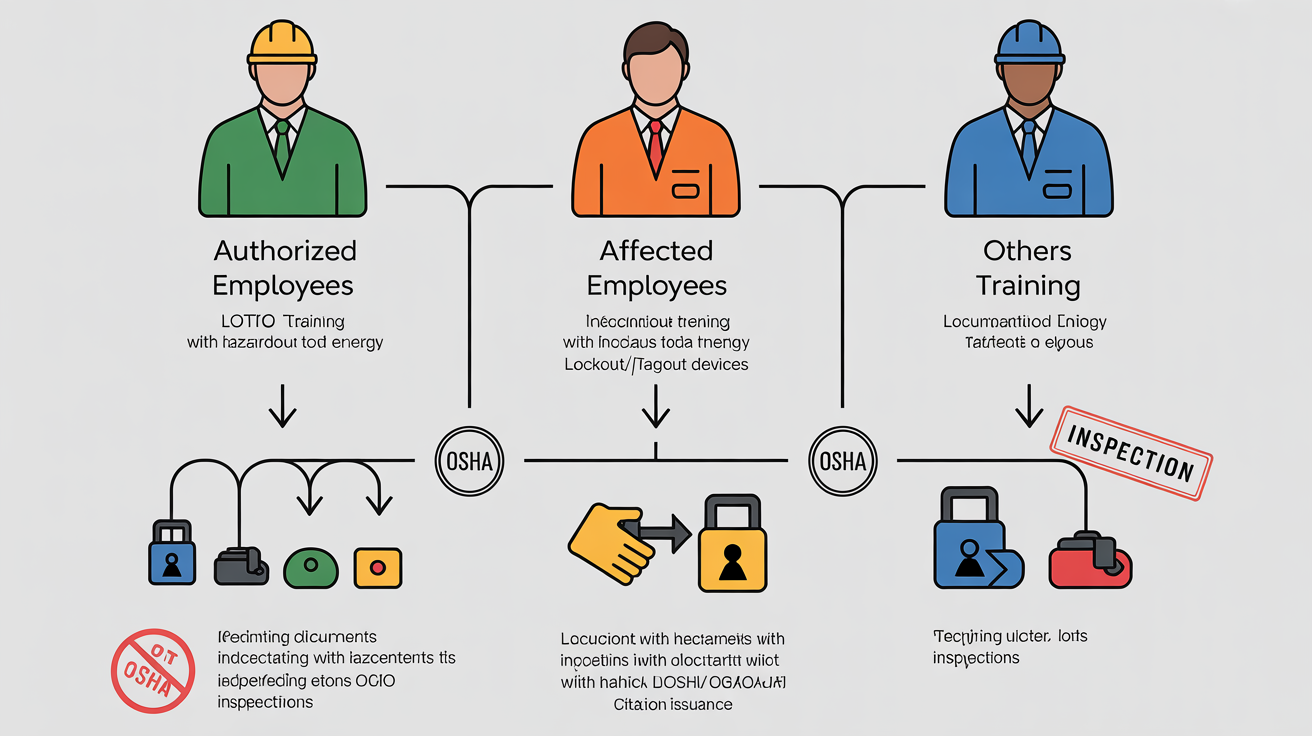
OSHA mentions three employee categories: authorized, affected, and other. Each category carries distinct LOTO training requirements based on their interaction with hazardous energy sources and lockout/tagout devices.
The three employee categories include authorized employees who perform lockout/tagout, affected employees who operate or work near serviced equipment, and other employees who may encounter locks or tags in their work areas. Different training content under 29 CFR 1910.147 applies to each group.
Authorized Employees
The three employee categories includes authorized employees as the primary focus of LOTO training requirements. These trained staff members execute lockout/tagout procedures directly. Their training scope encompasses:
Affected Employees
The three employee categories includes affected employees who operate equipment or work in areas where servicing occurs. Their LOTO training requirements center on awareness and prohibition:
Non-authorized workers and support staff fall into this category when their duties bring them near locked-out equipment.
Other Employees
The third group within the three employee categories covers other employees who work where LOTO may occur but don’t operate or service the equipment. Even the janitor walking through a production floor needs basic training covering:
| Category | Definition | Training Depth |
|---|---|---|
| Authorized | Performs LOTO | Procedure execution |
| Affected | Operates/works near equipment | Restart prohibition |
| Other | Works in LOTO areas | Recognition and avoidance |
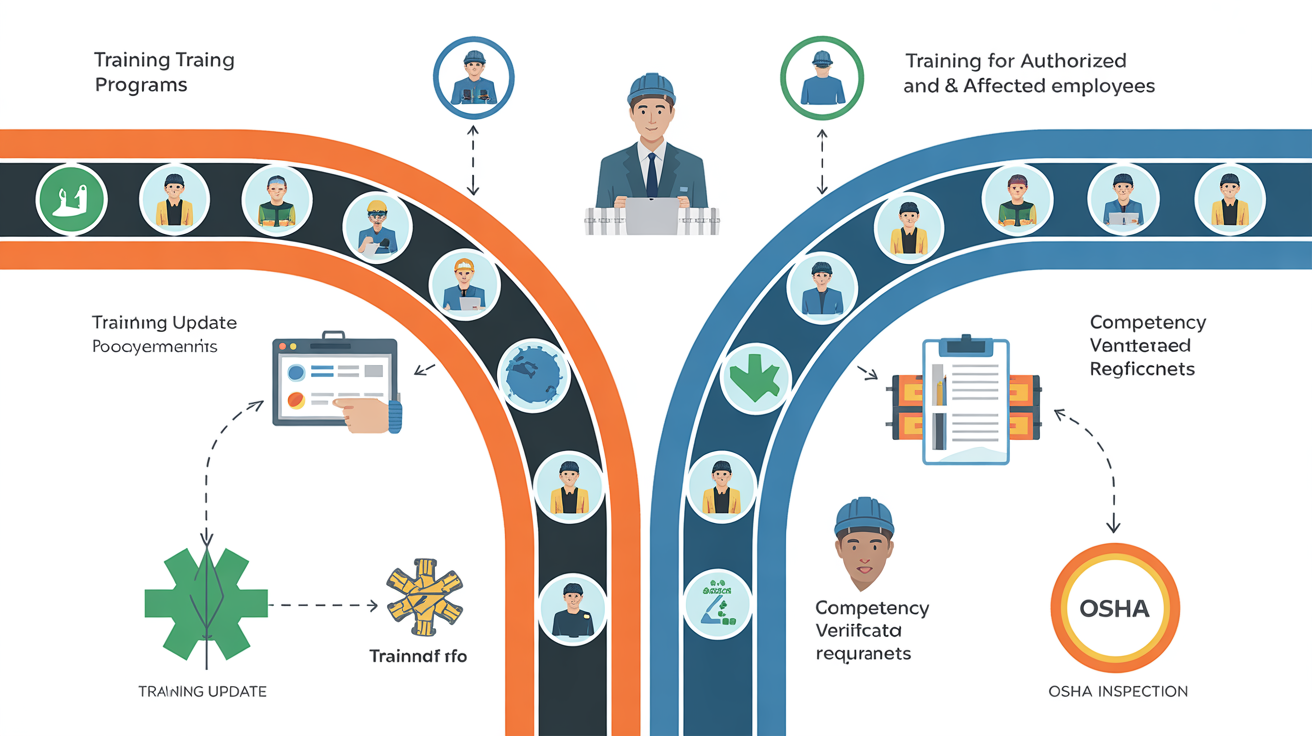
Retraining ensures that employee knowledge keeps pace with evolving hazardous energy sources and updated energy control procedures. Initial training becomes inadequate when workplace conditions change or when inspections reveal knowledge gaps.
Retraining is mandatory when procedures change — whether due to equipment modifications, new isolation points, or updated protocols. Similarly, retraining is mandatory when job assignments change, such as when an operator becomes an authorized employee or transfers to equipment with different hazardous energy sources.
The regulatory standard is explicit: “Retraining shall also be conducted whenever a periodic inspection… reveals, or whenever the employer has reason to believe, that there are deviations from or inadequacies in the employee’s knowledge or use of the energy control procedures.”
Mandatory Retraining Triggers:
The importance of retraining in LOTO training requirements extends beyond regulatory compliance. Equipment evolves continuously. A hydraulic system added to an existing machine introduces stored energy that previous training didn’t address. Without retraining, authorized employees approach modified equipment with incomplete hazard recognition.
Energy control procedures must reflect current equipment configurations. Retraining connects updated procedures to the workers who execute them. The gap between documentation and actual knowledge is precisely where fatalities occur.
Retraining differs from annual refreshers. osha requires periodic inspections annually — not calendar-based retraining. The inspection process may reveal retraining needs, but scheduled refreshers don’t satisfy the triggered retraining requirement when specific events occur.
Companies faced 491 training citations due to inadequate LOTO training. This enforcement volume makes inadequate training documentation relates to the #2 most-cited LOTO subsection — second only to missing written procedures.
OSHA can objectively verify training records during inspections. Missing documentation, attendance-only records, and generic training content all trigger citations and training violations.
Citation Consequences:
OSHA calculates fines per violation, not per inspection. Ten undertrained authorized employees equal ten citations. Training violations compound rapidly when multiple workers lack proper documentation.
Operational Consequences:
Documentation failures that trigger citations:
The financial penalties pale against human costs. LOTO procedures prevent fatalities when properly trained workers execute them correctly. Each workplace death represents a training failure somewhere in the system — an authorized employee who didn’t recognize a hazardous energy source, an affected employee who restarted locked equipment, or another worker who removed a lock they didn’t understand.
Training violations create liability exposure extending beyond OSHA fines. Personal injury attorneys examine training records when pursuing negligence claims. Inadequate documentation becomes evidence of employer negligence in civil proceedings.
A: LOTO training requirements define mandatory safety protocols for employees who service or work near equipment with hazardous energy sources. Authorized employees need training on hazard recognition and procedure execution. Affected employees need training on the purpose of energy control procedures and the prohibition against restarting locked-out equipment.
A: OSHA mandates LOTO training requirements through 29 CFR 1910.147. OSHA requires training for 491 companies under its jurisdiction, with training violations ranking as the #2 most-cited LOTO subsection. Enforcement includes document review, employee interviews, and citations for non-compliance.
A: OSHA mentions three employee categories: authorized, affected, and other. Authorized employees perform lockout/tagout and need procedure execution training. Affected employees operate equipment and need restart prohibition training. Other employees work in LOTO areas and need basic recognition training.
A: Retraining is mandatory when procedures change, when job assignments change, or when periodic inspections reveal knowledge deficiencies. Updated energy control procedures and modified equipment introduce hazardous energy sources that initial training didn’t address. The regulatory standard requires retraining whenever deviations or inadequacies appear.
A: Companies faced 491 training citations due to inadequate LOTO training. Training violations lead to $16,131 fines per serious violation, with willful violations reaching $161,323. Beyond fines, consequences include production shutdowns, increased insurance costs, workers’ compensation claims, and wrongful death litigation.