Physical Address
304 North Cardinal St.
Dorchester Center, MA 02124
Physical Address
304 North Cardinal St.
Dorchester Center, MA 02124
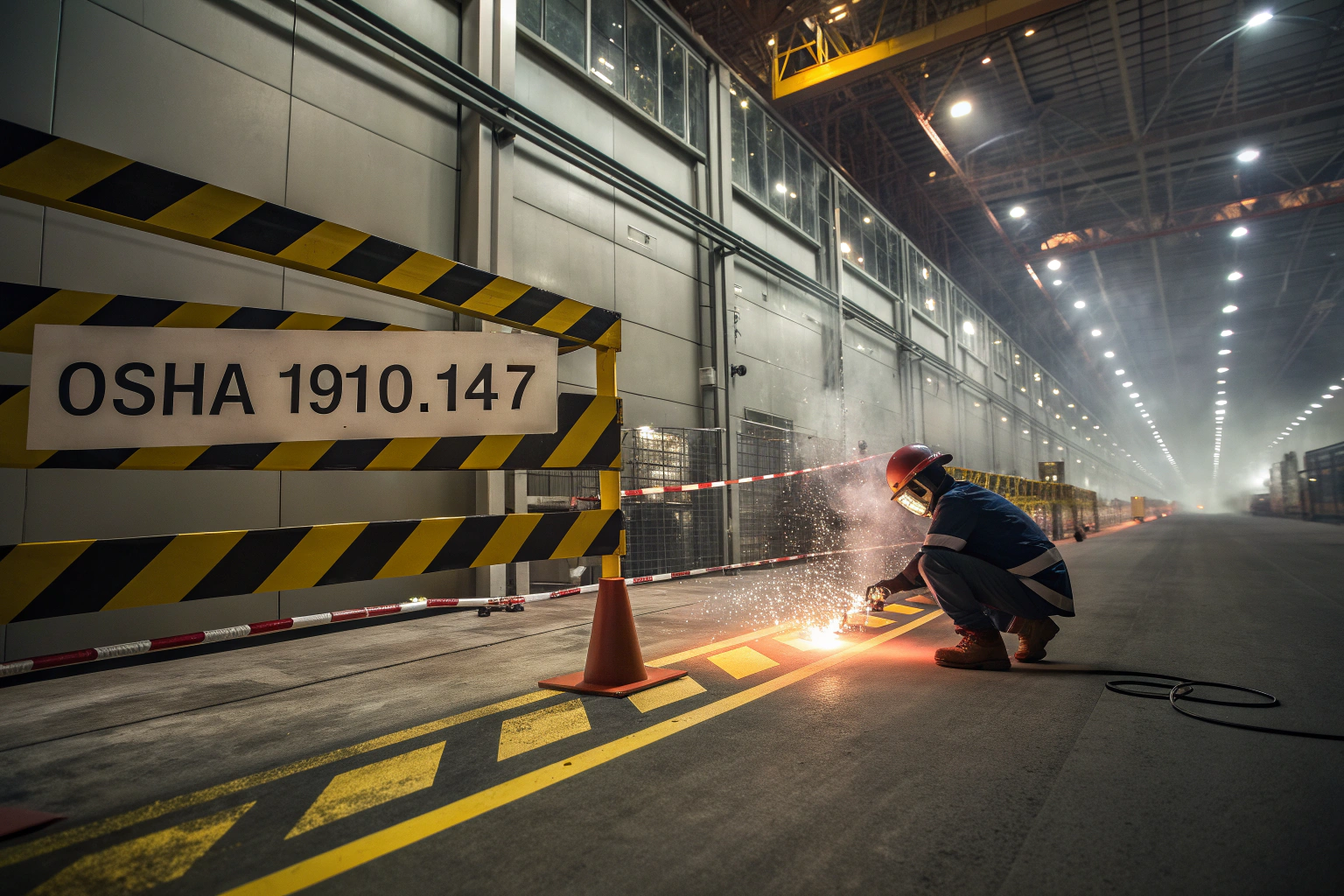
Online LOTO training covers the knowledge component of osha’s 1910.147(c)(7) requirements but cannot satisfy the hands-on competency verification that authorized employees need. Any online course claiming full compliance is misleading you—or hoping you don’t read the regulation closely.
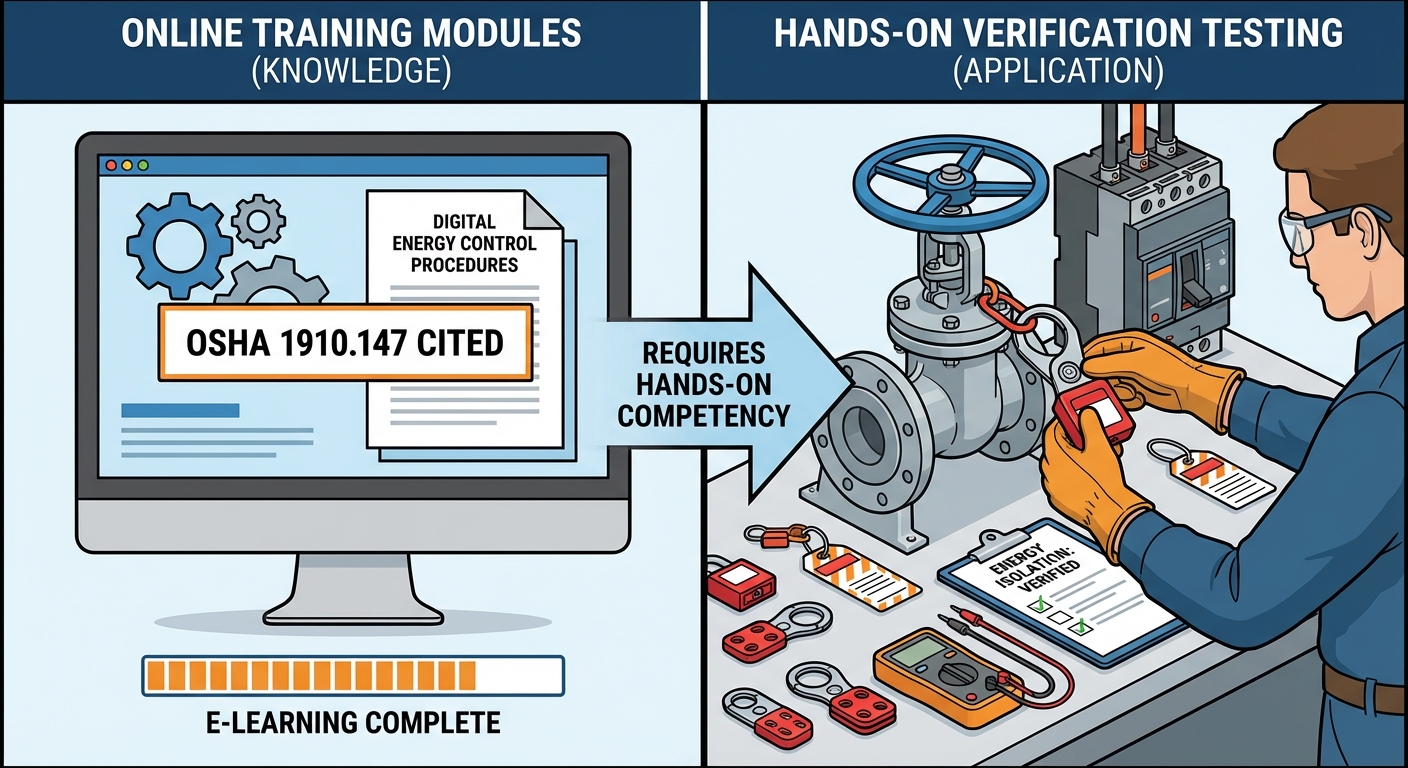
OSHA Lockout Tagout Training Online programs deliver hazard recognition and procedural knowledge—but the regulation requires more than knowledge transfer. Training citations hit 491 companies in FY2024, making it the second most-cited LOTO violation behind energy control procedures. For more information, see LOTO Training Requirements. For more information, see LOTO Training Requirements.
The problem isn’t that online training is worthless. It’s that facilities treat it as complete when it’s fundamentally incomplete.
“Each authorized employee shall receive training in the recognition of applicable hazardous energy sources, the type and magnitude of the energy available in the workplace, and the methods and means necessary for energy isolation and control.”
— 29 CFR 1910.147(c)(7)(i)(A)
What This Actually Means: Authorized employees—the ones physically applying locks—need training specific to YOUR equipment, YOUR energy sources, YOUR procedures. A generic online module covering “types of hazardous energy” doesn’t teach someone how to isolate the hydraulic accumulator on your specific press brake.
Here’s the breakdown by employee classification:
| Employee Type | What Online Training CAN Provide | What Online Training CANNOT Provide |
|---|---|---|
| Authorized | Hazard recognition theory, regulatory overview, general procedural concepts | Machine-specific isolation steps, hands-on lock application, verification testing on actual equipment |
| Affected | Purpose and use of energy control procedures, awareness content | Site-specific notification procedures, recognition of YOUR lockout devices |
| Other | General awareness that LOTO exists, prohibition against restarting | Facility-specific device recognition, location of isolation points |
The honest answer: Online training works as a foundation. It fails as a standalone solution for authorized employees.
COMPLIANCE NOTE: OSHA doesn’t explicitly prohibit online training, but enforcement history shows that “computer-based training only” programs get cited when authorized employees can’t demonstrate practical competency during inspections.
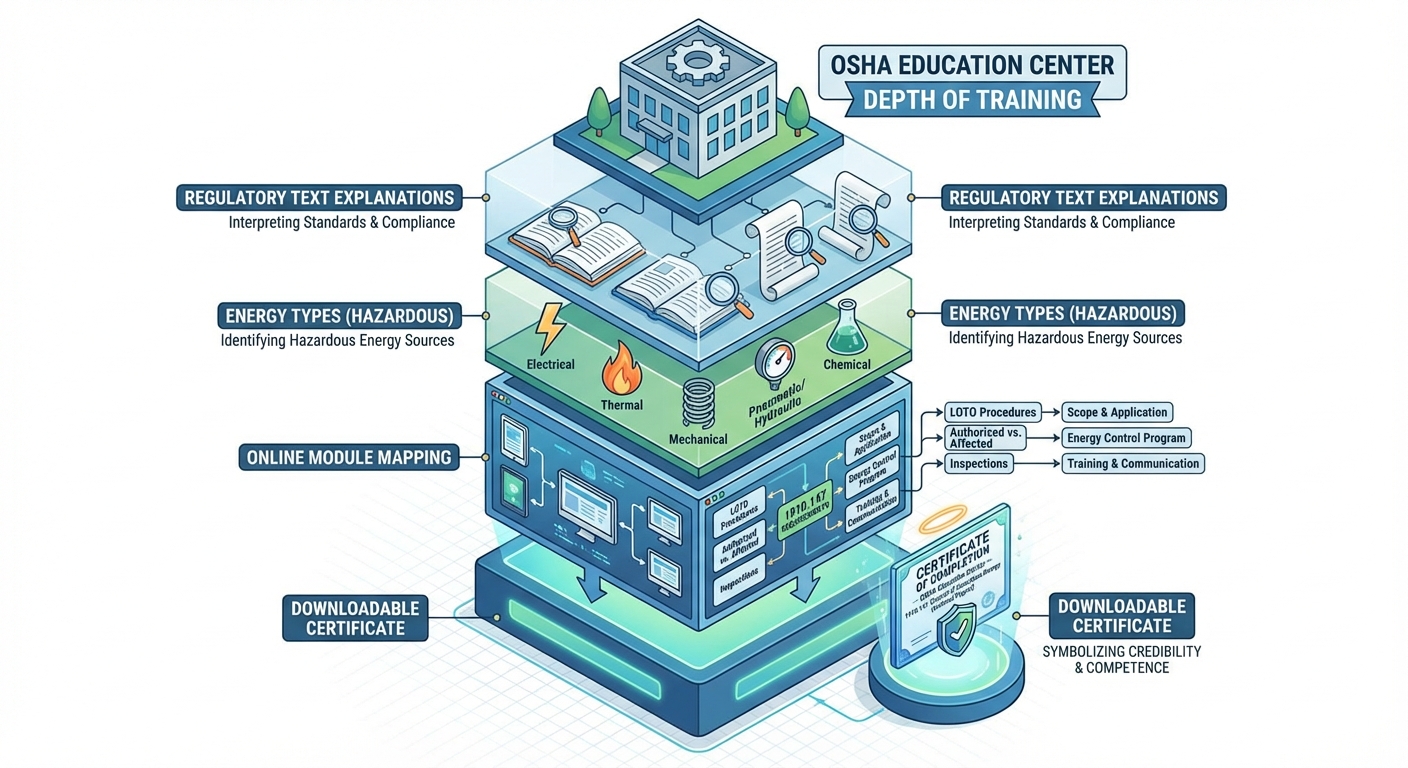
OSHA Education Center operates as an authorized provider of OSHA Outreach training, which gives it credibility that third-party providers lack. Their lockout tagout course targets the general industry audience with content mapped to 1910.147 requirements.
What You Get:
What You Don’t Get:
Pricing: Approximately $25-40 depending on current promotions
Best For: Affected employees who need awareness-level training. Also useful as a refresher for authorized employees who already have hands-on competency from in-person training.
Honest Assessment: The OSHA name carries weight, but this course covers the same general content as competitors. The primary value is the certificate’s perceived authority—inspectors recognize osha Education Center credentials. That said, no certificate replaces the ability to demonstrate actual lockout procedure execution.
IN PRACTICE: Facilities using OSHA Education Center typically pair it with in-house hands-on sessions. The online certificate documents knowledge; the hands-on documentation proves competency.
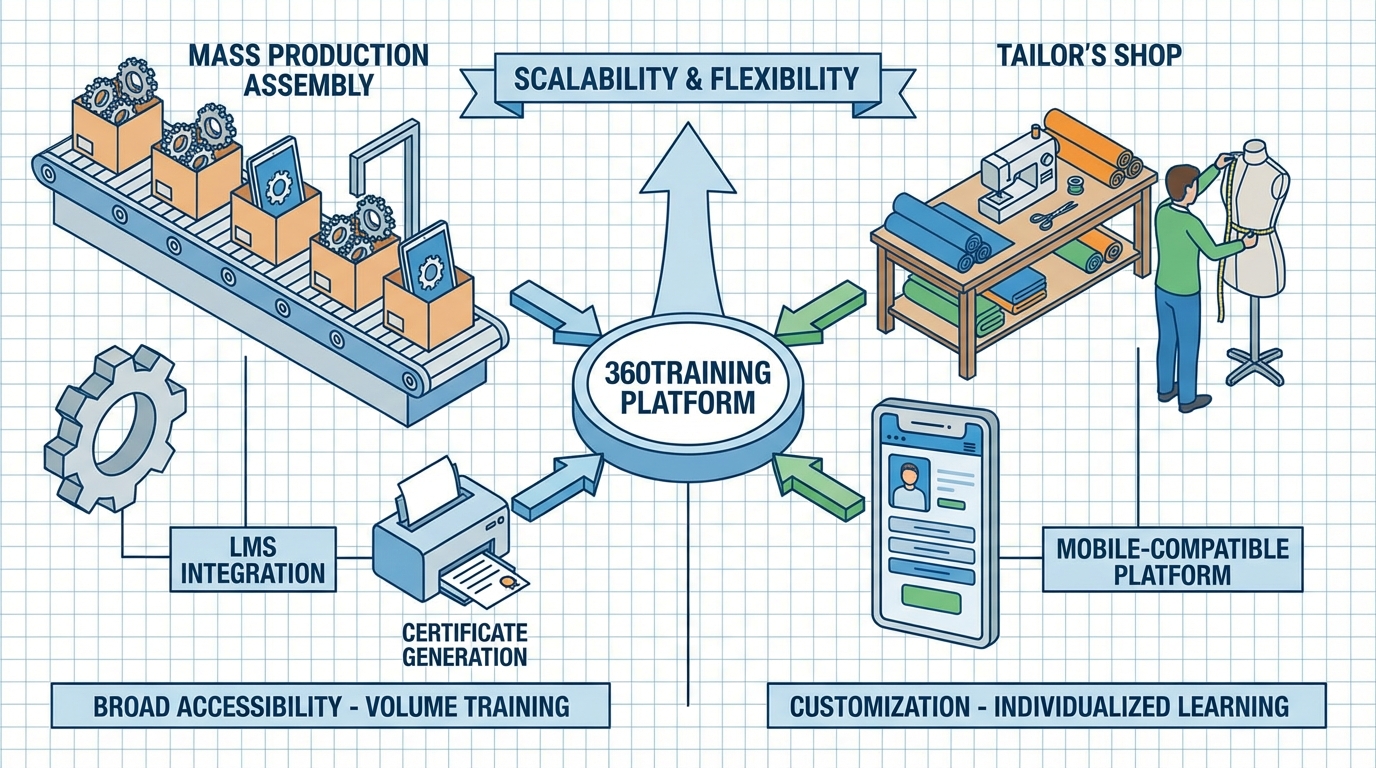
360training has built significant market share in online safety training, and their OSHA lockout tagout course is among their highest-volume offerings. The platform emphasizes accessibility and tracking features that appeal to multi-site operations.
What You Get:
What You Don’t Get:
Pricing: Individual courses around $20-35; volume discounts for enterprise accounts
Best For: Operations needing to scale awareness training across multiple locations quickly. The LMS integration makes it practical for organizations managing hundreds of employees across different sites.
Honest Assessment: 360training excels at logistics—getting training delivered, tracked, and documented at scale. The content itself is competent but generic. You’re paying for the delivery infrastructure as much as the training material.
The platform works well as the “knowledge layer” in a two-tier training program. Pair it with site-specific hands-on training, and you’ve built something defensible. Use it alone for authorized employees, and you’ve built a citation waiting to happen.
| Strength | Limitation |
|---|---|
| Scalable across locations | No facility customization |
| Mobile-friendly access | Generic equipment examples |
| Built-in record keeping | Doesn’t replace hands-on documentation |
| Competitive pricing at volume | Quiz completion ≠ competency verification |
COMMON TRAP: Facilities assume that because 360training tracks completion, they have compliant training records. OSHA requires documentation of training content AND verification that employees understood it. A completion certificate shows someone clicked through modules—not that they can execute a lockout sequence correctly.
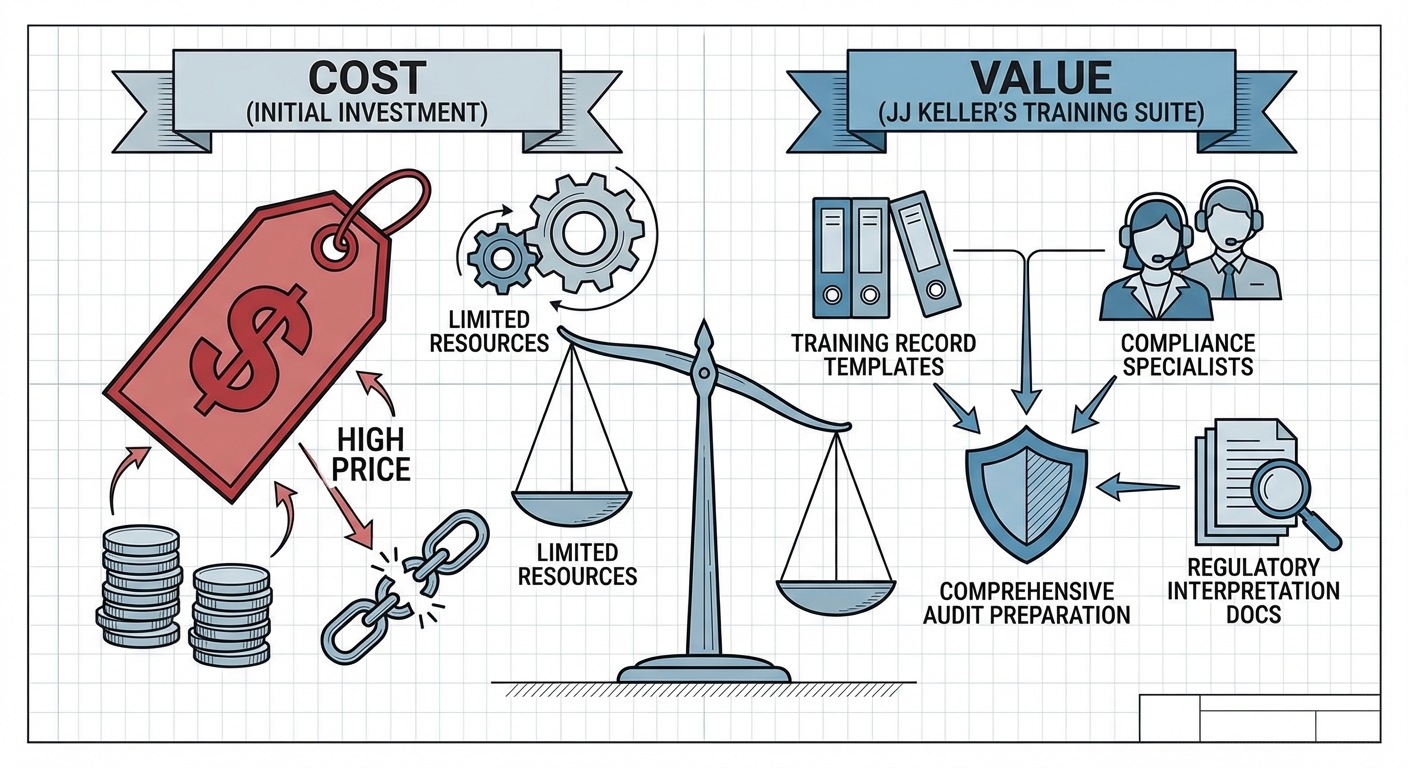
JJ Keller brings decades of regulatory compliance expertise to their training products. Their lockout tagout offerings reflect this—more comprehensive than competitors, with stronger emphasis on documentation and audit preparation.
What You Get:
What You Don’t Get:
Pricing: Higher than competitors—typically $50-75 for individual courses, with subscription models for ongoing access
Best For: Safety managers who need training AND documentation infrastructure. JJ Keller’s value is the surrounding compliance ecosystem, not just the training content itself.
Honest Assessment: You’re paying a premium, but JJ Keller delivers more than a certificate. The documentation templates and compliance support have tangible value—especially for facilities without dedicated EHS staff who understand what “training records” actually need to contain.
If you’re going to pay more, this is where the extra money provides actual return. The supplementary materials can turn a generic online course into a more complete training program when combined with your own hands-on component.
IN PRACTICE: JJ Keller users typically leverage the procedure templates to build machine-specific documentation, then use the online training as the knowledge foundation before conducting equipment-specific hands-on sessions.
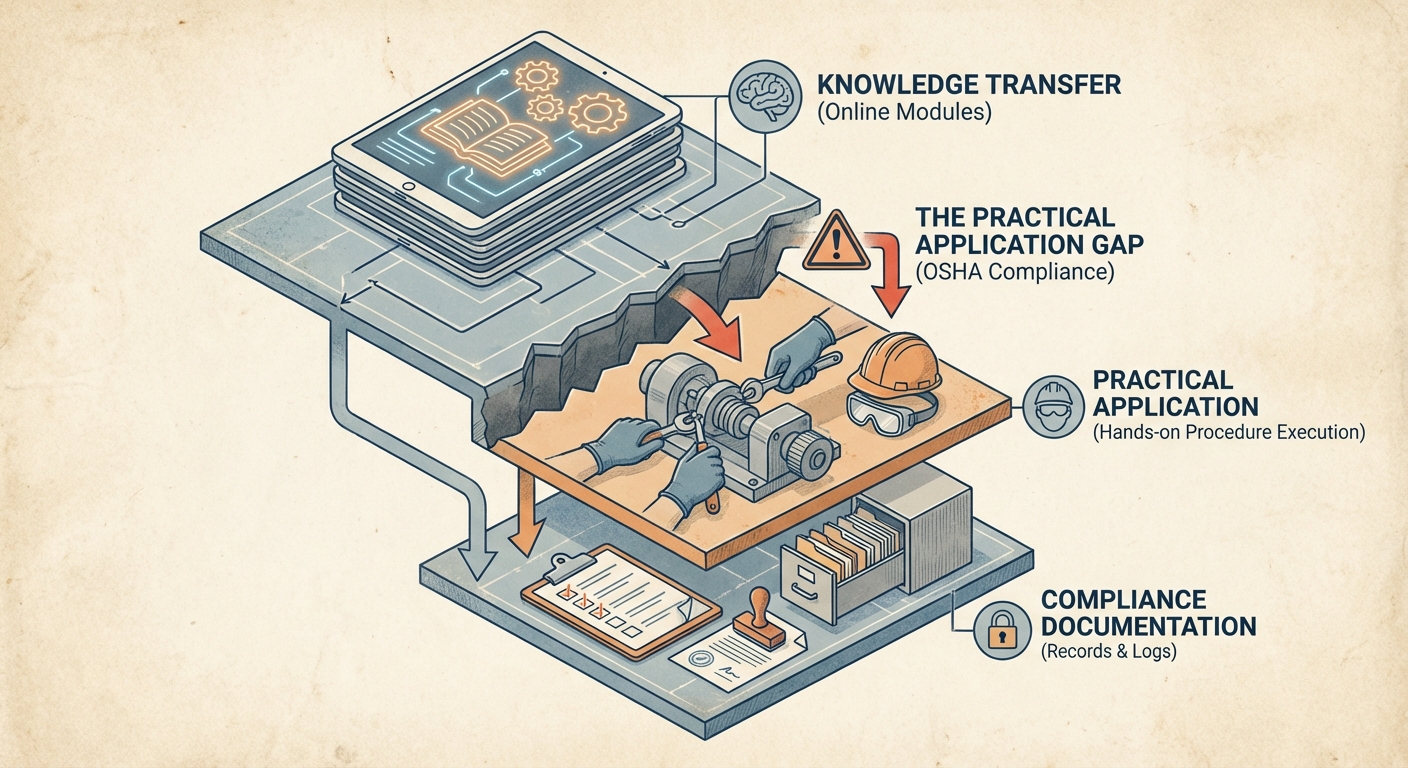
Here’s what every online training provider avoids saying explicitly: For authorized employees, online training alone does not meet OSHA requirements.
The regulation doesn’t use the phrase “hands-on training.” But it requires that authorized employees understand “the methods and means necessary for energy isolation and control” specific to their workplace. A quiz question about hydraulic energy doesn’t prove someone can identify and isolate the accumulator on Machine #47.
The Compliance Math:
Online training covers:
OSHA requires for authorized employees:
Generic online content cannot satisfy specific on-site requirements. The math doesn’t work.
What Compliant Training Actually Looks Like:
COMPLIANCE NOTE: When OSHA inspectors evaluate training programs, they don’t just check for certificates. They ask employees to explain the lockout procedure for specific equipment. If the employee can only recite generic steps from an online course, the training program fails.
The Practical Solution:
Use online training for what it does well—scalable knowledge delivery. Then build the hands-on component yourself:
Cost Reality:
Online course: $25-75 per employee
In-house hands-on addition: 2-4 hours per employee group (your trainer’s time)
Combined documentation: 30 minutes to set up templates
Compare to potential citations: $16,131 per serious violation. training documentation failures hit 491 companies last year. The hands-on investment is a rounding error against that exposure.
Online training satisfies knowledge requirements for affected and other employees. For authorized employees who physically perform lockout, online training must be supplemented with hands-on, equipment-specific instruction to meet 1910.147(c)(7) competency standards.
JJ Keller provides the most comprehensive package with documentation support. 360training offers the best scalability for multi-site operations. OSHA Education Center carries recognized credential authority. All require hands-on supplementation for authorized employee compliance.
Initial training before assignment to LOTO duties, retraining when procedures change, when new equipment is introduced, or when inspections reveal inadequate knowledge. No fixed annual requirement exists, though many facilities conduct annual refreshers as a practical standard.