Physical Address
304 North Cardinal St.
Dorchester Center, MA 02124
Physical Address
304 North Cardinal St.
Dorchester Center, MA 02124
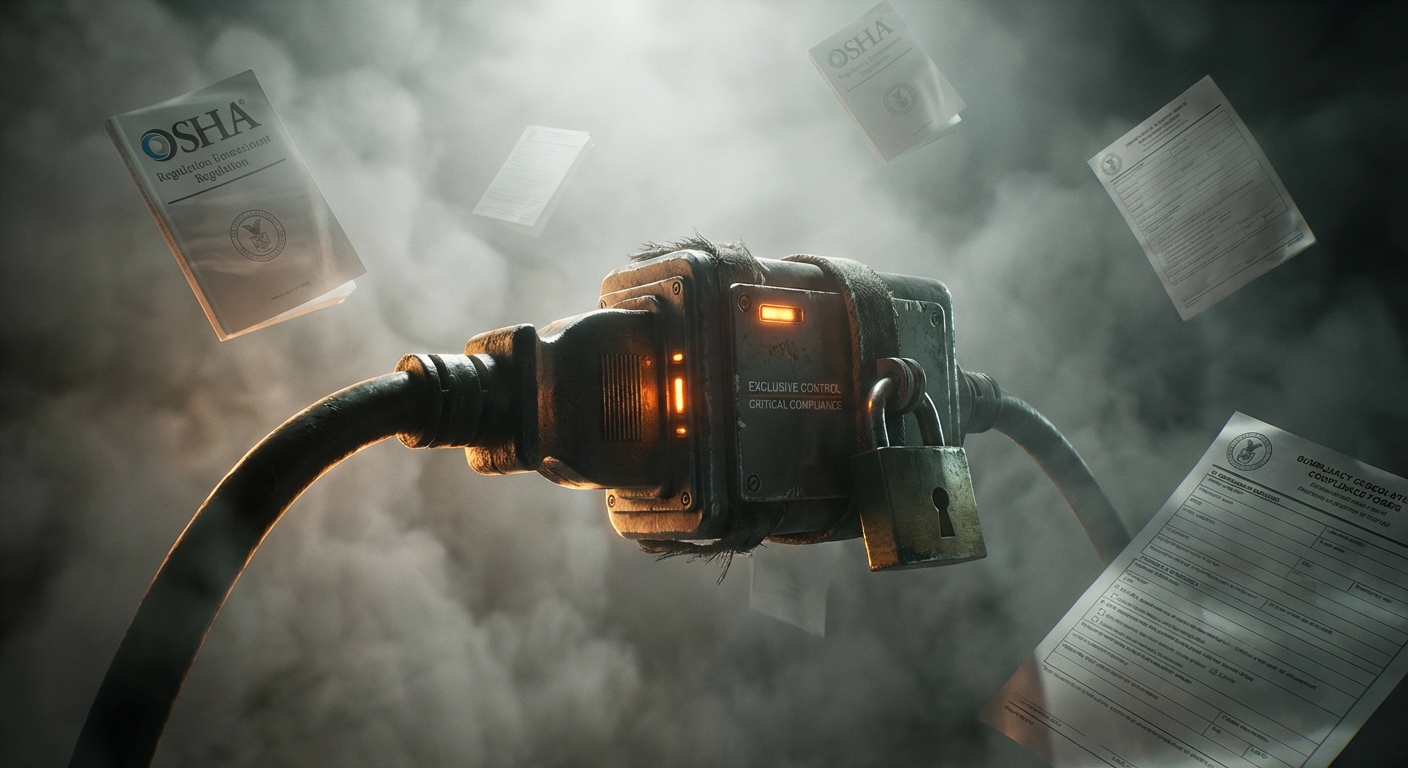
The OSHA cord and plug exemption is the most misunderstood clause in 29 CFR 1910.147. Maintenance workers assume “I unplugged it” means they’re covered. It doesn’t. The exemption has teeth — and those teeth bite when you walk away from that plug to grab a tool, take a bathroom break, or work on the other side of a large machine. For more information, see Lockout Tagout Padlocks. For more information, see Mastering Lockout Hasp Selection. For more information, see Lockout Tagout Padlocks. For more information, see Mastering Lockout Hasp Selection.
I’ve watched inspectors cite this violation on walk-throughs. The cord is unplugged. The machine is dead. And the company still gets hit because the technician was 20 feet away with his back turned.
Here’s what the exemption actually requires — and the $15 device that solves the problem.
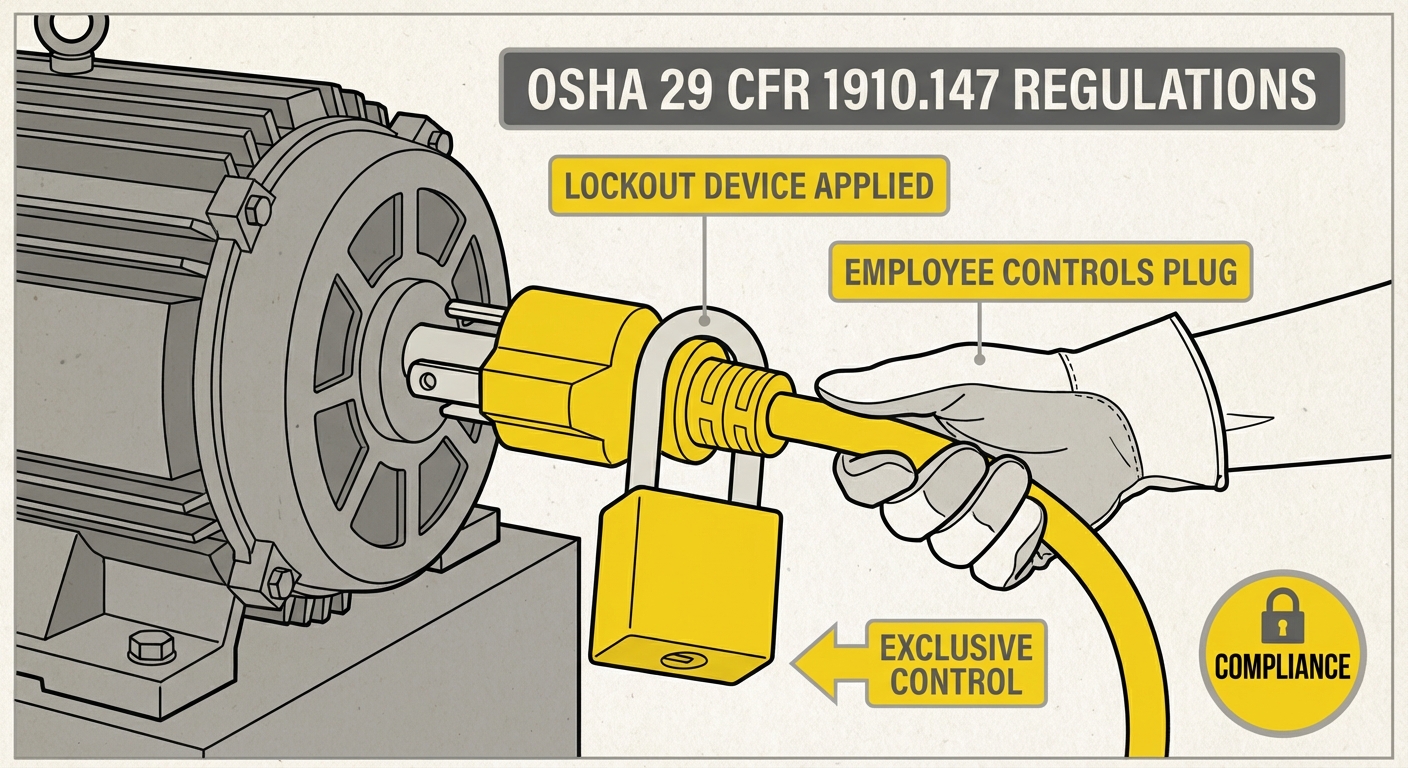
“Work on cord and plug connected electric equipment for which exposure to the hazards of unexpected energization or start up of the equipment is controlled by the unplugging of the equipment from the energy source and by the plug being under the exclusive control of the employee performing the servicing or maintenance.”
— 29 CFR 1910.147(a)(2)(iii)(A)
Shop Floor Translation: Unplugging alone doesn’t satisfy this exemption. The plug must remain under your exclusive control the entire time you’re servicing the equipment. Lose that control, lose the exemption — and now you need full lockout/tagout procedures.
This isn’t interpretation. It’s the literal regulatory text. Two conditions must exist simultaneously:
Miss either one, and LOTO applies.
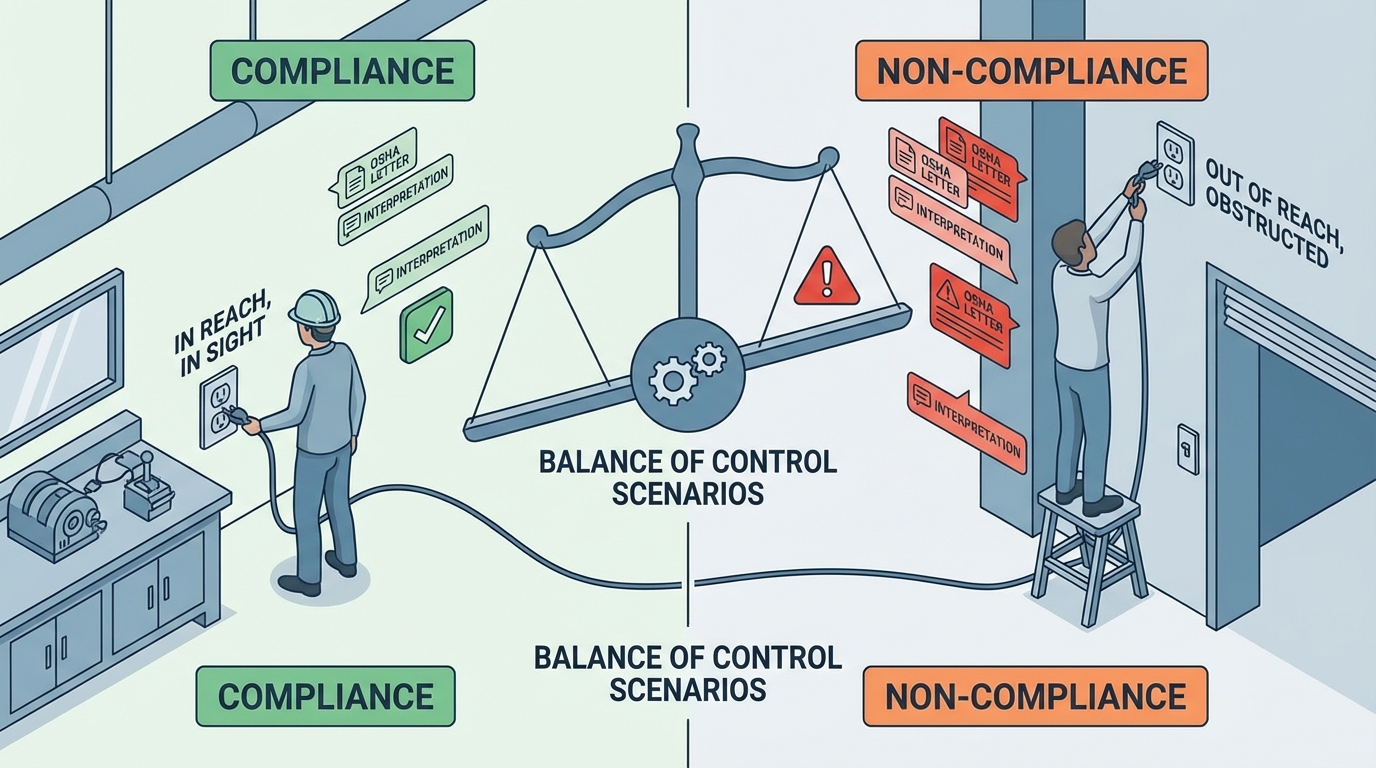
OSHA clarified “exclusive control” across multiple Letters of Interpretation (June 30, 1993; November 30, 2010; April 3, 2012). An authorized employee maintains exclusive control when the plug is:
| COMPLIANT | NON-COMPLIANT |
|---|---|
| Physically in the employee’s possession | Across the room, out of reach |
| Within arm’s reach AND in line of sight | Behind the employee, out of view |
| Secured with a plug lockout device | Lying on the floor unattended |
The standard isn’t vague here. “Exclusive control” means you can physically prevent someone from plugging that cord back in. If another employee could walk over and reconnect power without you knowing, you’ve lost exclusive control.
AUDIT TRAP: “I could see it from where I was working” doesn’t cut it. OSHA requires arm’s reach AND line of sight — or a lockout device. One or the other isn’t enough.
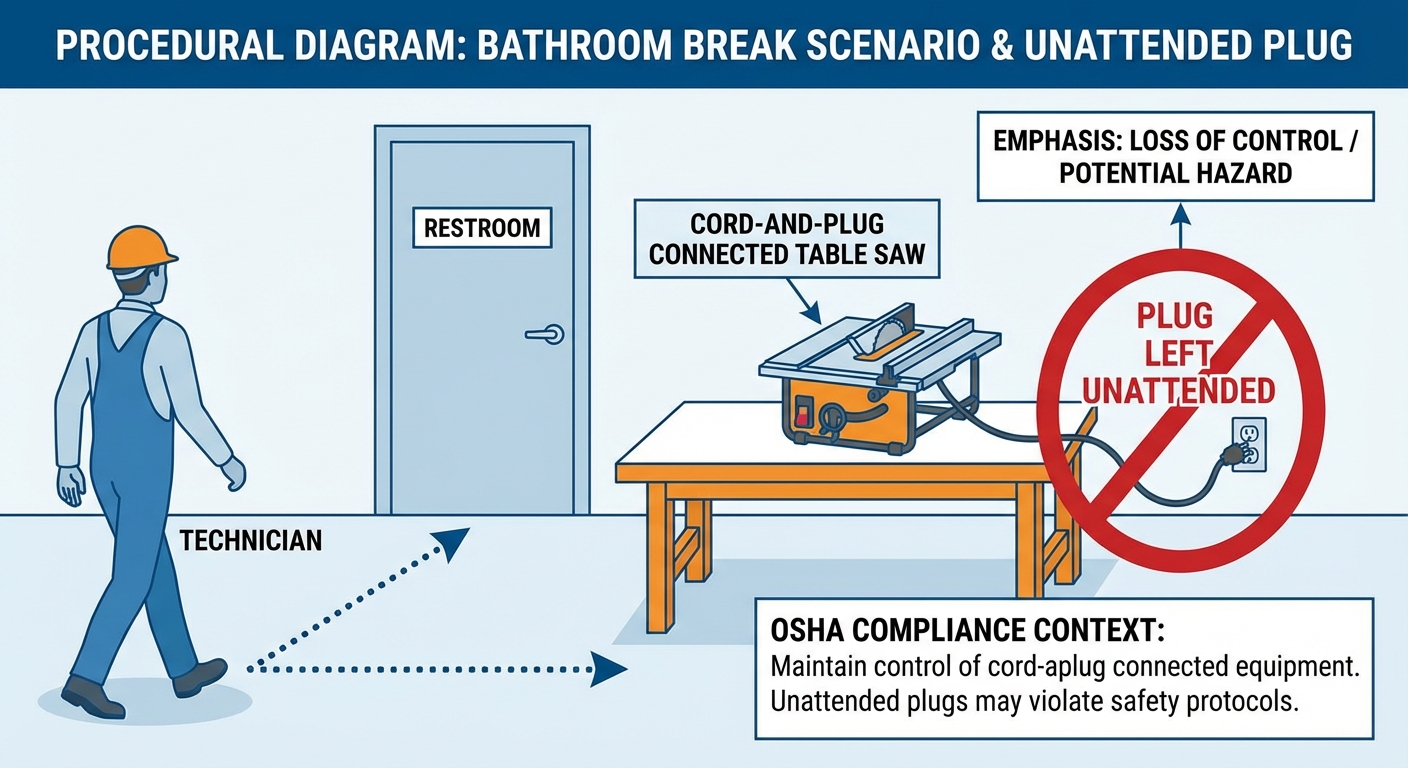
Here’s how this plays out on the shop floor:
A technician is servicing a cord-and-plug connected table saw. He unplugs it, sets the plug on the workbench, and starts the repair. Twenty minutes in, he needs to use the restroom. He leaves the plug on the bench and walks away.
He just lost his exemption.
During those three minutes, anyone could plug that saw back in. The “exclusive control” requirement isn’t satisfied by good intentions or short timeframes. It’s binary — you either control the plug or you don’t.
The same failure happens constantly with large equipment. Industrial mixers, packaging machines, CNC mills with long cords — the plug might be 15 feet from where you’re actually working. You’re physically incapable of maintaining exclusive control while servicing the machine.
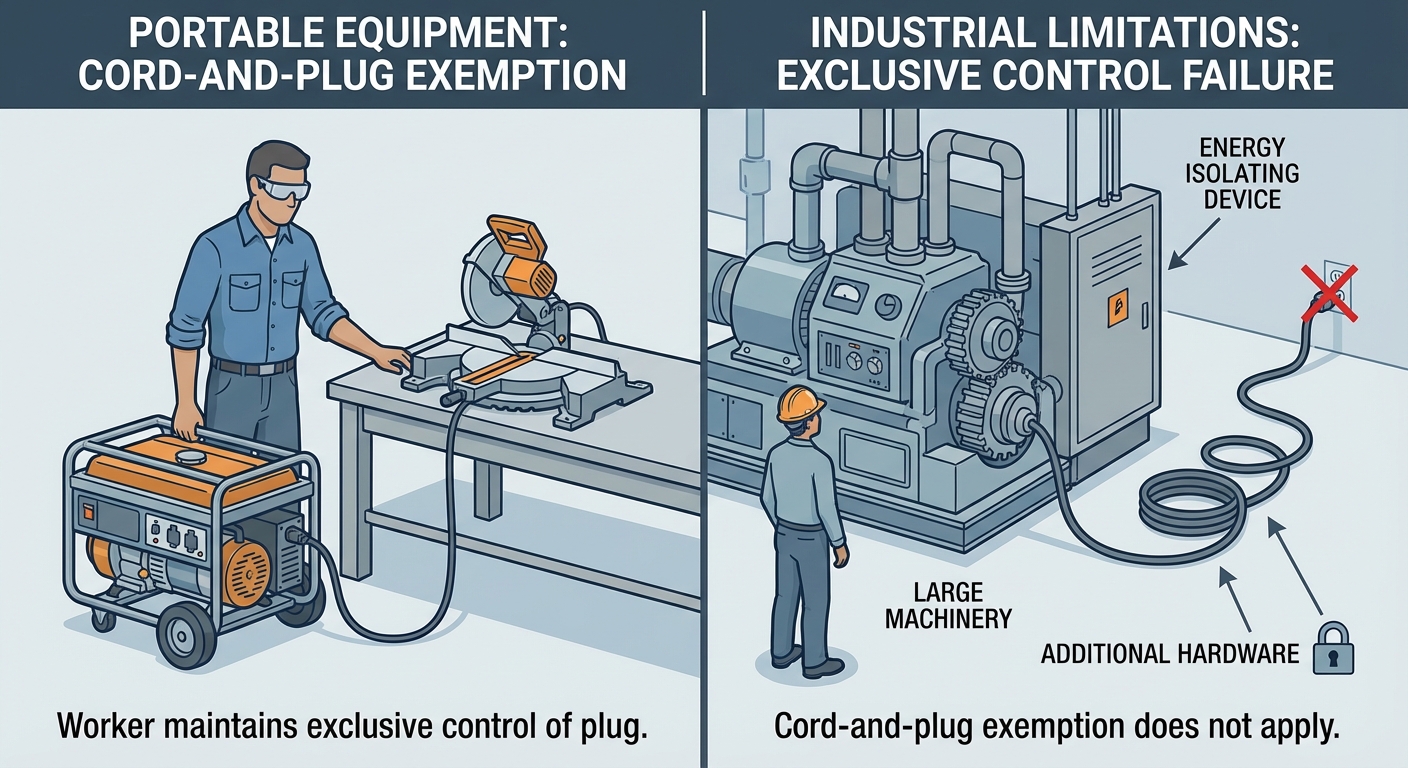
The cord-and-plug exemption was designed for small, portable equipment — not industrial machinery. When the energy isolating device (the plug) is physically distant from the work area, exclusive control becomes impossible without additional hardware.
Consider a floor-standing drill press with a 10-foot cord. You’re changing the spindle on one side. The plug is on the other side of the machine, behind you, out of arm’s reach. Another worker walks by, assumes the machine is ready, and plugs it in.
The exemption also fails when cord-and-plug equipment has multiple energy sources. That mixer might be unplugged, but if it has a pneumatic cylinder or stored hydraulic pressure, the electrical exemption means nothing. You need full energy control procedures.
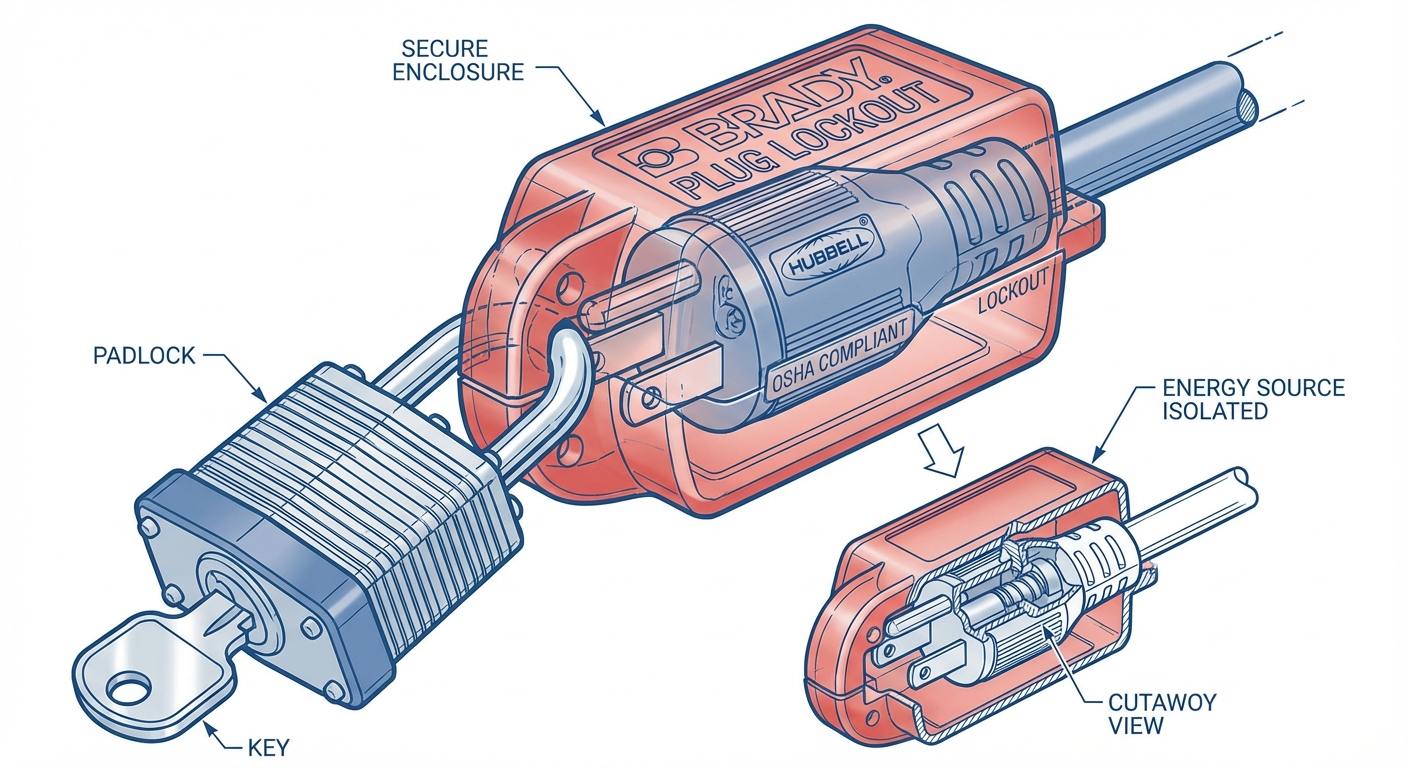
A plug lockout device is a physical enclosure that covers the plug end and accepts a padlock. The authorized employee unplugs the equipment, places the plug inside the lockout box, applies their personal lock, and carries the key.
Now the exemption works. Exclusive control is maintained even when you walk away because nobody can access the plug without your key.
| Device Type | Application | Price Range |
|---|---|---|
| Plug Lockout Box (small) | Standard 3-prong plugs | $12-20 |
| Plug Lockout Box (large) | 20A-30A industrial plugs | $25-45 |
| Plug Lockout Pouch | Irregular plug shapes | $15-25 |
These devices cost less than a single hour of an OSHA penalty. brady and Hubbell both manufacture compliant options that fit most industrial plugs. To better understand the regulations surrounding lockout/tagout, refer to 29 cfr 1910.147 for detailed insights.
The hardware satisfies the “exclusive control” requirement because the plug is physically secured. You can leave the work area, take breaks, work on the opposite side of the machine — the protection remains intact.
AUDIT TRAP: Some facilities use zip-ties or tape to “secure” plugs. Neither meets the regulatory standard. A plug lockout device must accept a padlock and provide positive lockout protection.
Q: Does the cord-and-plug exemption apply if I’m wearing the plug in my tool belt?
A: Yes. Physical possession of the plug satisfies the exclusive control requirement. This works for small cords but becomes impractical with heavy-gauge industrial cables.
Q: Can two employees share exclusive control of the same plug?
A: No. The regulation specifies “the employee” — singular. For group servicing situations, use a plug lockout device with a multi-lock hasp so each worker can apply a personal lock.
Q: What if the only energy source is the cord and I’m working alone?
A: If you maintain arm’s reach and line of sight throughout the entire service activity, the exemption applies. The moment you step away — even briefly — it doesn’t.