Physical Address
304 North Cardinal St.
Dorchester Center, MA 02124
Physical Address
304 North Cardinal St.
Dorchester Center, MA 02124

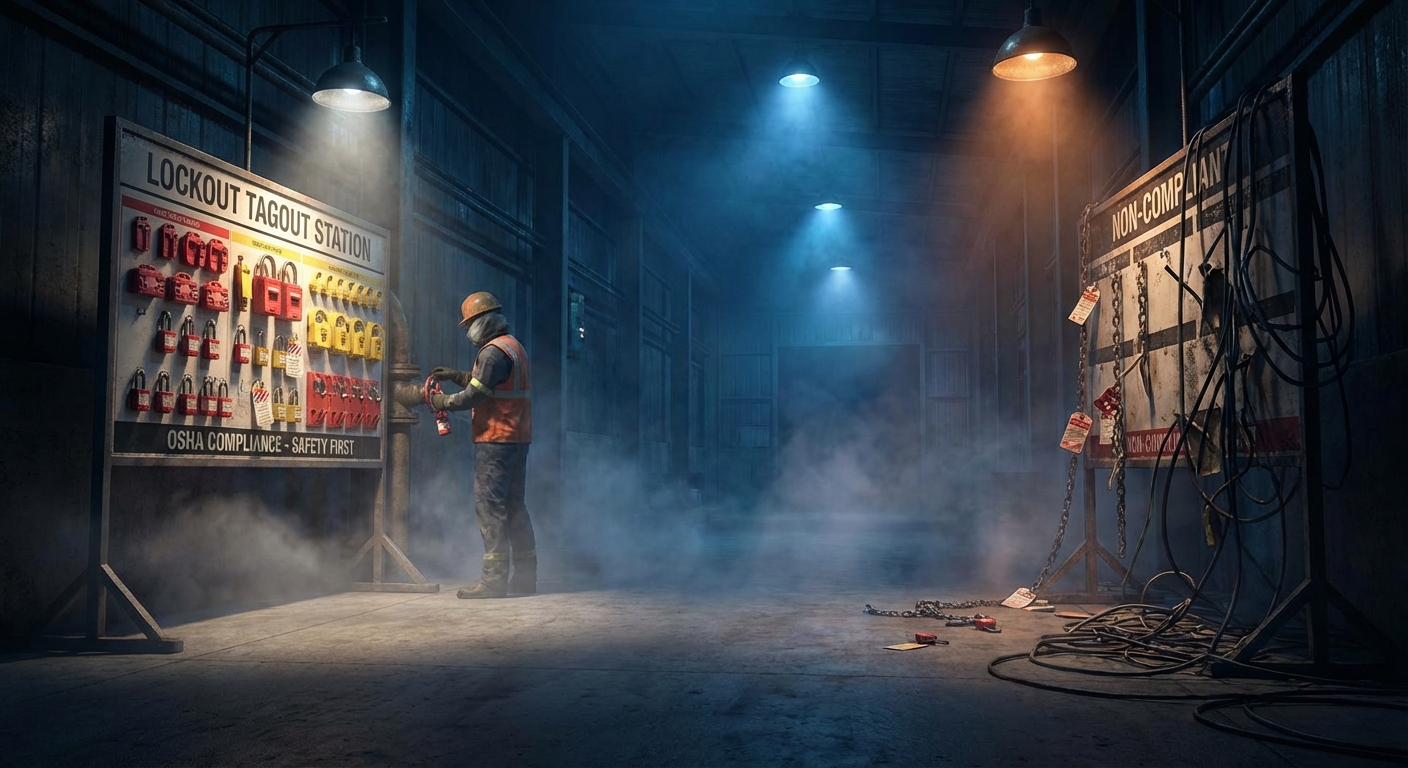
The best lockout tagout station isn’t the cheapest one on Amazon. It’s the one that’s still intact three years from now with hardware that actually meets the four regulatory requirements.
I’ve watched companies buy $89 plastic stations, fill them with random locks from the maintenance closet, and then act surprised when osha asks why their lockout devices aren’t standardized. That’s 289 citations under (c)(1) last year for inadequate energy control programs — and non-standardized hardware is a recurring theme.
A lockout station is an organization system. But it’s also evidence. When an inspector walks your floor, a well-stocked station with matching red padlocks, identical tags, and serialized hasps tells a story: this facility takes LOTO seriously.
The wrong station tells a different story.
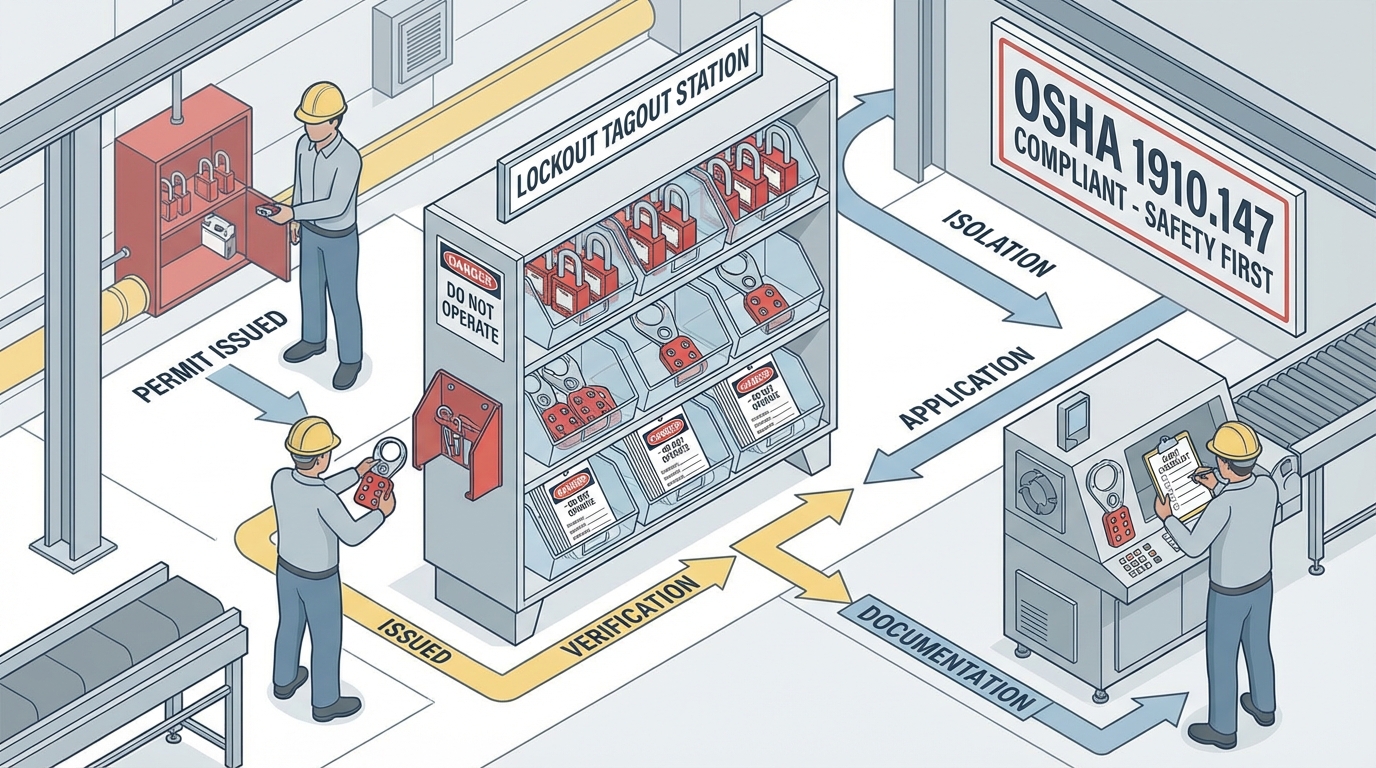
Before you compare products, understand what you’re actually buying compliance for.
“Lockout devices and tagout devices shall be standardized within the facility in at least one of the following criteria: Color; shape; or size.”
— 29 CFR 1910.147(c)(5)(ii)(B)
Shop Floor Translation: Every lock, tag, and hasp in your facility needs to match. Same color. Same shape. Same format. A lockout station is the easiest way to enforce this — you issue hardware from the station, not from someone’s toolbox.
The standardization requirement exists for recognition. When a worker sees a red padlock on an energy isolating device, they should instantly know: that’s a lockout lock. Not a storage locker padlock. Not a supervisor’s personal lock. A LOTO lock.
| COMPLIANT | NON-COMPLIANT |
|---|---|
| Red safety padlocks, all same model | Mixed red/blue/silver locks |
| Identical pre-printed danger tags | Hand-written tags, varying formats |
| Matching hasps from single manufacturer | Random hasps from different kits |
A lockout station centralizes your hardware. Workers grab standardized equipment from one location. When you audit your station inventory annually, you verify everything still matches.
AUDIT TRAP: “We bought standardized locks five years ago” doesn’t help when half have been lost and replaced with whatever was at the hardware store. Stations need periodic inventory checks — the locks on the board should match what’s actually in use on the floor.
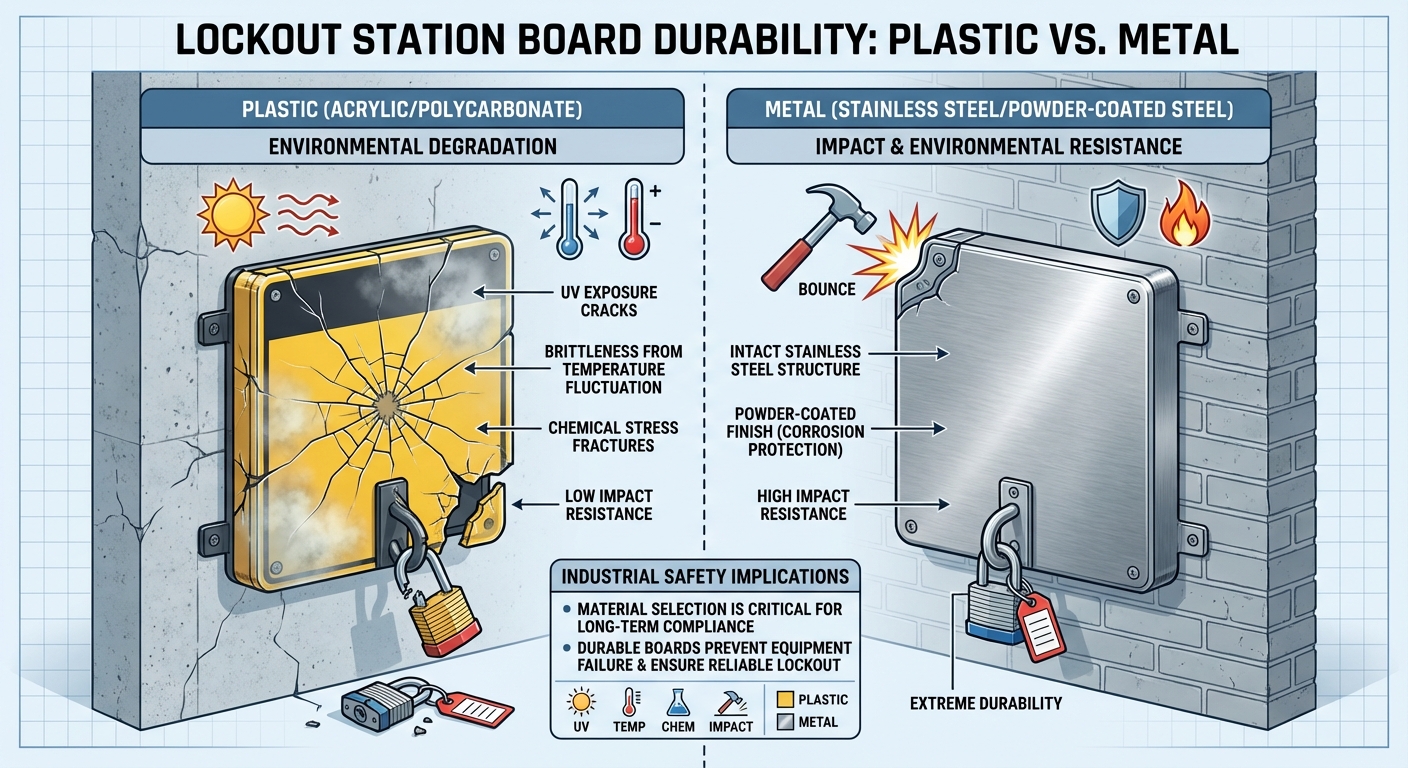
This is where most cheap stations fail. Not during the audit — during year two.
A lockout station is a board that holds hardware. That’s it. But the board material determines whether you’re buying once or buying twice.
Plastic Station Boards
Price range: $50-150 unfilled
The appeal is obvious. They’re light. They’re cheap. They look professional when new.
The problem: plastic becomes brittle. Cold warehouse environments, outdoor installations, direct sunlight through windows — all degrade plastic over time. I’ve seen station boards crack down the middle when someone grabbed a lock too hard in January.
Acrylic boards are worse. One drop and you’re sweeping up pieces.
Metal Station Boards
Price range: $100-300 unfilled
Steel or aluminum boards with powder coating. Heavier. More expensive. Still functional after a forklift bumps the wall.
The durability requirement in 1910.147(c)(5)(ii)(A) applies to lockout devices, not stations. But think about it: if your station falls apart, your devices scatter. Standardization fails. Hardware gets lost. Workers grab whatever’s available.
| Material | Pros | Cons | Best Environment |
|---|---|---|---|
| Plastic/Acrylic | Low cost, lightweight | Cracks in cold/heat, UV degrades | Climate-controlled office areas |
| Powder-coated Steel | Durable, professional | Heavier, higher cost | Warehouses, manufacturing floors |
| Stainless Steel | Corrosion-proof | Highest cost | Food processing, chemical plants |
My recommendation: If your station lives anywhere near a production floor, pay for metal. The $100 premium over plastic saves you $200 in replacement costs and the headache of re-standardizing scattered hardware.
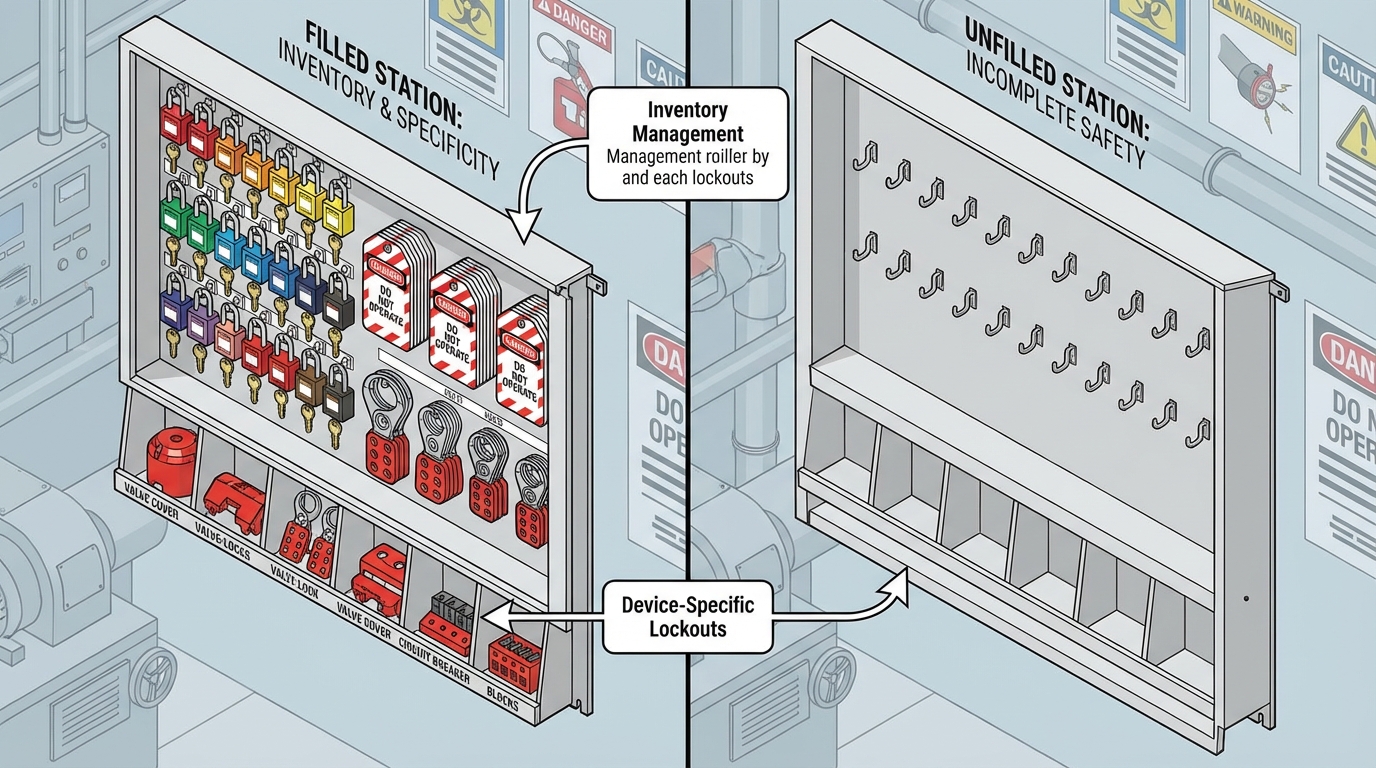
A lockout station is either “filled” or “unfilled.” This decision affects your budget more than the board material.
Unfilled Stations
You’re buying the board, hooks, and maybe some labels. You supply the locks, tags, and hasps separately.
This makes sense if you already have compliant hardware and just need organization. It does NOT make sense if you’re building a program from scratch.
Filled Stations
Pre-configured with padlocks, tags, hasps, and sometimes device-specific lockouts (circuit breaker, valve, plug). Prices range from $200 for basic kits to $800+ for comprehensive stations.
Here’s what matters in a filled station:
Padlock Quantity and Type
Most stations include 6-12 padlocks. For a single-shift operation with 5-8 authorized employees, that’s enough. Multi-shift facilities need more — remember, each authorized employee applies their own lock.
Check the shackle diameter. Standard is 1/4″ (6mm). Some cheap kits include 3/16″ shackles that won’t fit industrial hasps.
Tag Inventory
Look for pre-printed tags that meet the warning legend requirement:
“Tags shall contain a legend such as the following: Do Not Start. Do Not Open. Do Not Close. Do Not Energize. Do Not Operate.”
— 29 CFR 1910.147(c)(5)(iii)
Shop Floor Translation: A tag that just says “LOCKED OUT” without a specific prohibition fails the regulatory test. Good station kits include tags with “DANGER: DO NOT OPERATE” or equivalent legends.
Hasps
A hasp is a lockout device that allows multiple padlocks on a single isolation point. Essential for group lockout procedures where multiple workers need protection.
Most filled stations include 2-4 hasps. Capacity varies from 4-lock to 12-lock models. For large crews, you’ll need supplemental hasps — or consider a permit station for group LOTO.
Device-Specific Lockouts
Premium stations include circuit breaker lockouts, ball valve lockouts, and plug lockouts. Budget stations don’t.
If your facility has varied energy isolating devices — and most do — a station with device-specific hardware saves separate purchases. But verify the included devices match YOUR equipment. A universal circuit breaker lockout doesn’t fit every breaker type.
| Station Type | Typical Contents | Price Range | Best For |
|---|---|---|---|
| Unfilled | Board, hooks, labels only | $50-150 | Existing compliant hardware |
| Basic Filled | 6 locks, 10 tags, 2 hasps | $150-250 | Small facilities, single shift |
| Standard Filled | 12 locks, 20 tags, 4 hasps, basic devices | $250-400 | Mid-size manufacturing |
| Premium Filled | 20+ locks, tags, hasps, comprehensive devices | $400-800+ | Large facilities, multiple energy types |
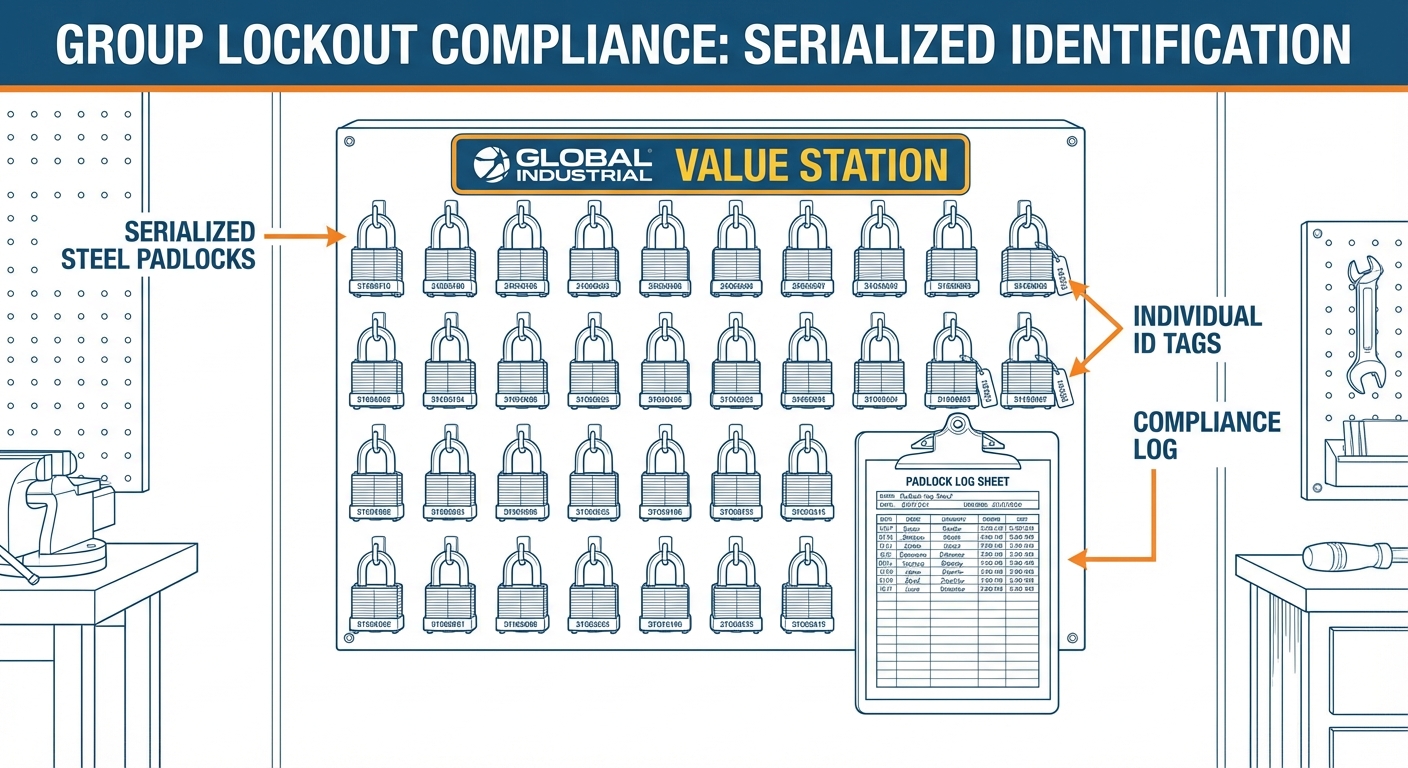
Price: ~$300-350 filled
What You Get: 16 steel padlocks (keyed differently), 50 lockout tags, 4 steel hasps, assorted circuit breaker lockouts, plug lockout, and a powder-coated steel board.
This is the station I recommend for most manufacturing facilities starting or rebuilding their LOTO program.
The steel board survives shop environments. The 16-lock quantity handles two shifts of authorized employees. The included circuit breaker lockouts fit standard residential and commercial breakers — though you’ll need to verify compatibility with your specific panels.
What I Like:
The padlocks are serialized. Each lock has a unique number stamped on the body and recorded on a log sheet. This handles the “identifiable” requirement without buying separate photo ID tags.
The hasp capacity (4 pieces, 6-lock each) handles most group lockout situations without immediate supplementation.
What’s Missing:
No valve lockouts included. If you have ball valves, gate valves, or pneumatic disconnects, you’re buying those separately.
The tags are basic. They meet the legend requirement but don’t have extensive write-in fields. For complex procedures requiring detailed information on the tag, consider upgrading.
Best For: Facilities with primarily electrical energy sources, 10-20 authorized employees, and straightforward isolation requirements.
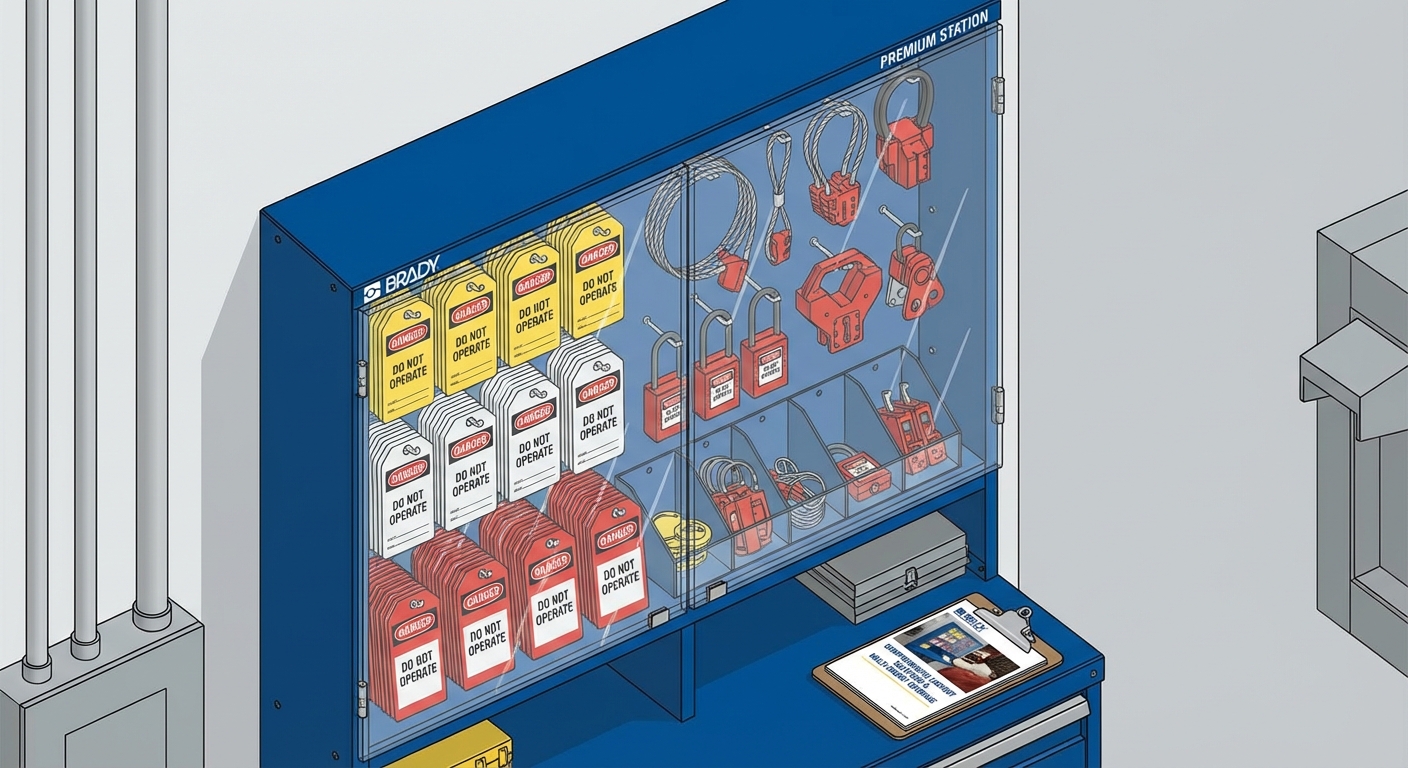
Price: ~$500-700 filled (varies by configuration)
What You Get: Depends on configuration, but premium stations typically include 20+ padlocks, comprehensive tags, multiple hasp sizes, AND a full range of device-specific lockouts — circuit breaker, ball valve, gate valve, plug, and cable lockouts.
Brady stations cost more. But Brady is the name OSHA inspectors recognize. When your station board says “Brady,” it signals investment in compliance.
What I Like:
The device variety. A Brady premium station covers electrical panels, pneumatic lines, hydraulic valves, and cord-and-plug equipment in one purchase. You’re not making five separate orders.
The tag system. Brady’s tags have extensive documentation fields, durable construction (laminated polyester, not paper), and clear warning legends. They survive wet environments that destroy cheap tags.
The support materials. Brady stations often include procedure templates, training guides, and wall charts. Not essential, but helpful for new programs.
What’s Missing:
Value. You’re paying for the Brady name and the comprehensive coverage. If your facility only has electrical energy sources, you’re buying valve lockouts you’ll never use.
Best For: Facilities with multiple energy types (electrical, hydraulic, pneumatic), 20+ authorized employees, or environments requiring chemical/moisture resistance.
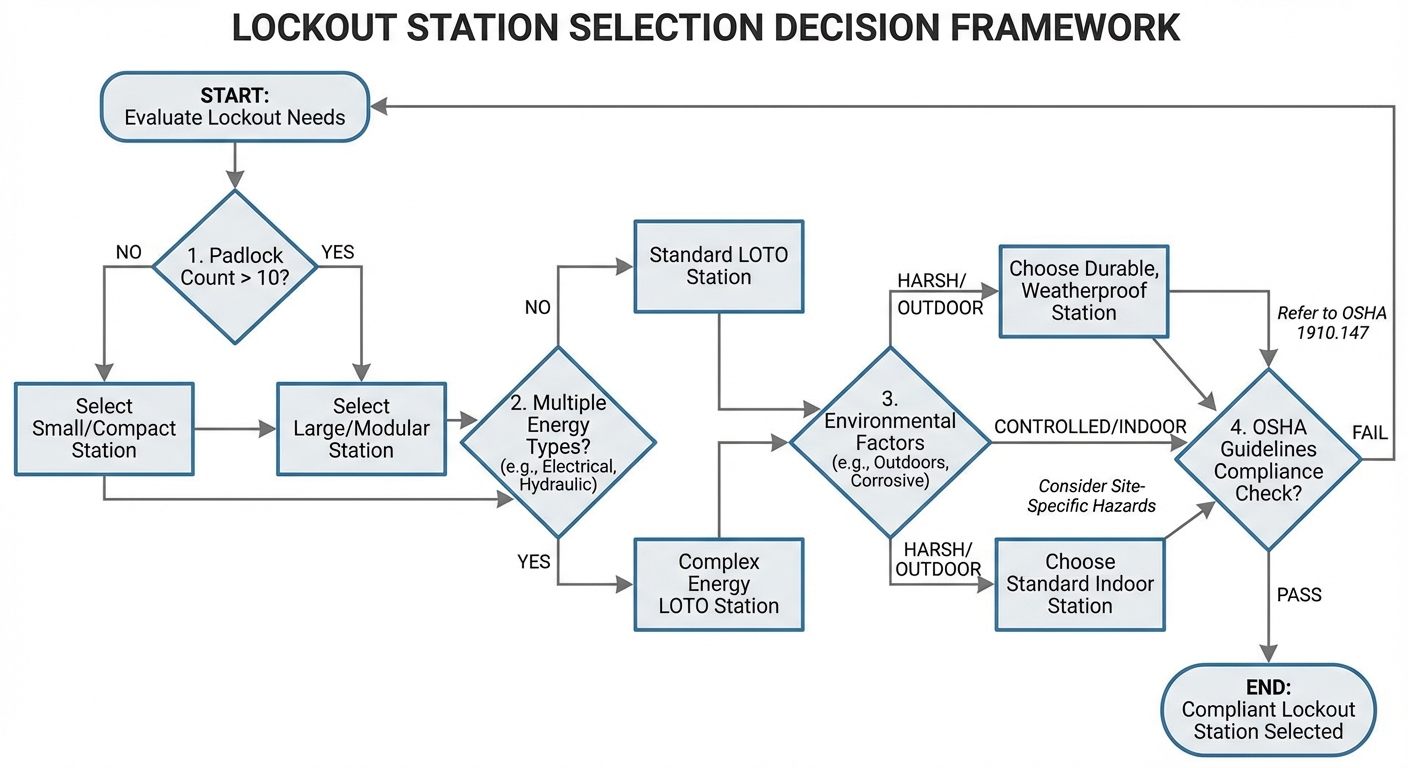
Stop comparing features. Start with your facility.
Question 1: How many authorized employees do you have?
Multiply by 1.5 for spare capacity. That’s your minimum padlock count.
Question 2: What energy types exist in your facility?
Electrical only = basic station works. Multiple energy types = premium station or supplemental devices.
Question 3: What’s your environment?
Climate-controlled = plastic acceptable. Production floor, warehouse, outdoor = metal mandatory.
Question 4: Is this a new program or a reorganization?
New program = filled station saves time. Reorganization with existing compliant hardware = unfilled station saves money.
Q: Can I use personal padlocks from employees’ toolboxes on a lockout station?
A: No. Personal padlocks fail the standardization requirement. All locks on the station must match in color and/or shape and/or size. Mixed personal locks from different sources = citation.
Q: How often should I inventory my lockout station?
A: Formally, during your annual periodic inspection under 1910.147(c)(6). Practically, a monthly visual check catches missing hardware before it becomes an audit problem.
Q: Do I need a separate station for each department?
A: OSHA doesn’t specify. The question is access. If workers in Department B can’t reasonably reach Department A’s station, you need multiple stations to ensure hardware availability.
Q: What’s the minimum number of locks a station should have?
A: At least one dedicated lock per authorized employee, plus spares. “One person, one lock, one key” is the baseline principle.